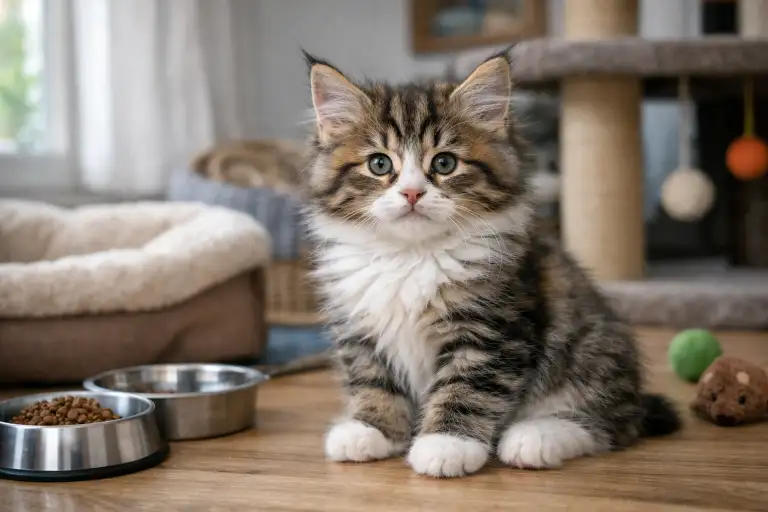
Bringing home a Norwegian Forest kitten is exciting—and it’s completely normal to feel a little unsure at first. Kittens, regardless of breed, go through fast physical and emotional changes, and the early weeks are more about helping them feel safe than doing everything “perfectly.” If your kitten seems shy, sleepy, extra playful, or a bit clingy, you’re not doing anything wrong—this is all part of normal kitten adjustment.
Norwegian Forest kittens are often described as sturdy, curious, and slow to mature compared to smaller breeds. That doesn’t mean they need complicated care. In fact, the basics matter far more than breed-specific details at this stage: a calm environment, regular meals, clean litter access, gentle handling, and predictable routines. Size, fluff, and personality will develop gradually over time.
It also helps to know what this guide is—and isn’t—meant to do. This is a practical, beginner-friendly kitten care guide focused on daily life, behavior, feeding basics, and confidence-building for new owners. It’s not a veterinary manual, and it’s not about raising a “perfect” kitten. The goal is to help you understand what’s normal, what deserves patience, and how to support healthy development without stress.
Many first-time owners worry that they might miss something important in the early days. In reality, most kitten issues come from overstimulation, sudden changes, or unrealistic expectations—not from lack of effort. A calm, observant approach goes a long way.
To help ease common worries, here’s a quick reality check on behaviors that often concern new owners:
| Common Kitten Behavior | Why It’s Normal | What Helps |
|---|---|---|
| Hiding during the first days | New environment feels overwhelming | Give space and quiet time |
| Sleeping most of the day | Kittens grow while they sleep | Let them rest undisturbed |
| Sudden bursts of energy | Natural play and coordination practice | Short, frequent play sessions |
| Meowing more than expected | Communication and adjustment | Consistent routines and gentle response |
As you move through this guide, remember: your kitten is learning just as much as you are. Consistency, patience, and simple care habits matter far more than doing everything at once.
Preparing Your Home and Daily Routine for a Norwegian Forest Kitten
Before your kitten starts exploring, it helps to prepare your home in a simple and calm way. You do not need a perfect setup. Your goal is to create a space where your kitten feels safe, warm, and able to rest without stress.
Start by choosing a quiet area of your home. This can be a small room or a corner where your kitten can sleep, eat, and use the litter box without too much noise. Place food and water bowls away from the litter box. Add a soft bed or blanket where your kitten can curl up and rest. Many kittens like warm, cozy spots more than open spaces at first.
Keep your kitten indoors. Close windows, block small gaps, and remove items that can be chewed or knocked over. Cords, small objects, and open shelves can be unsafe for curious kittens. Norwegian Forest kittens enjoy climbing, so make sure any furniture they can reach is stable.
A daily routine helps kittens feel secure. Try to feed, play, and rest at similar times each day. This does not need to be strict. Even a loose routine helps your kitten know what to expect.
Here is a simple example of a daily kitten routine:
| Time of Day | What to Do | Why It Matters |
|---|---|---|
| Morning | Feed and clean litter box | Starts the day calmly |
| Midday | Short play and rest time | Supports growth and learning |
| Evening | Play, feed, quiet time | Helps prevent night activity |
| Night | Let your kitten sleep | Sleep is important for growth |
Do not worry if your kitten does not follow this routine perfectly. Kittens adjust slowly, and changes are normal in the first weeks.
Many new owners make the mistake of giving their kitten too much space too soon. A smaller, safe area is better at first. You can slowly allow more access to your home as your kitten becomes confident.
Feeding, Growth, and Development in Norwegian Forest Kittens
Feeding your kitten the right way is important, but it does not need to be confusing. Kittens grow fast, and food helps their body, brain, and bones develop. What matters most is regular meals and steady habits, not perfect feeding.
Most kittens eat small meals several times a day. Your kitten may seem hungry often, especially during growth spurts. This is normal. At the same time, a bigger kitten does not always need more food than other kittens. Growth happens slowly, and every kitten develops at their own pace.
Norwegian Forest kittens are known for growing over a longer time. They may look big early on, but they are still kittens inside. Do not rush their growth or expect adult behavior too soon. Focus on balanced meals and watch how your kitten eats and feels after meals.
Here is a simple guide to help you understand how feeding and care change as your kitten grows:
| Kitten Age | Feeding Focus | What You May Notice |
|---|---|---|
| 8–12 weeks | Frequent small meals | Lots of sleep and short play bursts |
| 3–6 months | Steady eating habits | More play and curiosity |
| 6–12 months | Gradual routine changes | Growing size and confidence |
Always provide clean, fresh water. Keep feeding times calm and quiet. If your kitten eats slowly or skips a meal during the first days, this can be part of adjusting to a new home.
Avoid changing food too often. Sudden changes can upset your kitten’s stomach. If something feels off, take notes and observe before worrying.
Growth is not just about size. It includes learning, confidence, and comfort in the home. A relaxed feeding routine supports all of these.
Behavior, Play, Sleep, and Socialization
Kittens use behavior to learn about the world. Many actions that worry new owners are normal parts of growing up. Running, jumping, climbing, and sudden bursts of energy help kittens build strength and balance.
Play is very important. Short play times a few times a day are better than one long session. Use play to guide energy in a safe way. If your kitten bites or scratches during play, it is usually not anger. It is how kittens practice hunting skills. Gently stop play and give space when this happens.
Sleep takes up most of a kitten’s day. Many kittens sleep 16 to 20 hours. This helps their body and brain grow. Some kittens become more active in the evening. Calm play and feeding before bedtime can help reduce nighttime activity.
Social time helps your kitten feel safe with people. Speak softly, move slowly, and let your kitten come to you. Pick up your kitten only when they are relaxed. Gentle touch builds trust over time.
Here is a simple guide to help tell what is normal and what needs attention:
| Behavior | Why It Happens | What Helps |
|---|---|---|
| Zooming and climbing | Natural energy release | Daily play time |
| Play biting | Learning hunting skills | Stop play calmly |
| Sleeping a lot | Healthy growth | Let your kitten rest |
| Hiding sometimes | Feeling unsure | Give quiet space |
Do not punish your kitten for normal behavior. Kittens learn best through calm guidance and routine. With time, playful behavior becomes more controlled.
Grooming, Health Basics, and Long-Term Care Confidence
Grooming helps your kitten stay clean and also helps you build trust. It is best to start grooming habits early, even when your kitten is small. Keep sessions short and calm. A few gentle strokes are enough at first.
Norwegian Forest kittens have soft, fluffy fur that will get thicker as they grow. Light brushing helps your kitten get used to being touched and prevents fear later. If your kitten tries to walk away, let them. Forcing grooming can cause stress.
Basic hygiene matters too. Touch your kitten’s paws, ears, and tail gently during calm moments. This helps your kitten accept handling as they grow. Trim nails only when your kitten is relaxed, and stop if they become restless.
Health care for kittens is mostly about watching and learning. A healthy kitten is curious, playful, eats well, and rests often. Small changes in behavior can happen during growth or adjustment. Take note before worrying.
Your first vet visit is a normal part of kitten care. Keep it calm and simple. This visit helps set a baseline for your kitten’s growth and comfort.
Here is a simple overview of early grooming habits:
| Care Habit | How Often | Why It Helps |
|---|---|---|
| Light brushing | A few times a week | Builds comfort with touch |
| Nail checks | Weekly | Keeps paws healthy |
| Gentle handling | Daily | Builds trust and calm behavior |
Raising a kitten is a long journey, not a race. Focus on steady care, patience, and gentle routines. These early habits help your kitten grow into a confident adult cat.
For more general guidance on raising healthy kittens, you can also visit the ASPCA’s kitten care resource, which offers beginner-friendly information on early kitten needs and development.

Ata Ur Rehman is the founder of Pet Age in Human Years Calculator, an educational platform that provides age conversion charts and lifespan guides for dogs, cats, birds, and other companion animals. His work focuses on helping pet owners understand how animal ages translate into human years using commonly accepted age conversion formulas and published lifespan averages.
The website compiles breed and species lifespan data from kennel clubs, breed organizations, and general animal lifespan studies to present simple and easy-to-understand guides for pet owners worldwide.
This website was created to centralize animal age conversion charts into one easy reference platform for pet owners.