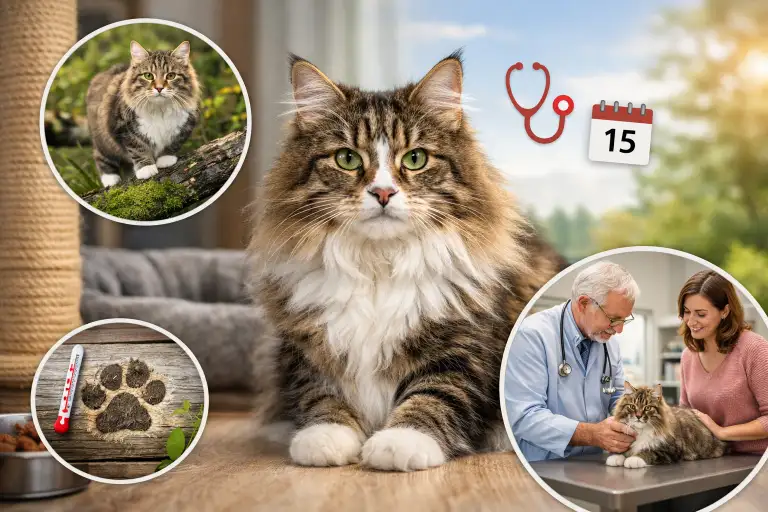
Norwegian Forest Cats are often described as sturdy, resilient companions, shaped by generations of living in a harsh northern climate. Many owners are drawn to the breed because of this reputation for strength, along with their calm temperament and long-term companionship potential. Still, like all cats, Norwegian Forest Cats are individuals first—and their health and lifespan can vary widely based on genetics, environment, and ongoing care.
This guide is designed to give a clear, balanced overview of Norwegian Forest Cat health issues and lifespan, without drifting into diagnosis or medical advice. It focuses on what owners commonly want to understand: how long these cats tend to live, what health concerns are most often discussed at a high level, and how everyday care and observation can support long-term well-being.
It’s important to separate breed tendencies from certainty. Being a Norwegian Forest Cat does not mean a cat will develop specific health problems, nor does it guarantee exceptional longevity. Many live long, healthy lives with minimal issues, while others may need closer monitoring as they age. Responsible breeding, indoor living, preventive veterinary care, and a stable home environment all play a meaningful role.
Throughout this article, health topics are presented in a reassuring, educational way, with an emphasis on awareness rather than worry. The goal is to help owners feel informed and confident—better able to notice changes, ask thoughtful questions, and support their cat’s quality of life at every stage, while always partnering with a veterinarian for individual guidance.
Average Norwegian Forest Cat Lifespan and Longevity Expectations
Many people ask a simple question first: how long do Norwegian Forest Cats live?
The answer depends on several factors, but most well-cared-for Norwegian Forest Cats live between 12 and 16 years, with some living longer.
Where a cat lives makes a big difference. Cats that live indoors are usually safer from traffic, fights, and serious infections. Outdoor cats may have more freedom, but they also face more risks. Because of this, indoor Norwegian Forest Cats often live longer than those that spend a lot of time outside.
These cats are also known for slow growth and late maturity. They may not fully grow into their large size until they are four or even five years old. This slow development does not shorten their life. In fact, many owners notice that Norwegian Forest Cats stay playful and active well into adulthood.
It’s important to remember that lifespan numbers are averages, not promises. One cat may live longer than expected, while another may need more health support as they age. Daily care, regular checkups, a healthy body weight, and a calm home all help support a longer and more comfortable life.
Below is a simple overview to help compare lifestyle and lifespan.
| Lifestyle | Typical Lifespan Range | What Affects It Most |
|---|---|---|
| Indoor | 14–16+ years | Safety, routine care, stable home |
| Indoor/Outdoor | 12–15 years | Supervision, environment risks |
| Outdoor | 10–13 years | Traffic, injuries, infections |
Common Health Issues Seen in Norwegian Forest Cats
Norwegian Forest Cats are often healthy and strong, but no cat breed is free from health concerns. This section shares common health topics owners should be aware of, without assuming that a cat will have these problems. Think of this as awareness, not a prediction.
Because Norwegian Forest Cats are large and slow-growing, some health topics come up more often in conversations about the breed. Many of these are also common in cats in general, especially as they get older.
Here are the main areas owners usually hear about:
- Joint and movement changes
Large cats put more weight on their joints. Over time, some may move more slowly, jump less, or rest more. - Weight-related concerns
Norwegian Forest Cats can gain weight if they eat too much or move too little. Extra weight can affect comfort and daily activity. - Dental health
Like many cats, they can develop dental problems as they age. Bad breath, trouble chewing, or less interest in food can sometimes be linked to the mouth. - Coat and grooming challenges
Their thick, long coat is beautiful but needs regular grooming. Mats and tangles can hide skin problems if not noticed early. - Age-related health changes
As cats grow older, their energy, habits, and needs often change. This is a normal part of aging, not always a sign of illness.
The table below gives a simple overview of these health areas and what owners can watch for in daily life.
| Health Area | Why It’s Mentioned in This Breed | What Owners Can Watch For |
|---|---|---|
| Joints & movement | Large body size and slow growth | Less jumping, stiffness |
| Weight & body shape | Calm nature, indoor living | Weight gain, low activity |
| Dental health | Common in adult and senior cats | Bad breath, chewing changes |
| Coat & skin | Thick, long fur | Mats, less self-grooming |
| Aging changes | Normal life stage | Sleep, behavior shifts |
Most Norwegian Forest Cats will not experience all of these issues, and many may have none at all. Regular observation, gentle grooming, and routine checkups help owners notice small changes early.
Factors That Influence Long-Term Health and Lifespan
How long and how well a Norwegian Forest Cat lives is not based on breed alone. Daily care and lifestyle choices play a very big role. Many of these factors are simple and within an owner’s control.
Here are the most important ones:
- Genetics and early care
Cats from responsible breeders or healthy backgrounds often get a better start in life. Early vet visits and good nutrition matter. - Indoor living and safety
Cats that live indoors are protected from cars, fights, and many infections. A safe home supports a longer life. - Food and body weight
Eating the right amount helps keep a healthy weight. Being overweight can make movement harder and lower energy levels. - Activity and play
Regular play keeps muscles strong and helps prevent boredom. Even calm cats need daily movement. - Grooming and coat care
Brushing is not just for looks. It helps owners notice skin, weight, or behavior changes early. - Stress and routine
Cats like calm, predictable homes. Big changes or loud environments can affect their well-being. - Regular vet checkups
Routine visits help track health over time. Small changes are easier to manage when noticed early.
No single factor decides a cat’s future. Good care over many years adds up and supports both comfort and lifespan.
Aging, Quality of Life, and When to Consult a Veterinarian
As Norwegian Forest Cats grow older, small changes in their body and behavior are normal. Aging does not always mean something is wrong, but it does mean owners should pay closer attention to daily habits and comfort.
Older cats may:
- Sleep more than before
- Move more slowly or jump less
- Groom themselves less often
- Prefer quiet places
- Play for shorter periods
These changes often happen slowly, which is why they can be easy to miss. Watching daily routines helps owners notice when something feels different.
Supporting quality of life is about comfort and consistency. Soft resting places, easy access to food and litter boxes, gentle play, and regular grooming can make a big difference as cats age.
Some changes are worth checking in about, even if the cat seems calm. The table below helps explain what to watch for and what to do next.
| Observed Change | What It May Mean | Suggested Next Step |
|---|---|---|
| Less movement or jumping | Aging or comfort changes | Monitor and mention at next vet visit |
| Eating less or more | Body or routine changes | Track and ask a professional |
| Weight loss or gain | Metabolism changes | Schedule a checkup |
| Less grooming | Stiffness or low energy | Help with brushing, observe closely |
| Behavior changes | Stress or age-related shifts | Seek advice if changes continue |
Knowing when to consult a veterinarian does not mean waiting for an emergency. Asking questions early, even for small changes, helps build a clear health picture over time.
With calm observation, routine care, and professional support, many Norwegian Forest Cats enjoy a comfortable and happy life well into their senior years.
For more general, science-based information about feline health and preventive care, you can visit the American Association of Feline Practitioners (AAFP), a leading organization dedicated to improving the health and well-being of cats through education and veterinary standards.

Ata Ur Rehman is the founder of Pet Age in Human Years Calculator, an educational platform that provides age conversion charts and lifespan guides for dogs, cats, birds, and other companion animals. His work focuses on helping pet owners understand how animal ages translate into human years using commonly accepted age conversion formulas and published lifespan averages.
The website compiles breed and species lifespan data from kennel clubs, breed organizations, and general animal lifespan studies to present simple and easy-to-understand guides for pet owners worldwide.
This website was created to centralize animal age conversion charts into one easy reference platform for pet owners.