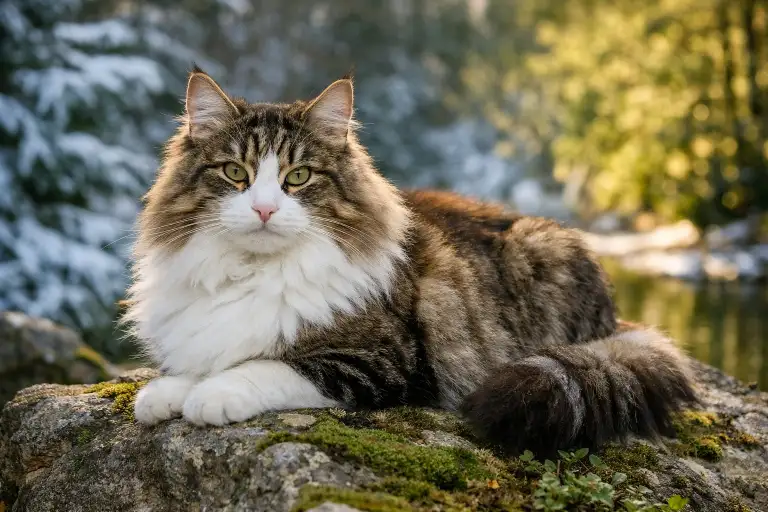
The Norwegian Forest Cat is a large, powerful, and quietly affectionate breed shaped not by human design, but by nature itself. Originating in the harsh forests of Scandinavia, this cat developed through natural selection to survive cold winters, rugged terrain, and an outdoor working life. That wild heritage still shows today—not in aggression or aloofness, but in confidence, physical strength, and a calm, self-assured temperament that many owners describe as “dog-like, but dignified.”
In Norway, the breed has long been known as the skogkatt, or “forest cat.” Folklore tells of giant cats pulling the chariot of the Norse goddess Freyja, but behind the myths is a very real farm and forest cat that hunted rodents, climbed trees with ease, and endured extreme weather. Unlike many modern breeds, the Norwegian Forest Cat was not created through selective breeding for looks. Instead, its thick coat, sturdy bones, and exceptional climbing ability evolved out of necessity.
By the early 20th century, the breed was at risk of disappearing due to crossbreeding with domestic cats. Norwegian breeders stepped in to preserve the native type, and the Norwegian Forest Cat was officially recognized by FIFe in the 1970s, followed later by CFA and TICA. Today, it’s celebrated worldwide as a natural breed that balances wild beauty with a gentle, family-friendly nature.
Despite its imposing size, this is not a hyperactive or demanding cat. Norwegian Forest Cats are typically calm, observant, and deeply loyal to their people. They enjoy companionship but dislike being forced into attention, preferring to sit nearby, follow from room to room, or perch above their environment to keep watch. Their slow maturity—often taking four to five years to fully develop—means they retain a youthful playfulness well into adulthood.
For readers who want a fast snapshot before diving deeper, the table below summarizes the key traits most people search for when researching this breed.
Norwegian Forest Cat Quick Facts
| Trait | Details |
|---|---|
| Origin | Norway (Scandinavia) |
| Breed Type | Natural breed |
| Size Category | Large |
| Average Weight | Males: 13–20 lbs (6–9 kg), Females: 9–13 lbs (4–6 kg) |
| Coat Type | Long, dense double coat |
| Lifespan | 12–16 years (often longer with good care) |
| Activity Level | Moderate |
| Affection Style | Loyal, calm, not clingy |
| Vocalization | Quiet; soft chirps and trills |
| Maturity Rate | Slow (full size at 4–5 years) |
This combination of rugged ancestry and gentle modern temperament is what makes the Norwegian Forest Cat so appealing. It’s a breed that feels substantial—physically and emotionally—without being overwhelming, and one that tends to form deep, long-term bonds with the people who respect its independent nature.
Norwegian Forest Cat Appearance: Size, Coat, and Physical Traits
The Norwegian Forest Cat is easy to recognize once you know what to look for. This is a large, strong cat, but it does not look bulky or heavy. Instead, it has a long body, solid muscles, and a balanced shape that shows its forest-climbing roots.
One important thing to know is that this breed grows very slowly. Many Norwegian Forest Cats do not reach full size until they are 4 to 5 years old. Because of this, young cats may look slimmer and taller before their body fully fills out.
Size and Growth
Male Norwegian Forest Cats are usually bigger than females. They have broader chests, stronger necks, and heavier bones. Females are smaller but still larger than the average house cat.
| Gender | Average Adult Weight | Growth Notes |
|---|---|---|
| Male | 13–20 lbs (6–9 kg) | Very muscular, slow to mature |
| Female | 9–13 lbs (4–6 kg) | Leaner build, same slow growth |
Their long legs and large paws help them climb and jump with ease. Many owners notice that these cats prefer high places, such as shelves or tall cat trees.
Coat Type and Seasonal Changes
The coat is one of the breed’s most famous features. Norwegian Forest Cats have a thick double coat made to protect them from cold and wet weather.
- The outer coat is long and water-resistant
- The undercoat is soft and warm
- A thick ruff often forms around the neck in winter
This coat changes with the seasons. In cold months, it becomes fuller and heavier. In warm months, much of the undercoat sheds, and the cat looks slimmer.
| Season | Coat Appearance |
|---|---|
| Winter | Very thick, fluffy, full ruff and tail |
| Summer | Lighter coat, less volume, easier to manage |
Head, Eyes, and Other Features
The head has a triangle shape, with a straight nose and a strong chin. The eyes are large and almond-shaped, giving the cat a calm and alert look. Eye color can vary and does not have to match coat color.
Other common features include:
- Medium to large ears, often with small hair tufts
- A long, bushy tail used for warmth and balance
- Large paws with extra fur between the toes
All these traits helped the breed survive outdoors for hundreds of years, and they still give the Norwegian Forest Cat its wild, natural look today.
Norwegian Forest Cat Personality, Temperament, and Behavior
The Norwegian Forest Cat is known for having a calm, balanced, and gentle personality. This breed is friendly, but not demanding. Many owners say this cat likes to be close to people, but not on top of them all the time.
These cats are confident and relaxed. They usually do not panic easily and are not aggressive. Instead of jumping into situations, they often watch first and decide later. This comes from their natural survival instincts.
Affection and Bonding Style
Norwegian Forest Cats form strong bonds with their families. They enjoy being in the same room as their people and may follow them around the house. However, they are not true lap cats in most cases.
They show love in quiet ways:
- Sitting nearby
- Sleeping close, but not always touching
- Rubbing against legs
- Greeting their owners at the door
They do not like being forced to cuddle. When affection is on their own terms, they are very loving.
Independence and Intelligence
This breed is independent but not distant. They can handle being alone for a few hours without stress, which makes them easier for working households.
They are also very smart. Norwegian Forest Cats learn routines quickly and can solve simple problems. Some can open doors, figure out food puzzles, or learn leash walking with patience.
Because they are intelligent, they can get bored if they have nothing to do. A bored cat may climb furniture or explore places it should not.
Vocal Sounds and Communication
Norwegian Forest Cats are usually quiet cats. They do not meow often, and when they do, the sound is soft.
Instead of loud meows, they often use:
- Chirps
- Trills
- Short, gentle sounds
They mainly “talk” when greeting people or asking for food.
Behavior With Children and Other Pets
These cats are patient and gentle, which makes them a good match for families. They do best with calm, respectful children who understand not to pull or chase them.
With other pets:
- They usually get along well with other cats
- They can live with dogs if the dog is calm and respectful
- They may avoid very noisy or pushy animals at first
Personality Traits at a Glance
| Trait | What to Expect |
|---|---|
| Affection Level | Loving but not clingy |
| Energy Level | Moderate |
| Independence | Comfortable being alone |
| Intelligence | High |
| Vocalization | Low |
| Good with Children | Yes, with gentle handling |
| Good with Other Pets | Yes, with proper introduction |
Many people mistake their calm nature for being distant, but this breed is simply quietly loyal. They prefer trust and respect over constant attention.
Care Needs: Activity, Grooming, Health, and Lifespan
Norwegian Forest Cats are strong and healthy cats, but they still need proper care to stay happy. Their needs are not hard, but they are different from short-haired or smaller cats. Knowing what to expect makes life easier for both the cat and the owner.
Activity and Play Needs
This breed has a moderate activity level. They are not lazy, but they are not wild or hyper either. Instead of running nonstop, they enjoy purposeful movement.
They especially love:
- Climbing tall cat trees
- Sitting on high shelves
- Slow chasing games
- Hunting-style play with toys
They do best in homes that offer vertical space. Even indoor-only Norwegian Forest Cats stay fit if they can climb and explore.
| Care Area | What They Need |
|---|---|
| Daily Activity | Moderate |
| Favorite Play | Climbing, jumping, stalking |
| Alone Time | Handles well |
| Indoor Life | Very suitable with enrichment |
Grooming and Shedding
Despite their long fur, Norwegian Forest Cats are easier to groom than many people expect. Their coat does not mat easily if brushed regularly.
Basic grooming needs:
- Brush 1–2 times per week
- Brush more during heavy shedding seasons
- Baths are rarely needed
They shed the most in spring and early summer when the thick winter coat comes out.
| Season | Grooming Level |
|---|---|
| Winter | Light brushing |
| Spring | Heavy shedding, more brushing |
| Summer | Easier coat care |
Health and Lifespan
Norwegian Forest Cats are generally healthy, but like all purebred cats, they can have some genetic health risks.
Common health concerns include:
- Heart disease (HCM)
- Hip joint problems
- A rare genetic muscle disease (GSD IV)
Responsible breeders test for these problems before breeding.
| Health Issue | Risk Level | Prevention |
|---|---|---|
| HCM (heart disease) | Medium | Heart screening |
| Hip issues | Low–Medium | Good breeding |
| GSD IV | Rare | Genetic testing |
The average lifespan is 12 to 16 years, and many live longer with good care, regular vet visits, and a safe indoor life.
Indoor vs Outdoor Living
Norwegian Forest Cats can live outdoors in cold areas, but indoor life is safer and recommended. Indoor cats live longer and avoid dangers like traffic, fights, and illness. With climbing spaces and toys, they stay happy indoors.
Is the Norwegian Forest Cat Right for You? Cost, Pros & Cons, and Alternatives
Before choosing a Norwegian Forest Cat, it is important to know if this breed truly fits your home and lifestyle. This is a wonderful cat, but it is not the best match for everyone.
Who This Breed Is Best For
The Norwegian Forest Cat is a good choice for:
- Families with calm, respectful children
- People who want a friendly but independent cat
- Homes with enough space for climbing
- Multi-pet homes with gentle animals
- Owners who enjoy quiet companionship
They are also a good option for first-time cat owners who want a relaxed and steady pet, not one that needs constant attention.
Who May Struggle With This Breed
This breed may not be ideal for:
- People who want a lap cat all day
- Very small homes with no vertical space
- Owners who dislike shedding
- People who are away for very long periods
They need space to move and owners who respect their personal boundaries.
Cost to Own a Norwegian Forest Cat
Norwegian Forest Cats are not cheap, especially if bought from a responsible breeder.
| Cost Type | Average Range |
|---|---|
| Kitten Price | $900–$2,000+ |
| Grooming Supplies | Low to moderate |
| Annual Vet Care | Moderate |
| Pet Insurance | Recommended |
Adoption from a rescue may cost less, but purebred Norwegian Forest Cats are rare in shelters.
Pros and Cons at a Glance
| Pros | Cons |
|---|---|
| Calm and gentle personality | Not a strong lap cat |
| Loyal and affectionate | Heavy seasonal shedding |
| Good with families and pets | Needs climbing space |
| Quiet and intelligent | Slow to mature |
Similar Breeds to Consider
If you like the Norwegian Forest Cat but are unsure, you may also want to look at:
- Maine Coon – larger and more playful
- Siberian Cat – similar coat, more affectionate
- Ragdoll – very cuddly and relaxed
Each breed has a different personality and care level.
For official breed standards and detailed registration information, you can also visit the Cat Fanciers’ Association (CFA) Norwegian Forest Cat breed profile.

Ata Ur Rehman is the founder of Pet Age in Human Years Calculator, an educational platform that provides age conversion charts and lifespan guides for dogs, cats, birds, and other companion animals. His work focuses on helping pet owners understand how animal ages translate into human years using commonly accepted age conversion formulas and published lifespan averages.
The website compiles breed and species lifespan data from kennel clubs, breed organizations, and general animal lifespan studies to present simple and easy-to-understand guides for pet owners worldwide.
This website was created to centralize animal age conversion charts into one easy reference platform for pet owners.