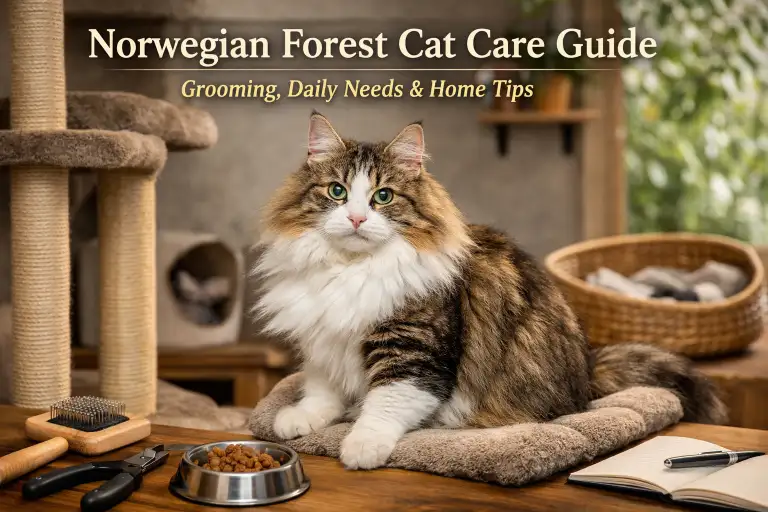
Norwegian Forest Cats aren’t difficult to care for, but they are different from the average domestic cat. Most care mistakes happen when owners assume that “long hair” and “calm temperament” mean low effort. In reality, this breed thrives when its natural traits are respected and supported with the right routines.
This cat developed in a cold, rugged environment, and that history still shows up in everyday life. Their thick double coat, powerful body, and climbing instincts all shape how they should be groomed, housed, and engaged. When these needs are met, Norwegian Forest Cats are steady, confident companions. When they aren’t, problems tend to appear slowly and are often missed until they’re well established.
One of the most common questions owners ask is whether Norwegian Forest Cats are high maintenance. The honest answer is no—but they are high responsibility. Their care doesn’t require constant attention, but it does require consistency, space, and awareness.
They are also more independent than many popular breeds. This independence is often misunderstood. It doesn’t mean they don’t bond; it means they prefer calm, predictable interaction over constant handling. Owners who respect this usually report fewer behavior issues and a more trusting relationship over time.
The table below connects key Norwegian Forest Cat traits to what owners typically notice at home and what those traits mean in practical care terms.
| Trait | What Owners Commonly Notice | Care Implication |
|---|---|---|
| Thick double coat | Heavy shedding during seasonal changes | Regular brushing routines are essential |
| Large, muscular body | Needs more space than average cats | Oversized litter boxes and sturdy furniture |
| Strong climbing instinct | Seeks shelves, doors, and high cabinets | Vertical space is a necessity, not a luxury |
| Independent temperament | Not overly clingy or vocal | Quality interaction matters more than frequency |
| Slow maturity | Remains “kitten-like” longer | Long-term enrichment planning is important |
Understanding these needs upfront helps set realistic expectations. Norwegian Forest Cats don’t demand constant attention, but they do expect their environment to work with them, not against them. When owners plan care around the breed’s natural behavior instead of trying to change it, daily life becomes much easier for both cat and human.
Daily and Weekly Care Routine for Norwegian Forest Cats
Caring for a Norwegian Forest Cat does not mean doing something complicated every day. It means doing a few important things regularly. When care is spread out into small routines, it becomes easy to manage and much less stressful for both you and your cat.
Daily care basics
Every day, your cat needs short periods of attention and movement. This does not mean constant play or cuddling. A few focused moments are enough.
Most Norwegian Forest Cats enjoy calm play that lets them climb, stretch, and chase. Wand toys, climbing trees, or even stairs work well. Ten to twenty minutes of play is usually enough to keep them active and mentally relaxed.
A quick coat check is also helpful. You do not need to brush every day, but you should run your hands over the chest, belly, and behind the legs. These are the areas where small tangles start.
Litter boxes need daily scooping. Because this breed is large, many problems come from litter boxes that are too small or too dirty. A clean, roomy box helps prevent stress and accidents.
Weekly and occasional care
Some care tasks do not need daily attention but should never be ignored.
Brushing is usually needed one to three times a week. During heavy shedding seasons, you may need to brush more often. Regular brushing removes loose fur and prevents painful mats.
Nails should be checked every two to three weeks. Long nails can catch in carpets or furniture, especially because these cats love to climb.
Your home also needs small weekly checks. Make sure climbing furniture is stable, scratching posts are not worn out, and play areas are still interesting. Bored cats often create their own entertainment, which owners rarely enjoy.
The table below shows a simple care routine that most owners can follow.
| Care Task | How Often | Why It Matters |
|---|---|---|
| Interactive play | Daily | Prevents boredom and weight gain |
| Quick coat check | Daily | Catches tangles early |
| Brushing | 1–3 times a week | Controls shedding and mats |
| Nail trimming | Every 2–3 weeks | Prevents injury and snagging |
| Home check | Weekly | Keeps environment safe and engaging |
Indoor living and space needs
Norwegian Forest Cats can live indoors full-time, even in apartments, as long as their space is used well. Height matters more than floor size. Tall cat trees, shelves, or window perches allow them to move naturally and feel secure.
Cats that do not have enough space to climb often become restless or destructive. This is not bad behavior—it is a sign that their daily needs are not being met.
When daily and weekly care becomes routine, these cats are calm, confident, and easy to live with.
Grooming and Coat Care for Norwegian Forest Cats
The coat is one of the most important parts of Norwegian Forest Cat care. It looks thick and heavy, but it is designed to protect the cat, not to be shaved or over-washed. When grooming is done the right way, the coat stays clean, soft, and healthy.
Understanding the double coat
Norwegian Forest Cats have a double coat. The top layer is long and water-resistant. The undercoat is soft and thick. Together, they protect the cat from cold and moisture.
Because of this, shaving the coat is usually a bad idea. It can damage how the fur grows back and make it harder for the cat to control body temperature.
How often to brush
Most of the year, brushing one to three times a week is enough. During heavy shedding seasons, usually spring and fall, brushing may be needed more often.
Brushing should feel gentle. You are not trying to pull fur out. You are helping loose hair come away before it turns into mats.
Pay extra attention to:
- Behind the front legs
- Around the chest
- Under the belly
- Behind the ears
These areas mat first because they rub when the cat moves.
Grooming needs by situation
| Situation | What to Do |
|---|---|
| Normal weeks | Light brushing 1–2 times |
| Heavy shedding | Brush more often with gentle strokes |
| Small tangles | Carefully loosen with fingers or comb |
| Tight mats | See a professional groomer |
| Senior cats | Short, calm grooming sessions |
Bathing: when it helps and when it hurts
Most Norwegian Forest Cats do not need regular baths. Bathing too often dries the skin and removes natural oils.
A bath may help only when:
- The cat is very dirty
- The coat has sticky or oily buildup
- A vet recommends it
If bathing causes fear or stress, it is better to avoid it unless truly needed.
Grooming do’s and don’ts
| Do | Avoid |
|---|---|
| Use wide-tooth combs | Shaving the coat |
| Groom in short sessions | Pulling through mats |
| Stay calm and patient | Bathing too often |
| Watch the skin closely | Ignoring early tangles |
Grooming should never feel like a fight. Short, calm sessions build trust and make care easier over time.
When coat care is gentle and regular, Norwegian Forest Cats stay comfortable and shed less around the home.
Home Environment, Behavior, and Common Care Mistakes
Norwegian Forest Cats need a home that fits their body and behavior. Many problems happen not because the cat is “bad,” but because the home setup does not match what the cat needs.
These cats are strong climbers. They feel safest when they can sit high and watch their space. If they cannot climb, they may jump on shelves, doors, or kitchen counters instead.
Creating the right home setup
Height is more important than floor space. Tall cat trees, strong shelves, or window perches give this breed a safe way to climb and rest.
Scratching is also very important. Norwegian Forest Cats prefer solid scratching posts that do not move. Soft or weak posts are often ignored.
Litter boxes should be large and easy to enter. Small boxes make big cats uncomfortable and can cause litter problems over time.
Understanding behavior signals
This breed is calm and quiet, but they still show stress in small ways. Owners should watch for changes instead of waiting for loud signs.
Normal behavior includes:
- Enjoying alone time
- Sitting in high places
- Playing in short bursts
Warning signs may include:
- Hiding more than usual
- Scratching furniture suddenly
- Refusing to use the litter box
- Over-grooming or pulling out fur
These signs often mean the cat is bored, stressed, or uncomfortable.
Common care mistakes and better choices
| Common Mistake | Better Choice |
|---|---|
| Little or no climbing space | Tall, stable cat furniture |
| Infrequent grooming | Regular light brushing |
| Small litter boxes | Oversized litter boxes |
| Treating independence as dislike | Calm, respectful interaction |
| No routine playtime | Short daily play sessions |
Multi-cat home challenges
In homes with more than one cat, space matters even more. Each cat needs access to food, water, litter boxes, and resting spots. When resources are shared too closely, stress can build quietly.
Vertical space helps reduce conflict. Cats can avoid each other without fighting, which keeps the home peaceful.
When the home fits the cat’s needs, behavior problems often disappear without punishment or training.
Safety, Life Stages, and When to See a Vet
Good care also means knowing what is normal and what is not. Norwegian Forest Cats often hide discomfort, so small changes matter.
Safety concerns at home
Because these cats are large and love to climb, safety is very important. Cat trees and shelves must be strong and stable. Loose furniture can fall and cause injuries.
Long fur can also hide skin problems. Always look for redness, sores, or bald spots when brushing. These signs should never be ignored.
Care needs at different life stages
A cat’s needs change as it grows older. Care should change too.
| Life Stage | Main Care Focus |
|---|---|
| Kitten | Gentle grooming, learning routines |
| Adult | Play, weight control, coat care |
| Senior | Help with grooming, joint support |
Kittens should get used to brushing early. Short and calm sessions help them feel safe later in life.
Adult cats need regular play and weight checks. This breed can gain weight slowly, which is easy to miss.
Senior Norwegian Forest Cats may struggle to groom themselves. Mats form faster, and joints may feel stiff. Helping them groom keeps them comfortable and clean.
When to see a vet or professional
Some problems need expert help. You should contact a vet or groomer if you notice:
- Sudden behavior changes
- Trouble walking or jumping
- Skin problems under the fur
- Heavy matting that cannot be brushed out
- Weight loss or weight gain
Seeing a vet early can prevent bigger problems later.
Final care advice
Norwegian Forest Cats do best with calm routines, space to climb, and gentle care. They are not demanding, but they do need consistency and respect.
When their care needs are met, they are steady, confident, and loving companions.
For more expert-backed guidance on feline wellbeing and care standards, you can visit the International Society of Feline Medicine (ISFM), which provides evidence-based resources used by veterinarians and cat care professionals worldwide.

Ata Ur Rehman is the founder of Pet Age in Human Years Calculator, an educational platform that provides age conversion charts and lifespan guides for dogs, cats, birds, and other companion animals. His work focuses on helping pet owners understand how animal ages translate into human years using commonly accepted age conversion formulas and published lifespan averages.
The website compiles breed and species lifespan data from kennel clubs, breed organizations, and general animal lifespan studies to present simple and easy-to-understand guides for pet owners worldwide.
This website was created to centralize animal age conversion charts into one easy reference platform for pet owners.