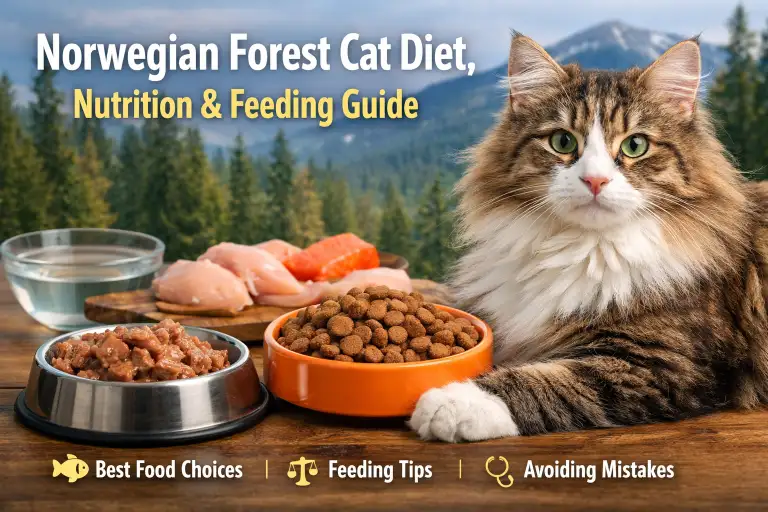
Norwegian Forest Cats are not just “big fluffy cats.” They are a naturally large, muscular breed with a slow growth rate, a dense double coat, and an athletic build that developed to survive harsh Scandinavian climates. Because of this, their diet and feeding approach deserve a bit more thought than generic cat-feeding advice.
One of the most common mistakes owners make is assuming that a larger cat automatically needs significantly more food. In reality, nutrition quality matters far more than bowl size. Norwegian Forest Cats need diets that support lean muscle, steady energy, and long-term health—without quietly encouraging weight gain that can hide beneath thick fur.
A well-balanced diet plays a role in:
- Maintaining strong muscles and joints in a heavy-bodied cat
- Supporting skin and coat health for a long-haired breed
- Providing steady energy without excess calories
- Helping prevent gradual weight gain that’s easy to miss
- Supporting hydration, especially for indoor cats
Like all cats, Norwegian Forest Cats are obligate carnivores, meaning their bodies are biologically designed to get most of their nutrition from animal-based ingredients. However, their size, slow maturity, and often indoor lifestyle mean that how they are fed can matter just as much as what they are fed.
This guide is designed to help you understand:
- What Norwegian Forest Cats actually need from their diet
- How to make practical, balanced feeding choices
- How to avoid common feeding mistakes without overcomplicating things
It’s important to note that this article is educational, not a substitute for veterinary care. Individual cats can have unique needs, but a strong understanding of nutrition helps owners make informed, confident feeding decisions for everyday life.
Understanding Norwegian Forest Cat Nutritional Needs
Norwegian Forest Cats have the same basic needs as other cats, but their large size, strong muscles, and slow growth make balance especially important. Feeding more food is not the goal. Feeding the right kind of food is.
Like all cats, Norwegian Forest Cats are obligate carnivores. This means their bodies are built to use nutrients from animal sources, not plants. Their digestive system, teeth, and metabolism all work best when animal-based nutrition comes first.
Here are the main nutrition points every owner should understand:
- Protein is essential
Protein helps maintain strong muscles and supports daily activity. What matters most is quality, not just high numbers on the label. Animal-based protein is easier for cats to use than plant protein. - Fat provides energy
Fat is a key energy source for cats. It also helps keep the skin healthy and supports a thick, shiny coat. Norwegian Forest Cats often benefit from steady energy rather than excess calories. - Carbohydrates are not required
Cats do not need carbohydrates to survive. However, small amounts in commercial food are normal and usually well tolerated. The goal is moderation, not complete removal. - Essential nutrients must come from food
Cats cannot make some nutrients on their own. One of the most important is taurine, which supports heart, vision, and overall health. This is why complete and balanced cat food matters. - Moisture plays a big role
Many cats naturally drink less water than they should. Diet helps make up for this, especially for indoor cats.
To make this easier to understand, here is a simple overview:
| Nutrient Type | Why It Matters for Norwegian Forest Cats |
|---|---|
| Animal Protein | Supports large muscles and strength |
| Dietary Fat | Provides energy and coat support |
| Carbohydrates | Not needed, but small amounts are tolerated |
| Taurine | Essential for heart and eye health |
| Moisture | Helps with hydration and urinary health |
The key takeaway is that Norwegian Forest Cats do best on balanced nutrition, not extremes. Focusing on one nutrient while ignoring others often causes more harm than good.
Best Feeding Choices: Wet Food, Dry Food, and Mixed Diets
Many owners wonder what type of food is best for a Norwegian Forest Cat. The truth is, there is no single “perfect” choice for every cat. What matters most is balance, hydration, and choosing food that fits your cat’s daily life.
The three most common feeding options are wet food, dry food, and a mix of both. Each one has strengths and limits.
Wet food
- Contains a lot of moisture, which helps with hydration
- Often lower in calories per bite
- Can be easier for cats to eat and enjoy
- Spoils faster once opened
Dry food
- Convenient and easy to measure
- Can be left out longer without spoiling
- Very calorie-dense, so portions must be controlled
- Low in moisture, which does not help hydration
Mixed feeding
- Combines wet and dry food
- Helps increase water intake while keeping meals practical
- Allows better portion control
- Works well for many Norwegian Forest Cats
Here is a simple comparison to make this easier:
| Feeding Type | Benefits | Limitations |
|---|---|---|
| Wet Food | High moisture, lower calorie density | Higher cost, short shelf life |
| Dry Food | Easy to store and measure | Low moisture, easy to overfeed |
| Mixed Feeding | Balanced and flexible | Needs portion awareness |
For long-haired cats like Norwegian Forest Cats, hydration is especially important. Moist food helps support urinary health and overall well-being. This does not mean dry food is “bad,” but it does mean it should be fed with care.
Another important skill for owners is reading cat food labels at a basic level. Look for foods labeled as “complete and balanced” for cats. Animal-based ingredients should appear early in the ingredient list. Avoid focusing only on marketing words like “natural” or “premium.”
The best feeding choice is one that:
- Meets your cat’s nutrition needs
- Fits your schedule and budget
- Helps maintain a healthy body shape
- Encourages good hydration
How Much and How Often to Feed a Norwegian Forest Cat
Because Norwegian Forest Cats are large, many owners think they need very large meals. In reality, how much a cat eats depends on calories, not size. A big bowl of food can easily lead to slow weight gain, especially for indoor cats.
Most cats do best with measured meals instead of food being left out all day. This makes it easier to control portions and notice changes in appetite.
Here are some simple feeding guidelines:
- Meal feeding vs free-feeding
Scheduled meals help prevent overeating. Free-feeding often leads to extra calories, especially with dry food. - Portion size matters more than bowl size
Dry food is very calorie-dense. Small portions can still contain many calories. - Activity level makes a difference
Active cats may need more food than calm indoor cats. Always adjust slowly. - Life stage affects feeding needs
Kittens need more energy for growth. Adult cats need balance. Senior cats need careful monitoring.
A simple life-stage overview:
| Life Stage | Feeding Focus |
|---|---|
| Kitten | More energy, smaller meals more often |
| Adult | Maintain muscle, avoid weight gain |
| Senior | Support lean body mass and appetite |
Because Norwegian Forest Cats have thick fur, weight gain can be hard to notice. Owners should watch for signs like:
- Less interest in play
- Trouble grooming the back or belly
- Ribs that are hard to feel
If a cat seems hungry all the time or leaves food untouched, it may be a sign that feeding amounts need review.
Common Feeding Mistakes, Treats, and When to Get Help
Many feeding problems happen slowly and are easy to miss, especially with large and fluffy cats like Norwegian Forest Cats. Knowing common mistakes can help owners avoid long-term issues.
Common feeding mistakes
- Feeding based on bowl size instead of portion size
- Giving too many treats during the day
- Using food to handle boredom instead of play
- Forgetting that neutered or spayed cats need fewer calories
- Assuming a big cat always needs more food
Here is a simple reminder table:
| Common Mistake | Why It’s a Problem |
|---|---|
| Overfilling the bowl | Leads to weight gain |
| Too many treats | Adds hidden calories |
| Ignoring hydration | Can affect urinary health |
| Feeding on routine only | Misses changes in appetite |
Treats and human food
Treats should be a small part of the diet, not a daily habit. Many human foods are unsafe for cats, and even safe foods can add too many calories. Treats should never replace complete and balanced cat food.
Hydration is often overlooked
Cats do not always drink enough water on their own. Wet food, fresh water bowls, and water fountains can help increase water intake.
When to get professional help
It’s time to speak with a veterinarian if you notice:
- Sudden weight gain or weight loss
- Ongoing stomach problems
- Loss of appetite or constant hunger
- Big changes in drinking or eating habits
Small changes in feeding can make a big difference, but some issues need expert guidance.
For more information on what “complete and balanced” nutrition means for cats, you can read the Association of American Feed Control Officials (AAFCO) guidelines, which explain the standards used to ensure commercial cat foods meet basic nutritional needs..

Ata Ur Rehman is the founder of Pet Age in Human Years Calculator, an educational platform that provides age conversion charts and lifespan guides for dogs, cats, birds, and other companion animals. His work focuses on helping pet owners understand how animal ages translate into human years using commonly accepted age conversion formulas and published lifespan averages.
The website compiles breed and species lifespan data from kennel clubs, breed organizations, and general animal lifespan studies to present simple and easy-to-understand guides for pet owners worldwide.
This website was created to centralize animal age conversion charts into one easy reference platform for pet owners.