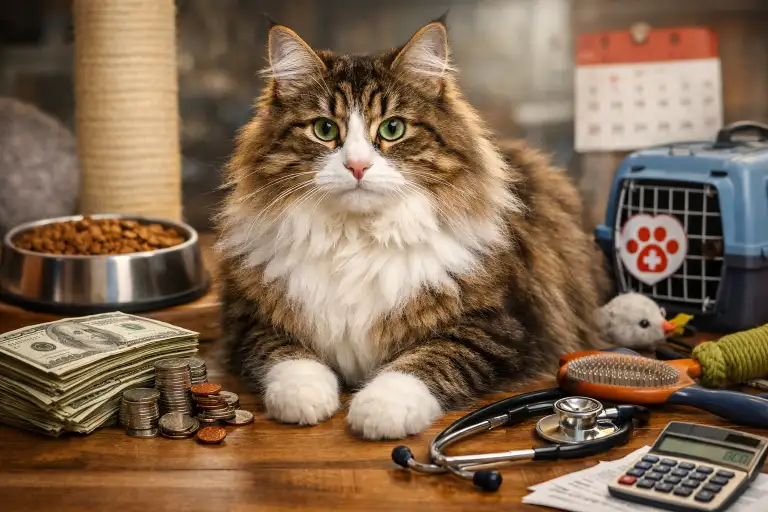
Owning a Norwegian Forest Cat is usually more expensive than owning an average domestic cat, but the reasons aren’t mysterious or exaggerated. This breed is large, slow-maturing, long-haired, and long-lived, which affects costs over many years—not just in the first few months.
The goal of this section is to help you quickly understand what kind of financial commitment you’re looking at, before diving into detailed breakdowns later in the guide.
At a high level, the total cost of ownership is shaped by four things:
- The cat’s size and nutritional needs
- Coat care and grooming requirements
- Veterinary care over a longer-than-average lifespan
- Your lifestyle choices as an owner
Rather than thinking in a single number, it’s more realistic to think in cost patterns over time.
Cost Overview Snapshot
| Cost Category | How Often It Occurs | Typical Cost Level | Why This Breed Is Different |
|---|---|---|---|
| Initial setup | One-time | Medium to High | Larger supplies, early vet care, quality setup |
| Food & litter | Monthly | Medium to High | Big body size = higher consumption |
| Grooming & hygiene | Monthly / periodic | Medium | Thick double coat needs regular care |
| Routine veterinary care | Annual | Medium | Long lifespan increases total lifetime spend |
| Unexpected care | Irregular | Variable | Like any cat, emergencies are unpredictable |
This snapshot is meant to answer a simple question quickly:
Are you budgeting for a standard pet, or for a long-term responsibility with above-average upkeep?
For many owners, the Norwegian Forest Cat is affordable—but only when they plan for:
- Consistent monthly expenses, not just adoption costs
- Higher lifetime costs due to longevity
- Periods where expenses spike rather than stay flat
If you’re comfortable planning beyond “average cat costs,” the rest of this guide will help you understand where the money actually goes and what surprises people most.
One-Time Initial Costs of a Norwegian Forest Cat
Before your Norwegian Forest Cat even settles in, there are one-time costs you need to plan for. These happen at the start, but they can feel heavy if you are not ready for them.
This breed is bigger and fluffier than most cats, so some setup items cost more or need to be replaced less often but bought stronger at the start.
Common One-Time Costs to Expect
| Expense | What It’s For | One-Time or Early Cost | Often Forgotten? |
|---|---|---|---|
| Adoption or purchase | Bringing the cat home | One-time | No |
| First vet visit | Health check, records, baseline care | Early | Sometimes |
| Spay or neuter | Prevents health and behavior issues | One-time | Yes |
| Carrier | Safe travel to the vet | One-time | Yes |
| Litter box (large size) | Comfort for a big cat | One-time | Yes |
| Food and water bowls | Better size and stability | One-time | No |
| Scratching post or tree | Prevents furniture damage | One-time | Often |
| Basic grooming tools | Brush, comb, nail clipper | One-time | Yes |
Many new owners plan only for the cat itself, but forget the cost of setting up the home properly. For a Norwegian Forest Cat, skipping strong or well-sized items often means replacing them later, which can cost more overall.
It also helps to know that this breed:
- Grows slowly and gets large over time
- Needs sturdy items that won’t tip or break
- Benefits from early grooming habits
Planning for these costs early makes the first months calmer and avoids stress spending later.
Monthly and Ongoing Costs You Should Expect
After the first setup is done, most of the cost of owning a Norwegian Forest Cat comes from monthly and regular expenses. These are the costs you pay again and again as long as your cat lives.
Because this is a large and long-haired breed, the monthly costs are usually higher than average, but they are also predictable if you plan well.
Main Monthly Expenses
| Expense | How Often | Cost Level | Why It Matters |
|---|---|---|---|
| Food | Every month | Medium to High | Big cats eat more food |
| Litter | Every month | Medium | Larger litter boxes need more litter |
| Grooming care | Monthly or regular | Medium | Thick fur needs brushing to avoid mats |
| Treats and toys | Monthly | Low to Medium | Keeps the cat active and happy |
| Basic health items | Ongoing | Low | Flea or parasite prevention if needed |
What Makes Monthly Costs Go Up or Down
Monthly spending is not the same for every owner. It depends on:
- The quality of food you choose
- Whether you groom at home or pay for help
- If your cat stays fully indoors or goes outside
- How active and playful your cat is
Some months cost very little. Other months cost more, especially when supplies run out at the same time.
The key thing to remember is this:
Monthly costs are small on their own, but big over time.
Owners who plan a simple monthly budget usually feel much less stress than those who only think about costs when something runs out.
Annual, Long-Term, and Unexpected Expenses
Some cat costs do not happen every month. These costs show up once a year, every few years, or without warning. Many owners feel stressed by these costs because they forget to plan for them.
For a Norwegian Forest Cat, these costs matter more because the breed often lives a long life.
Regular Yearly Costs
| Expense | How Often | Why It’s Needed |
|---|---|---|
| Yearly vet check | Once a year | Keeps track of health |
| Vaccines | Yearly or as advised | Prevents serious illness |
| Dental checks | Every few years | Teeth problems are common |
| Replacement items | When worn out | Scratching posts, beds, brushes |
Unexpected or Irregular Costs
These costs do not follow a schedule:
- Sudden illness or injury
- Emergency vet visits
- Special food for health problems
- Boarding or pet sitting during travel
Even healthy cats can have surprise problems. This does not mean you are a bad owner—it just means pets are living beings, not machines.
Long-Term Cost Changes
As Norwegian Forest Cats get older:
- Vet visits may happen more often
- Medicines may be needed
- Mobility or dental care may increase
Planning for these changes early makes later years easier for both you and your cat.
Can You Afford a Norwegian Forest Cat Long-Term?
This is the most important question in the whole guide. A Norwegian Forest Cat is not just a short-term pet. It is a long-term responsibility that can last many years.
You do not need to be rich to own one, but you do need to be prepared.
Things to Ask Yourself
Ask yourself these simple questions:
- Can I pay monthly pet costs without stress?
- Can I handle higher costs in some years?
- Can I still afford care if my cat gets sick?
- Can I care for a cat for many years, not just now?
If these questions feel uncomfortable, that does not mean “no.” It means you may need more planning.
Lifestyle Choices That Affect Cost
Your choices change the total cost over time:
- Indoor cats usually cost less than outdoor cats
- One cat costs less than two or more
- Grooming at home costs less than paying for it
- Planning ahead costs less than rushing during emergencies
None of these choices are right or wrong. They simply change the budget.
A Simple Way to Think About Lifetime Cost
Instead of thinking in one big number, think like this:
- Small monthly costs add up over many years
- Some years cost more than others
- Older cats usually cost more than young ones
The best owners are not perfect. They are owners who plan, adjust, and keep their cats safe and cared for.
This section helps you decide if a Norwegian Forest Cat fits your life, not just your wishes.
For a general, non-commercial overview of basic cat care needs and responsibilities, you can also review the American Society for the Prevention of Cruelty to Animals (ASPCA) guide to cat care and ownership costs.

Ata Ur Rehman is the founder of Pet Age in Human Years Calculator, an educational platform that provides age conversion charts and lifespan guides for dogs, cats, birds, and other companion animals. His work focuses on helping pet owners understand how animal ages translate into human years using commonly accepted age conversion formulas and published lifespan averages.
The website compiles breed and species lifespan data from kennel clubs, breed organizations, and general animal lifespan studies to present simple and easy-to-understand guides for pet owners worldwide.
This website was created to centralize animal age conversion charts into one easy reference platform for pet owners.