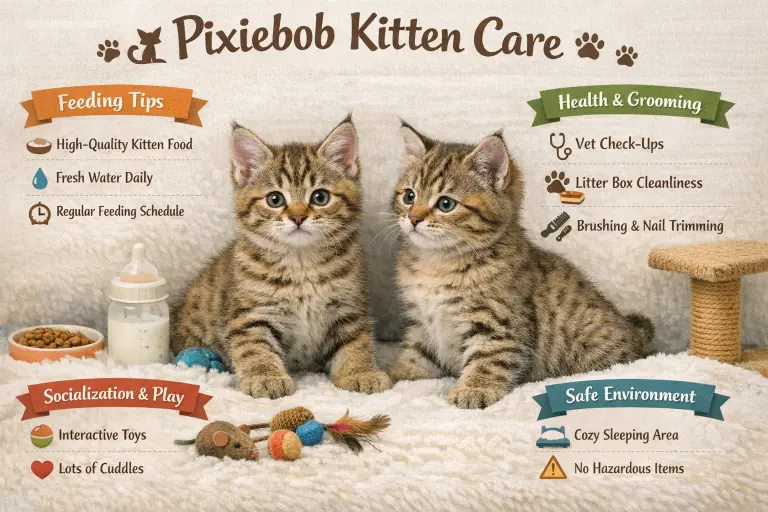
Bringing home a Pixiebob kitten is exciting, but it can also feel a little scary, especially if this is your first kitten. The good news is that Pixiebob kittens do not need special or difficult care. At their core, they are kittens, and their needs are very similar to any other healthy kitten. Food, safety, play, sleep, and gentle handling matter far more than breed labels.
Pixiebob kittens are often described as calm, curious, and people-friendly as they grow, but as babies, they are still learning everything. It is normal if your kitten hides at first, meows a lot, or follows you everywhere. These behaviors are part of adjusting to a new home. Many new owners worry they are doing something wrong, when in reality, the kitten is just settling in.
Your main goal in the first weeks is to help your Pixiebob kitten feel safe. This means keeping the environment quiet, predictable, and not too big at first. A small room with food, water, a litter box, a bed, and toys is often the best starting point. Once your kitten feels confident, you can slowly allow access to more space.
It is also important to set realistic expectations. Your kitten will not behave like an adult cat for a long time. They will have bursts of energy, moments of clumsiness, and days where they test limits. This is normal growth, not bad behavior. Patience and consistency matter more than perfection.
Below is a simple table with quick facts that many new Pixiebob kitten owners find helpful.
| Pixiebob Kitten Care Quick Facts | What to Expect |
|---|---|
| Energy level | High bursts, followed by long sleep |
| Social needs | Enjoys people but needs quiet time |
| Living space | Best kept indoors for safety |
| Learning pace | Curious and observant |
| Adjustment time | A few days to a few weeks |
Feeding, Growth & Daily Needs of a Pixiebob Kitten
Feeding your Pixiebob kitten correctly helps support healthy growth and steady energy. Kittens grow fast, especially in the first year, so they need food more often than adult cats. Most kittens eat several small meals a day. This is normal and helps keep their blood sugar stable.
Pixiebob kittens do not need special breed-only food. A high-quality kitten food made for growth is enough. Wet food is helpful because it adds moisture and is easier to eat, while dry food can support chewing habits. Many owners use a mix of both. What matters most is consistency and making changes slowly if needed.
As your kitten grows, you may notice sudden appetite changes. Some days they eat a lot, and other days they seem less interested. This often matches growth spurts or activity levels. As long as your kitten is active, alert, and gaining weight steadily, small changes in appetite are usually normal.
Daily needs go beyond food. Fresh water should always be available. Your kitten also needs playtime, rest, and gentle social time every day. Kittens learn through routine, so feeding and play around the same times each day can help them feel secure.
The table below shows a simple feeding and routine guide by age.
| Kitten Age | Meals Per Day | What to Expect |
|---|---|---|
| 8–12 weeks | 4 meals | Fast growth, frequent hunger |
| 3–6 months | 3–4 meals | High energy, learning routines |
| 6–12 months | 2–3 meals | Slower growth, more focus |
| 12+ months | 2 meals | Transition toward adult habits |
Pixiebob Kitten Behavior, Play & Socialization
Pixiebob kittens are playful, curious, and learning how to interact with the world. Play is not just fun; it is how kittens practice hunting skills, coordination, and social behavior. Daily play helps prevent boredom and unwanted behaviors like biting hands or chasing feet.
Play biting is one of the most common concerns for new owners. This does not mean your kitten is aggressive. Kittens explore with their mouths, and they are still learning limits. Using toys instead of hands during play helps teach your kitten what is okay to bite.
Socialization happens slowly and gently. Holding your kitten, talking softly, and allowing them to explore at their own pace builds trust. Some Pixiebob kittens enjoy being close to people early, while others take more time. Both are normal. Forcing interaction can slow trust instead of building it.
You may also notice your kitten zooming around the house and then suddenly sleeping deeply. These energy bursts are normal. Kittens need both intense play and long rest periods to grow properly.
This table helps explain common behaviors that worry owners and what they usually mean.
| Behavior | What It Usually Means |
|---|---|
| Play biting | Normal learning behavior |
| Zooming at night | Energy release before sleep |
| Following you | Seeking comfort or curiosity |
| Hiding sometimes | Needing quiet time |
| Kneading blankets | Feeling safe and relaxed |
Grooming, Hygiene & Litter Training
Grooming is not just about keeping your Pixiebob kitten clean. It is also about teaching them to accept handling. Starting early makes future care much easier. Even if your kitten has a short coat, gentle brushing helps remove loose fur and builds trust.
Nail trimming is another skill to introduce slowly. You do not need to trim all nails at once. One or two nails per session is fine. Pair grooming with calm voices and treats so your kitten learns it is not something to fear.
Litter training is usually simple. Most kittens naturally use a litter box if it is clean, easy to reach, and placed in a quiet area. If accidents happen, it often means the box is too far away, too dirty, or the kitten is stressed. Punishment is not helpful and can cause fear.
Keeping a basic hygiene routine helps you notice changes early. Checking ears, eyes, and paws during calm moments can alert you to small issues before they become bigger problems.
Here is a simple care frequency table for grooming and hygiene.
| Care Task | How Often | Helpful Tip |
|---|---|---|
| Brushing | 1–2 times a week | Keep sessions short |
| Nail trimming | Every 2–3 weeks | Trim slowly, reward after |
| Litter box cleaning | Daily | Keep box quiet and clean |
| Ear and eye check | Weekly | Look, don’t dig |
| Bathing | Rarely needed | Only if truly dirty |
Health, Safety & Common Pixiebob Kitten Mistakes
Health care for a Pixiebob kitten is mostly about observation and prevention. A healthy kitten is usually curious, playful, and responsive. Eating regularly, using the litter box, and sleeping well are good signs. Small changes in behavior can happen, but big or sudden changes are worth paying attention to.
Early vet visits help create a health baseline and give you a place to ask questions. These visits are also helpful for getting your kitten used to travel and handling. Try to stay calm, as kittens often take cues from their owners.
Safety at home is very important. Kittens explore with their mouths and paws. Loose strings, small objects, open windows, and toxic plants are common risks. Keeping your kitten indoors helps protect them from cars, predators, and disease.
Many new owners make similar mistakes, usually because they care a lot. Too much freedom too soon, overstimulation, or expecting adult behavior can lead to stress for both you and your kitten. Learning as you go is part of being a good owner.
This final table highlights common mistakes and better choices.
| Common Mistake | Better Approach |
|---|---|
| Too much space early | Start with one safe room |
| Using hands as toys | Use toys for play |
| Skipping playtime | Schedule short daily play |
| Ignoring routine | Keep feeding and play steady |
| Comparing kittens | Focus on your own kitten |
Final Note for New Owners
Raising a Pixiebob kitten is a learning process, not a test. Your kitten does not need perfection. They need safety, food, play, patience, and kindness. If you provide those basics, you are already doing a good job.
For additional general kitten care guidance, you can visit the ASPCA’s kitten care resources:
https://www.aspca.org/pet-care/cat-care

Ata Ur Rehman is the founder of Pet Age in Human Years Calculator, an educational platform that provides age conversion charts and lifespan guides for dogs, cats, birds, and other companion animals. His work focuses on helping pet owners understand how animal ages translate into human years using commonly accepted age conversion formulas and published lifespan averages.
The website compiles breed and species lifespan data from kennel clubs, breed organizations, and general animal lifespan studies to present simple and easy-to-understand guides for pet owners worldwide.
This website was created to centralize animal age conversion charts into one easy reference platform for pet owners.