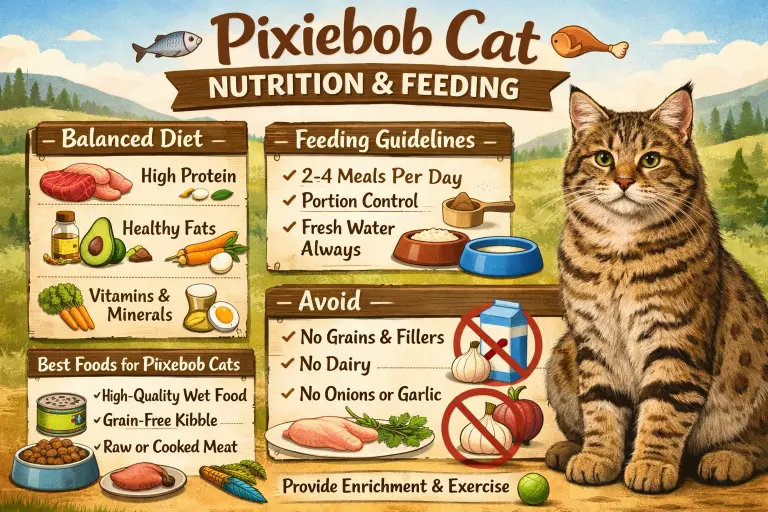
Pixiebob cats look wild and strong, but their food needs are not wild at all. Even though they may look like a small bobcat, Pixiebobs are fully domestic cats. Their bodies work the same way as other house cats. This means their diet should be built around normal feline nutrition rules, not special or extreme feeding plans. Understanding this helps owners avoid common mistakes caused by breed myths.
All cats, including Pixiebobs, are obligate carnivores. This means their bodies are designed to get most of their nutrition from animal-based foods. Protein is not optional for them—it is essential for muscle, organ health, and daily energy. While Pixiebobs are often larger and more muscular than average cats, bigger size does not automatically mean they need more food. What matters more is body condition, activity level, and age.
Pixiebobs also mature more slowly than some other cats. Kittens may grow for a longer time, and adults often carry more muscle mass. This makes balanced nutrition very important over the long term. Feeding too much “just because they’re big” can slowly lead to weight gain, joint strain, and low energy later in life. Feeding too little can affect muscle and coat quality.
A good Pixiebob diet focuses on balance, not perfection. The goal is steady energy, healthy digestion, good hydration, and a strong body condition. There is no single perfect food for every Pixiebob. Owners should aim to understand what nutrients matter most and how to choose foods that meet those needs safely.
Best Food Choices for Pixiebob Cats
When choosing food for a Pixiebob, the most important thing to look at is overall quality, not fancy labels or breed-specific promises. Pixiebobs do not need special “wild cat” formulas. They need complete and balanced cat food that follows recognized nutrition standards and uses animal protein as the main ingredient.
Wet food, dry food, and mixed feeding can all work for Pixiebobs. Wet food contains more moisture, which helps support hydration and urinary health. Dry food is easier to store and often more affordable. Mixed feeding combines both and works well for many households. The best choice often depends on your cat’s preferences, your budget, and your daily routine.
Protein quality matters more than protein percentage alone. Foods made with named animal sources are usually easier for cats to use. Fat is also important because it provides energy and supports skin and coat health. Carbohydrates are not harmful in small amounts, but they should not be the main part of the diet.
Cost is a real-life factor for most owners. A moderately priced food that is fed consistently and correctly is often better than an expensive food that causes stress or frequent changes. Sudden food switches can upset digestion, so stability matters.
Wet vs Dry vs Mixed Feeding for Pixiebob Cats
| Feeding Type | Benefits | Possible Downsides | Best For |
|---|---|---|---|
| Wet Food | High moisture, strong smell, good for hydration | Higher cost, spoils faster | Cats who drink little water |
| Dry Food | Convenient, longer shelf life, budget-friendly | Lower moisture content | Busy households |
| Mixed Feeding | Balanced hydration and convenience | Needs portion control | Most Pixiebob homes |
How Much and How Often to Feed a Pixiebob
Portion control is one of the hardest parts of feeding a Pixiebob. Because they are large cats, owners often give bigger portions than needed. Over time, this can lead to slow weight gain that is easy to miss under thick fur and muscle.
Calories matter more than bowl size. Two foods that look the same in volume can have very different calorie levels. This is why it’s helpful to read feeding guides on food packaging and adjust based on your cat’s body condition, not just hunger signals. Some Pixiebobs are very food-motivated and will ask for more even when they don’t need it.
Most Pixiebobs do well with scheduled meals instead of free feeding. Set meal times help control portions and make it easier to notice appetite changes. Adult cats often do well with two meals a day, while kittens need more frequent meals. Seniors may need smaller, more frequent meals depending on appetite and digestion.
Treats should be counted as part of daily intake, not extra food. Even small treats can add up over time. Using treats for training or bonding is fine, but they should stay a small part of the overall diet.
Feeding Frequency and Portion Overview
| Life Stage | Meals Per Day | Feeding Focus |
|---|---|---|
| Kitten | 3–4 | Growth and energy |
| Adult | 2 | Maintenance and balance |
| Senior | 2–3 | Appetite support and digestion |
Feeding Pixiebobs by Age and Lifestyle
Pixiebob kittens need more energy than adults because they are growing. They burn calories quickly and need frequent meals made for kittens. Kitten food supports bone growth, muscle development, and brain health. Skipping meals or feeding adult food too early can slow healthy growth.
Adult Pixiebobs usually settle into a steady routine. At this stage, the goal is weight stability and muscle maintenance. Indoor Pixiebobs often need fewer calories than outdoor or very active cats. Spayed or neutered cats may also need slightly smaller portions because their metabolism can slow down after surgery.
Senior Pixiebobs may show changes in appetite, digestion, or energy. Some eat less, while others beg more but lose muscle. Food texture, smell, and moisture can matter more as cats age. Owners should watch body condition closely and adjust portions gently rather than making sudden changes.
Multi-cat households add another challenge. Pixiebobs can be calm eaters, but food competition can lead to overeating or missed meals. Separate feeding areas and routine schedules help each cat get the right amount of food without stress.
Feeding Focus by Life Stage and Lifestyle
| Cat Type | Key Nutrition Goal |
|---|---|
| Kitten | Steady growth and development |
| Adult Indoor | Weight control and hydration |
| Adult Active | Energy balance |
| Senior | Muscle support and digestion |
Treats, Hydration, and Common Feeding Mistakes
Treats are a fun way to bond with your Pixiebob, but they should be used carefully. Treats are not nutritionally complete and should not replace meals. Many owners overfeed treats without realizing how many calories they add over time. A good rule is to keep treats as a small part of the daily diet.
Human food can be risky for cats. Some foods are unsafe, while others are simply too rich or salty. Even safe foods should only be offered rarely and in tiny amounts. Cats do not need human snacks to feel loved. Consistent meals, playtime, and attention matter more.
Water intake is just as important as food. Some Pixiebobs drink well, while others don’t. Fresh water should always be available. Bowls should be cleaned regularly and placed away from litter boxes. Some cats prefer wide bowls or moving water, but the main goal is easy access.
Common feeding mistakes include overfeeding, changing foods too often, ignoring body condition, and believing breed myths. Watching your cat’s energy, coat, and weight over time gives better information than any label or trend.
Treats and Feeding Safety Overview
| Item Type | General Rule |
|---|---|
| Cat Treats | Use sparingly |
| Human Food | Avoid or limit |
| Water Access | Always available |
| Feeding Changes | Make slowly |
For more general feline nutrition guidance, you can visit the World Small Animal Veterinary Association nutrition resources:
https://wsava.org/global-guidelines/nutrition-guidelines/

Ata Ur Rehman is the founder of Pet Age in Human Years Calculator, an educational platform that provides age conversion charts and lifespan guides for dogs, cats, birds, and other companion animals. His work focuses on helping pet owners understand how animal ages translate into human years using commonly accepted age conversion formulas and published lifespan averages.
The website compiles breed and species lifespan data from kennel clubs, breed organizations, and general animal lifespan studies to present simple and easy-to-understand guides for pet owners worldwide.
This website was created to centralize animal age conversion charts into one easy reference platform for pet owners.