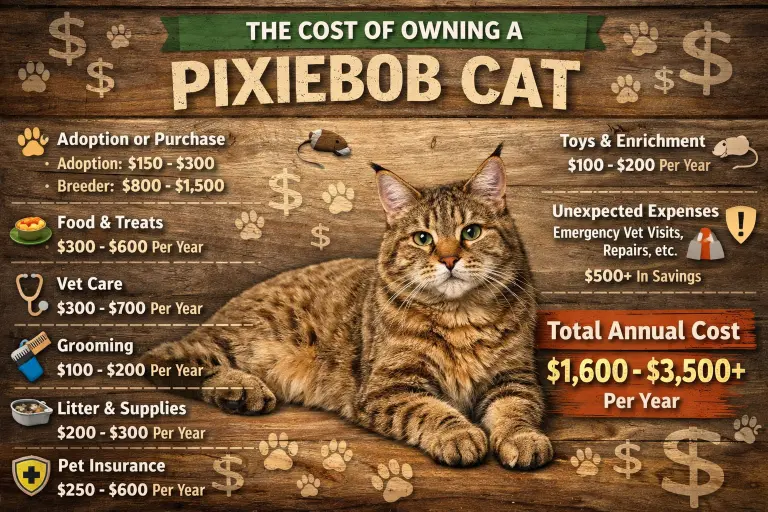
Owning a Pixiebob cat is not just about liking how they look or enjoying their dog-like personality. It is a long-term financial commitment that lasts well over a decade. Many people search for “Pixiebob cost of ownership” because they want to know if they can truly afford this breed, not just today, but years from now. This section explains what cost of ownership really means, beyond the price you pay to bring a cat home.
Cost of ownership includes every expense you will face during the cat’s life. Some costs happen only once, such as buying supplies or paying early vet bills. Other costs repeat every month or year, like food, litter, and health care. There are also unexpected costs that cannot be planned perfectly, such as emergencies or age-related illnesses. Looking at only one part of the cost can give a false sense of affordability.
Pixiebobs often cost more than average mixed-breed cats over time. They are larger, more active, and more social than many cats. These traits affect how much they eat, how much enrichment they need, and how much care they require. While they are not fragile cats, their size and energy level can lead to higher food use, more wear on supplies, and higher vet bills in some situations.
Understanding the full cost early helps people make responsible decisions. This guide is not meant to scare you or sell you anything. It is meant to help you decide if a Pixiebob fits your budget, lifestyle, and long-term plans. A cat should never become a financial burden or a source of stress. Knowing the numbers ahead of time protects both the owner and the cat.
Initial Cost of Buying and Setting Up a Pixiebob Cat
The first major expenses happen before or shortly after you bring a Pixiebob home. These are one-time or mostly one-time costs, but they can feel heavy because many of them happen close together. New owners often underestimate this stage, especially if they focus only on the cat’s purchase price.
Getting a Pixiebob usually costs more than adopting a regular shelter cat. Ethical breeders invest in health testing, proper care, and early socialization. Some people may also adopt adult Pixiebobs through rescues, which can reduce some early costs but not all of them. No matter where the cat comes from, the first year almost always costs more than later years.
Veterinary care is a major part of early expenses. New cats need full health checks, vaccinations, parasite prevention, and sometimes spaying or neutering if it has not already been done. Even a healthy kitten or adult cat will need several vet visits in the first year. These costs are normal and should be expected.
Supplies are another large part of the setup phase. Pixiebobs are big, strong cats, so cheaper items may wear out faster. Litter boxes need to be large, scratching posts need to be sturdy, and carriers need to support more weight. Buying durable items upfront can cost more, but it often saves money later by avoiding replacements.
Common One-Time Pixiebob Ownership Cost Categories
| Cost Category | What It Includes |
|---|---|
| Acquisition | Breeder or adoption fees |
| Initial vet care | Exams, vaccines, early treatments |
| Sterilization | Spay or neuter if not already done |
| Supplies | Litter boxes, bowls, carrier, scratching posts |
| Home setup | Beds, toys, safety items |
These costs do not repeat every year, but they set the foundation for your cat’s health and comfort. Skipping or delaying them often leads to higher costs later.
Monthly and Annual Costs of Owning a Pixiebob
Once the setup phase is over, most Pixiebob owners move into a steady pattern of monthly and yearly expenses. These costs are easier to plan for, but they add up slowly over time. Many owners feel comfortable month to month but are surprised when they look at the yearly total.
Food is one of the most consistent expenses. Pixiebobs are large, muscular cats with strong appetites. They often eat more than smaller cats, especially active adults. Feeding poor-quality food may seem cheaper at first, but it can increase vet visits later. Balanced nutrition is part of responsible ownership.
Litter is another ongoing cost that depends on the cat’s size and habits. Larger cats produce more waste, and some Pixiebobs prefer clean boxes, which means more frequent changes. Multi-cat homes will see this cost rise even faster.
Routine veterinary care usually happens once or twice a year. This includes wellness exams, vaccines when needed, and parasite prevention. These visits help catch problems early, which is usually cheaper and less stressful than treating advanced illness.
Pixiebobs also need mental and physical stimulation. They are social, intelligent cats that enjoy interaction. This can mean toys, puzzle feeders, or replacing worn scratching surfaces more often than with calmer breeds.
Typical Monthly vs Annual Cost Categories
| Expense Type | Monthly Pattern | Annual Pattern |
|---|---|---|
| Food | Regular purchase | Adjusts with age |
| Litter | Ongoing | Depends on usage |
| Routine vet care | Not monthly | Once or twice yearly |
| Preventive care | Some monthly | Often annual planning |
| Enrichment | Small but steady | Replacement over time |
These costs form the financial “baseline” of owning a Pixiebob. If your budget can handle these comfortably, you are on the right track.
Unexpected, Emergency, and Lifetime Pixiebob Costs
No cost guide is complete without talking about surprises. Unexpected expenses are not rare events. Over a cat’s lifetime, they are almost guaranteed. The question is not if they happen, but when.
Pixiebobs are active and curious. This can sometimes lead to injuries, swallowed objects, or accidents. Emergency vet visits are often expensive and stressful. Even one emergency can cost more than a full year of routine care. Planning for this reality is part of responsible ownership.
As Pixiebobs age, costs usually increase. Senior cats often need more vet visits, blood work, and medications. Mobility issues, dental problems, and chronic conditions become more common. These costs do not appear suddenly, but they do rise steadily in later years.
End-of-life care is another emotional and financial consideration. This may include pain management, special diets, or supportive treatments. While this guide does not go into medical decisions, it is important to understand that the final years are often the most expensive.
Short-Term vs Long-Term Cost Risks
| Time Frame | Common Cost Risks |
|---|---|
| Short-term | Accidents, sudden illness |
| Mid-life | Dental issues, weight management |
| Senior years | Chronic disease, medications |
| End-of-life | Comfort care and vet support |
Looking at lifetime cost helps shift thinking away from monthly affordability and toward long-term responsibility. A Pixiebob can live 13 to 15 years or more. Every year matters in planning.
Can You Afford a Pixiebob Cat Long Term?
Affording a Pixiebob is not about being rich. It is about stability, planning, and honesty. Many people can afford the purchase price but struggle with long-term costs. This section helps you think clearly about readiness, not desire.
Ask yourself if your income is stable enough to handle steady monthly costs plus surprises. If one emergency would cause serious financial harm, that is an important signal. Cats depend on their owners to make care decisions without delay.
Time is also a cost. Pixiebobs are social and often want interaction. Boredom can lead to behavior problems, which may create extra expenses or stress. If your schedule is very busy, you may need to spend more on enrichment or pet care support.
Household changes matter too. Moving, having children, or changing jobs can affect pet budgets. A Pixiebob will still need care no matter what else happens in your life.
Budget Readiness Self-Check
| Question | Yes | No |
|---|---|---|
| Can I cover monthly costs easily? | ⬜ | ⬜ |
| Can I handle a surprise vet bill? | ⬜ | ⬜ |
| Do I have time for daily interaction? | ⬜ | ⬜ |
| Can I commit for 15+ years? | ⬜ | ⬜ |
If several answers are “no,” it does not mean you are a bad person. It simply means now may not be the right time. Waiting is better than struggling later.For general feline cost and care education, you can also read trusted resources from organizations like the ASPCA:
https://www.aspca.org/pet-care/cat-care

Ata Ur Rehman is the founder of Pet Age in Human Years Calculator, an educational platform that provides age conversion charts and lifespan guides for dogs, cats, birds, and other companion animals. His work focuses on helping pet owners understand how animal ages translate into human years using commonly accepted age conversion formulas and published lifespan averages.
The website compiles breed and species lifespan data from kennel clubs, breed organizations, and general animal lifespan studies to present simple and easy-to-understand guides for pet owners worldwide.
This website was created to centralize animal age conversion charts into one easy reference platform for pet owners.