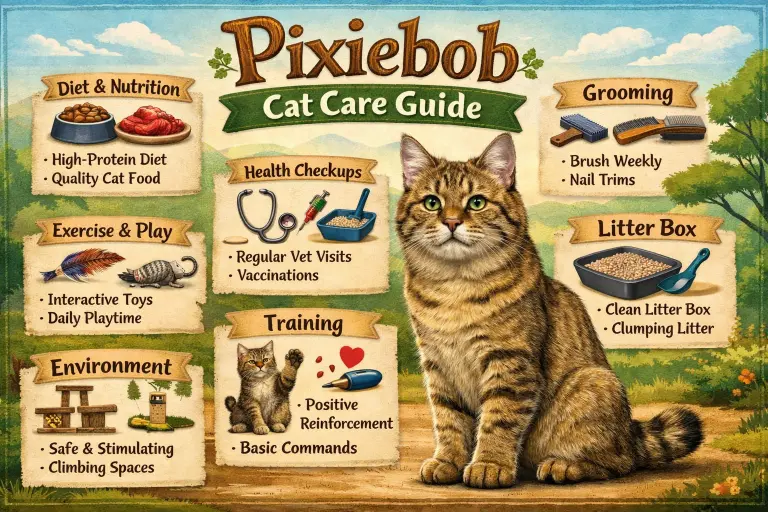
Pixiebob cats are not “average” cats when it comes to care. Many owners describe them as more dog-like than feline because of how closely they bond with people. This strong attachment affects how you should care for them every day. Pixiebobs usually want to be near their humans, follow them around the house, and take part in daily life. Because of this, they do not do well with long periods of isolation or boredom.
Their body type also plays a role in care. Pixiebobs are muscular, solid cats with a wild look, but they are fully domestic. Some have short coats, while others have longer coats, and many have extra toes (polydactyl paws). These physical traits mean grooming, nail care, and weight control need more attention than some owners expect. A Pixiebob that looks “big” should still feel firm and healthy, not soft or heavy.
Mental care is just as important as physical care. Pixiebobs are intelligent and curious. If they do not get enough mental activity, they may become frustrated. This frustration can show up as excessive meowing, destructive scratching, or trying to open doors and cabinets. Owners sometimes think this behavior is “bad,” but it is often a sign the cat needs more stimulation.
Pixiebobs are usually gentle and patient, which makes them good for families, but they still need structure. They do best in homes with routines, clear play times, and predictable care habits. Owners who enjoy interacting with their cat daily often find Pixiebobs very rewarding. Those looking for a low-effort or very independent cat may struggle with this breed’s needs.
Daily & Weekly Pixiebob Care Routine
Daily care for a Pixiebob goes beyond feeding and cleaning the litter box. These cats need daily interaction to stay calm and happy. Even short play sessions help release energy and reduce stress. Many Pixiebobs enjoy games like fetch, wand toys, or puzzle feeders that make them think.
The home environment matters a lot. Pixiebobs like to climb, watch, and explore. A boring space can lead to unwanted behavior. Scratching posts, cat trees, and window perches help meet these needs. Litter boxes should be large and cleaned often, as Pixiebobs tend to dislike dirty boxes more than some other cats.
Weekly care includes grooming, basic health checks, and refreshing toys. Brushing removes loose hair and helps you notice skin issues early. Checking ears, eyes, and paws once a week can help catch problems before they get serious. Rotating toys keeps the cat interested and prevents boredom.
Below is a simple table showing daily and weekly care tasks.
| Care Task | Daily | Weekly |
|---|---|---|
| Interactive play | Yes | — |
| Social time with people | Yes | — |
| Litter box cleaning | Yes | — |
| Brushing coat | — | 1–2 times |
| Nail and paw check | — | 1 time |
| Toy rotation | — | 1 time |
Time and effort are often underestimated by new owners. Pixiebobs do not need constant attention, but they do need regular engagement. The table below gives a realistic idea of owner effort.
| Care Area | Effort Level | Notes |
|---|---|---|
| Social interaction | Medium–High | Needs daily attention |
| Grooming | Low–Medium | Depends on coat length |
| Mental stimulation | Medium | Puzzle toys help |
| Physical activity | Medium | Short, frequent play is best |
Grooming, Health & Safety Considerations
Grooming a Pixiebob is usually simple, but it should not be ignored. Short-haired Pixiebobs need brushing about once a week, while long-haired Pixiebobs may need brushing two to three times a week. Regular brushing helps reduce shedding and hairballs and allows you to check for skin issues.
Polydactyl paws need special attention. Extra toes can trap dirt and may cause nails to grow in unusual directions. If nails are not trimmed regularly, they can grow into the paw pad, causing pain or infection. Checking paws weekly helps prevent this problem.
Health-wise, Pixiebobs are generally strong cats, but they can still develop common feline issues such as dental disease, obesity, or joint strain. Because they are muscular, weight gain is sometimes missed until it becomes serious. Feeling the ribs and watching how easily the cat jumps can help you notice changes early.
The table below explains grooming needs by coat type.
| Coat Type | Brushing Frequency | Extra Notes |
|---|---|---|
| Short coat | Once per week | Easy maintenance |
| Long coat | 2–3 times per week | Prevents mats |
| Polydactyl paws | Weekly checks | Watch nail growth |
Some warning signs are easy to miss. The table below helps explain what certain changes often mean.
| Warning Sign | What It Often Means |
|---|---|
| Less interest in play | Boredom or pain |
| Sudden weight gain | Overfeeding or low activity |
| Hiding more than usual | Stress or illness |
| Limping or stiffness | Joint or paw issue |
If you notice sudden changes in behavior, appetite, or movement, it is best to contact a veterinarian. Pixiebobs tend to hide pain until it becomes serious.
Common Pixiebob Care Mistakes to Avoid
One common mistake is assuming Pixiebobs are low-maintenance because they look calm. In reality, they need mental and social care to stay balanced. Ignoring playtime often leads to frustration behaviors like scratching furniture or constant vocalizing.
Another mistake is overfeeding. Pixiebobs have a solid build, which can make extra weight seem normal. Over time, this extra weight puts stress on joints and reduces activity. Measuring food and adjusting portions based on activity level helps prevent this issue.
Some owners also fail to provide enough vertical space. Pixiebobs enjoy climbing and observing their environment. Without proper outlets, they may jump onto unsafe surfaces or knock things over while exploring.
The table below shows common mistakes and better choices.
| Common Mistake | Better Care Choice |
|---|---|
| Skipping daily play | Short play sessions every day |
| Free-feeding food | Measured meals |
| Small litter boxes | Large, open boxes |
| Few toys | Rotate toys weekly |
Avoiding these mistakes helps keep your Pixiebob calm, healthy, and easier to live with.
Special Care Situations & Owner FAQs
Pixiebob kittens need extra social time and gentle handling. Early interaction helps them grow into confident adults. Safe play, simple routines, and positive experiences are very important during the first year.
Senior Pixiebobs may slow down, but they still need attention. Softer bedding, easier access to favorite spots, and gentle play help keep them comfortable. Watching for stiffness or changes in behavior is especially important in older cats.
In multi-cat homes, Pixiebobs usually do well if introductions are slow. They like companionship but still need personal space. Providing separate litter boxes, food bowls, and resting areas helps prevent stress.
Indoor-only Pixiebobs can live very happy lives if their environment is rich and interesting. Some owners choose supervised outdoor time using a harness, but this should only be done with proper training and safety checks.
Below is a simple comparison table for life stages.
| Life Stage | Key Care Focus |
|---|---|
| Kitten | Socialization, play, training |
| Adult | Routine, enrichment, weight control |
| Senior | Comfort, mobility, monitoring |
Frequently Asked Questions
Are Pixiebob cats high maintenance?
They are not high maintenance, but they do need daily interaction and mental stimulation.
Do Pixiebobs get lonely?
Yes, they can become lonely if left alone too often.
Are extra toes a health problem?
Not usually, but nails need regular checks.
Can Pixiebobs live in apartments?
Yes, if they have enough play and climbing space.
reference for further reading on feline care standards:
https://catfriendly.com

Ata Ur Rehman is the founder of Pet Age in Human Years Calculator, an educational platform that provides age conversion charts and lifespan guides for dogs, cats, birds, and other companion animals. His work focuses on helping pet owners understand how animal ages translate into human years using commonly accepted age conversion formulas and published lifespan averages.
The website compiles breed and species lifespan data from kennel clubs, breed organizations, and general animal lifespan studies to present simple and easy-to-understand guides for pet owners worldwide.
This website was created to centralize animal age conversion charts into one easy reference platform for pet owners.