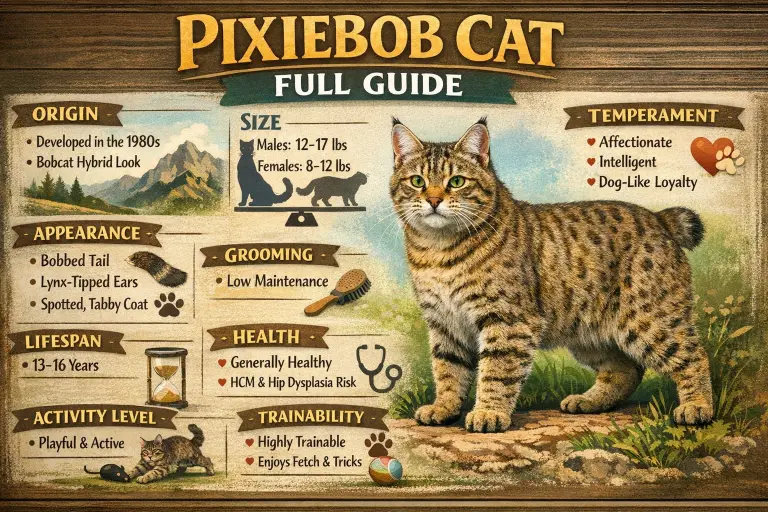
The Pixiebob cat is a rare and special breed that often makes people stop and look twice. At first glance, many think it is part wild bobcat because of its strong body, spotted coat, and short tail. In reality, the Pixiebob is a fully domestic cat with no proven wild ancestry. What makes this breed truly unique is how it combines a wild look with a calm, loving, and people-focused personality.
The breed started in the United States in the 1980s. A breeder named Carol Ann Brewer noticed several naturally short-tailed cats in the Pacific Northwest that looked similar to small bobcats. She carefully selected and bred these cats to keep their wild appearance while ensuring they had gentle, stable temperaments suitable for family homes. Over time, this selective breeding led to what we now call the Pixiebob.
One of the biggest myths about the Pixiebob is that it is a bobcat hybrid. While early stories and marketing made this claim popular, modern breed registries and genetic research do not support it. Major cat organizations recognize the Pixiebob as a domestic breed. The International Cat Association (TICA) officially recognized the Pixiebob in the 1990s, which helped bring more attention and trust to the breed.
Today, Pixiebobs are still considered uncommon. They are mostly bred in North America, and finding a responsible breeder can take time. Many owners say the wait is worth it. Living with a Pixiebob often feels more like sharing your home with a loyal companion than a typical independent cat. They tend to stay close to their humans, follow them around the house, and show strong emotional bonds.
Pixiebob Cat Appearance, Size, and Physical Traits
Pixiebobs are known for their solid, powerful build. They are medium to large cats and often feel heavier than they look. This is because they have dense bones and strong muscles, especially in the chest and legs. Males are usually larger than females, but both have a sturdy, athletic body.
The most noticeable feature is the tail. Pixiebob tails can be very short, slightly longer, or somewhere in between. Some are straight, while others have gentle bends. A full-length tail is allowed in pets but not always preferred in show cats. Another unusual trait is polydactyl paws. Many Pixiebobs have extra toes, which is accepted and even admired in the breed.
Their coat is usually a brown spotted tabby, which adds to their wild look. Pixiebobs can be shorthaired or longhaired. The coat has a soft but slightly rough texture that protects them well in cooler climates. Their eyes are often gold, brown, or green and sit under heavy brows, giving them a serious but gentle expression.
Below is a quick table to help you understand Pixiebob physical traits at a glance:
| Feature | Description |
|---|---|
| Average weight | Males: 12–18 lbs, Females: 8–14 lbs |
| Body type | Muscular, heavy-boned |
| Coat types | Shorthair and longhair |
| Coat color | Brown spotted tabby |
| Tail length | Very short to medium |
| Special traits | Polydactyl paws, bobbed tail |
These physical traits make the Pixiebob stand out, but they also mean this breed matures slowly. Many Pixiebobs do not fully grow until they are around four years old.
Pixiebob Cat Personality, Temperament, and Behavior
Pixiebobs are often described as “dog-like cats,” and this reputation is not just hype. They are known for their loyalty, calm nature, and strong desire to be near their people. Many owners say their Pixiebob greets them at the door, follows them from room to room, and even enjoys playing fetch.
This breed is affectionate but not usually clingy. Pixiebobs enjoy being close, sitting beside you, or resting nearby rather than demanding constant lap time. They are emotionally aware cats and often sense when their owner is stressed or sad. During these times, they may quietly stay close as a form of comfort.
Pixiebobs are not very loud. Instead of constant meowing, they use soft chirps, trills, and quiet sounds to communicate. This makes them a good choice for people who want an interactive cat without nonstop noise. Their intelligence is above average, and they enjoy puzzle toys, learning routines, and interactive games.
They usually do very well with children who are respectful. Their patient nature makes them less likely to scratch or panic. Pixiebobs also tend to get along with other cats and dogs, especially when introduced slowly. However, because they bond deeply with humans, they may struggle if left alone for long hours every day.
Here is a simple personality table for quick reading:
| Trait | Level |
|---|---|
| Affection | High |
| Independence | Medium |
| Intelligence | High |
| Vocal level | Low to moderate |
| Energy | Moderate |
| Good with kids | Yes |
This balance of calm behavior and emotional connection is why many people choose the Pixiebob as a long-term companion.
Pixiebob Cat Care, Health, and Cost to Own
Caring for a Pixiebob is not difficult, but it does require consistency. Grooming needs depend on coat length. Shorthaired Pixiebobs usually need brushing once a week, while longhaired ones benefit from brushing two to three times weekly. Their thick coats shed more during seasonal changes.
Pixiebobs need daily play and mental activity. They are not hyper, but boredom can lead to unwanted behaviors like scratching furniture or opening cabinets. Interactive toys, short play sessions, and even leash walks can help keep them happy.
In terms of health, Pixiebobs are generally strong cats. However, like many larger breeds, they can be at risk for hypertrophic cardiomyopathy (HCM), a heart condition. Responsible breeders screen for this issue. Their average lifespan is around 13 to 15 years, and many live longer with good care.
Owning a Pixiebob can be more expensive than owning a common domestic cat. Kitten prices are higher due to rarity and careful breeding. Ongoing costs include quality food, toys, grooming tools, and regular vet visits.
| Cost Type | Estimated Range |
|---|---|
| Kitten price | $900–$2,500 |
| Annual vet care | $200–$400 |
| Grooming supplies | $50–$150 per year |
| Pet insurance | $20–$40 per month |
Is the Pixiebob Cat Right for You? Pros, Cons, and Comparisons
The Pixiebob is an excellent choice for people who want a loyal, calm, and interactive cat. They are ideal for families, single owners, and even seniors who want companionship without extreme energy levels. Their adaptable nature allows them to do well in apartments as long as they receive enough attention and play.
However, this breed is not for everyone. Pixiebobs do not enjoy being ignored for long periods. If you travel often or work very long hours, this breed may become lonely. Their size also means higher food and medical costs compared to smaller cats.
Pros and cons are easier to see in table form:
| Pros | Cons |
|---|---|
| Loyal and people-focused | Can dislike being alone |
| Gentle with children | Higher purchase price |
| Intelligent and trainable | Needs mental stimulation |
| Quiet communication | Rare and hard to find |
Many people compare Pixiebobs to breeds like the American Bobtail, Maine Coon, and Bengal. Pixiebobs are usually calmer than Bengals and more emotionally focused than Maine Coons. If you want a wild look without wild behavior, the Pixiebob often stands out as the better option.For more official breed information, you can visit the International Cat Association website:
https://tica.org

Ata Ur Rehman is the founder of Pet Age in Human Years Calculator, an educational platform that provides age conversion charts and lifespan guides for dogs, cats, birds, and other companion animals. His work focuses on helping pet owners understand how animal ages translate into human years using commonly accepted age conversion formulas and published lifespan averages.
The website compiles breed and species lifespan data from kennel clubs, breed organizations, and general animal lifespan studies to present simple and easy-to-understand guides for pet owners worldwide.
This website was created to centralize animal age conversion charts into one easy reference platform for pet owners.