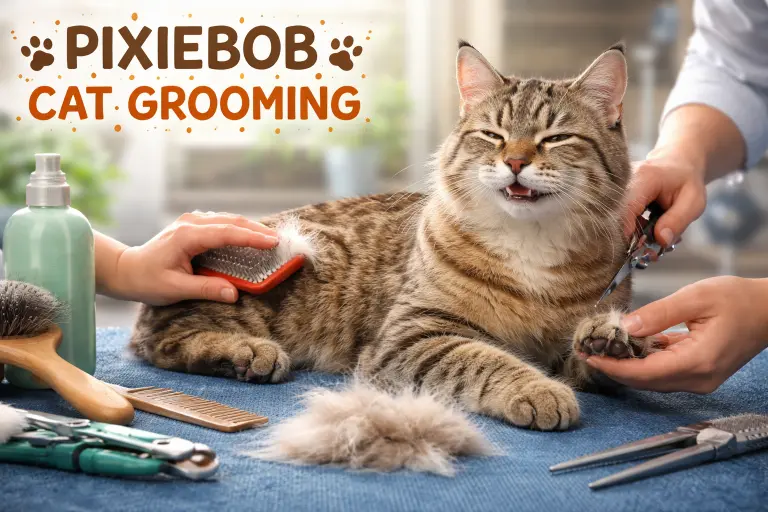
Pixiebob cats are often described as “easy” or “low maintenance,” but that description can be misleading for new owners. While Pixiebobs are generally hardy, social, and confident cats, they still have real grooming needs that should not be ignored. Grooming is not just about looks. It plays a big role in skin health, comfort, and early problem detection. Understanding what makes this breed different helps owners groom safely and correctly.
One thing that sets Pixiebobs apart is their coat variety. Some Pixiebobs have short coats, while others have medium to long coats. Both coat types can shed, collect loose hair, and develop tangles if not cared for. Long-haired Pixiebobs are more likely to form mats, especially around the chest, belly, and behind the legs. Short-haired Pixiebobs shed less visibly, but loose hair can still build up and cause skin irritation.
Pixiebobs also tend to have a thick, plush coat with a soft underlayer. This means brushing is not only about removing surface hair. It also helps remove dead undercoat hair that can trap heat, dirt, and oil close to the skin. If this hair is not removed, some Pixiebobs may develop flaky skin or greasy patches over time, especially during seasonal shedding.
Temperament is another important factor. Pixiebobs are known for being calm, confident, and people-oriented. Many tolerate grooming better than nervous or high-energy breeds. However, tolerance does not mean unlimited patience. Even relaxed Pixiebobs can become stressed if grooming sessions are too long, too rough, or too frequent. Grooming should always be gentle, slow, and respectful of the cat’s signals.
Indoor and outdoor lifestyle also affects grooming needs. Indoor Pixiebobs usually stay cleaner, but they still shed and need routine care. Outdoor or indoor-outdoor Pixiebobs are more likely to pick up dirt, plant debris, or oily buildup on their coat. These cats often need more frequent brushing and closer skin checks.
Pixiebob Coat Types and Grooming Needs
| Coat Type | Shedding Level | Mat Risk | Grooming Focus |
|---|---|---|---|
| Short-haired Pixiebob | Low to moderate | Low | Remove loose hair, skin health |
| Long-haired Pixiebob | Moderate to high | Medium to high | Mat prevention, undercoat care |
Brushing and Coat Care for Pixiebob Cats
Brushing is the most important grooming task for Pixiebob cats. Many owners think that because Pixiebobs groom themselves, brushing is optional. This is not true. Cats groom with their tongues, but they cannot remove all loose hair or prevent mats in hard-to-reach areas. Brushing fills that gap and keeps the coat healthy.
For short-haired Pixiebobs, brushing helps remove loose hair before it sheds onto furniture or gets swallowed during self-grooming. Hair swallowed during grooming can contribute to hairballs. Regular brushing also spreads natural oils across the coat, which keeps the skin healthy and the fur smooth.
Long-haired Pixiebobs need brushing even more. Their fur can tangle easily, especially under the arms, around the neck, on the belly, and near the base of the tail. Mats often start small and close to the skin. If they are not caught early, they can tighten, pull on the skin, and cause pain. Severe mats should never be cut out at home, as the skin underneath is thin and easy to injure.
Brushing should always be gentle and slow. Start with short sessions, especially if your Pixiebob is young or new to grooming. One or two minutes is enough at first. Over time, you can slowly increase the length of sessions as your cat becomes more comfortable. Always brush in the direction the fur grows, and never pull through resistance. If the brush catches, stop and gently work around the area instead of forcing it.
Seasonal shedding is common in Pixiebobs, usually in spring and fall. During these times, brushing frequency should increase. This helps reduce shedding, keeps the cat comfortable, and prevents loose hair from forming clumps in the coat.
Brushing Frequency for Pixiebob Cats
| Pixiebob Type | Normal Season | Shedding Season |
|---|---|---|
| Short-haired | 1–2 times per week | 2–3 times per week |
| Long-haired | 3–4 times per week | Daily or every other day |
Signs to stop brushing include tail flicking, ears turning sideways or flat, skin rippling, growling, or sudden attempts to leave. Stopping early builds trust and makes future grooming easier.
Nail, Ear, and Basic Hygiene Care
Brushing is only one part of Pixiebob grooming. Basic hygiene tasks like nail trimming, ear checks, and eye care are also important. These tasks do not need to be done every day, but they should be done regularly and carefully.
Pixiebob cats tend to be strong and active, which means their nails can grow thick and sharp. Indoor Pixiebobs especially need nail trims because they do not wear their nails down naturally. Long nails can snag on carpets, scratch people, or grow into the paw pad if left too long.
Nail trimming should be calm and quick. Only the sharp tip of the nail should be trimmed. Never cut into the pink area inside the nail, called the quick. If your Pixiebob struggles, it is better to trim one or two nails and stop than to force all of them at once. Many owners trim nails every two to three weeks.
Ears should be checked, not cleaned deeply, unless advised by a vet. A healthy Pixiebob ear is pale pink with a small amount of wax. Strong smells, redness, swelling, or dark discharge are warning signs. Never insert cotton swabs deep into the ear canal. Simply wipe the visible outer area if needed.
Eye care is usually simple. Some Pixiebobs may have small amounts of clear or light brown discharge in the corners of the eyes. This can be gently wiped away with a clean, damp cloth. Thick, yellow, or green discharge is not normal and should be checked by a vet.
Dental care is often ignored, but it matters. Pixiebobs have strong jaws, but they can still develop plaque and gum disease. Even basic steps like regular mouth checks and occasional brushing with cat-safe toothpaste can help prevent problems later in life.
Pixiebob Hygiene Tasks and Frequency
| Task | How Often | Notes |
|---|---|---|
| Nail trimming | Every 2–3 weeks | Trim only the tip |
| Ear check | Every 2–4 weeks | Clean only if dirty |
| Eye wipe | As needed | Use a soft, damp cloth |
| Dental care | Weekly check | Brushing if tolerated |
Never attempt deep ear cleaning, tooth extractions, or mat cutting close to the skin at home. These tasks belong with professionals.
Bathing Pixiebob Cats: When It’s Needed and When It’s Not
One of the most common questions owners ask is whether Pixiebob cats need baths. In most cases, the answer is no. Healthy Pixiebobs that are brushed regularly usually stay clean on their own. Bathing too often can dry out the skin and damage the coat.
That said, there are situations where bathing may be helpful. Some Pixiebobs develop oily buildup, especially around the belly or tail base. Others may get into something dirty or sticky, especially if they go outdoors. In these cases, a gentle, cat-safe bath may be appropriate.
Bathing should never be done as a routine grooming task. It should only be done when there is a clear reason. If a Pixiebob strongly resists water, forcing a bath can cause stress and fear that lasts long after the bath is over. Stress can make future grooming much harder.
For light dirt or grease, spot cleaning is often a better choice. A damp cloth or pet-safe wipe can clean small areas without soaking the whole cat. This approach is less stressful and safer for most Pixiebobs.
Never use human shampoo, dish soap, or scented products on a Pixiebob. These can irritate the skin and cause allergic reactions. If a bath is needed, keep it short, use warm (not hot) water, and dry the cat thoroughly afterward.
Bathing Decision Guide for Pixiebob Cats
| Situation | Full Bath Needed? | Better Option |
|---|---|---|
| Normal shedding | No | Brushing |
| Light dirt or grease | No | Spot cleaning |
| Strong odor or sticky mess | Sometimes | Short, gentle bath |
| Medical issue | Vet directed | Follow vet advice |
If your Pixiebob becomes aggressive, panicked, or extremely stressed during bathing attempts, stop immediately and seek professional help instead.
Pixiebob Grooming Schedule, Safety, and When to Get Help
A grooming schedule helps owners stay consistent without overdoing it. Pixiebobs do best with predictable, calm grooming routines. Short, regular sessions are better than long, stressful ones.
Safety should always come first. Grooming should never involve force, scruffing, or pinning a cat down. These methods may get the job done once, but they damage trust and increase fear. A calm environment, gentle handling, and patience make grooming safer for both the cat and the owner.
Learning stress signals is important. Signs like flattened ears, tail whipping, growling, sudden biting, or stiff body posture mean the cat has had enough. Stopping at the first signs of stress prevents escalation and keeps grooming positive.
There are times when professional help is the best choice. Severe mats, aggressive behavior, painful skin conditions, or medical concerns should be handled by a professional groomer or veterinarian. Waiting too long can make problems worse and more expensive to fix.
Pixiebob Grooming Schedule Overview
| Grooming Task | Frequency |
|---|---|
| Brushing | 1–4 times per week |
| Nail trimming | Every 2–3 weeks |
| Ear and eye check | Monthly |
| Bathing | Rare, as needed |
| Professional grooming | When problems arise |
A well-groomed Pixiebob is not about perfection. It is about comfort, health, and trust. Owners who focus on gentle care and consistency usually have the best results.For more general feline care guidance supported by veterinary experts, you can visit the American Veterinary Medical Association’s cat care resources: https://www.avma.org/resources-tools/pet-owners/petcare/cats

Ata Ur Rehman is the founder of Pet Age in Human Years Calculator, an educational platform that provides age conversion charts and lifespan guides for dogs, cats, birds, and other companion animals. His work focuses on helping pet owners understand how animal ages translate into human years using commonly accepted age conversion formulas and published lifespan averages.
The website compiles breed and species lifespan data from kennel clubs, breed organizations, and general animal lifespan studies to present simple and easy-to-understand guides for pet owners worldwide.
This website was created to centralize animal age conversion charts into one easy reference platform for pet owners.