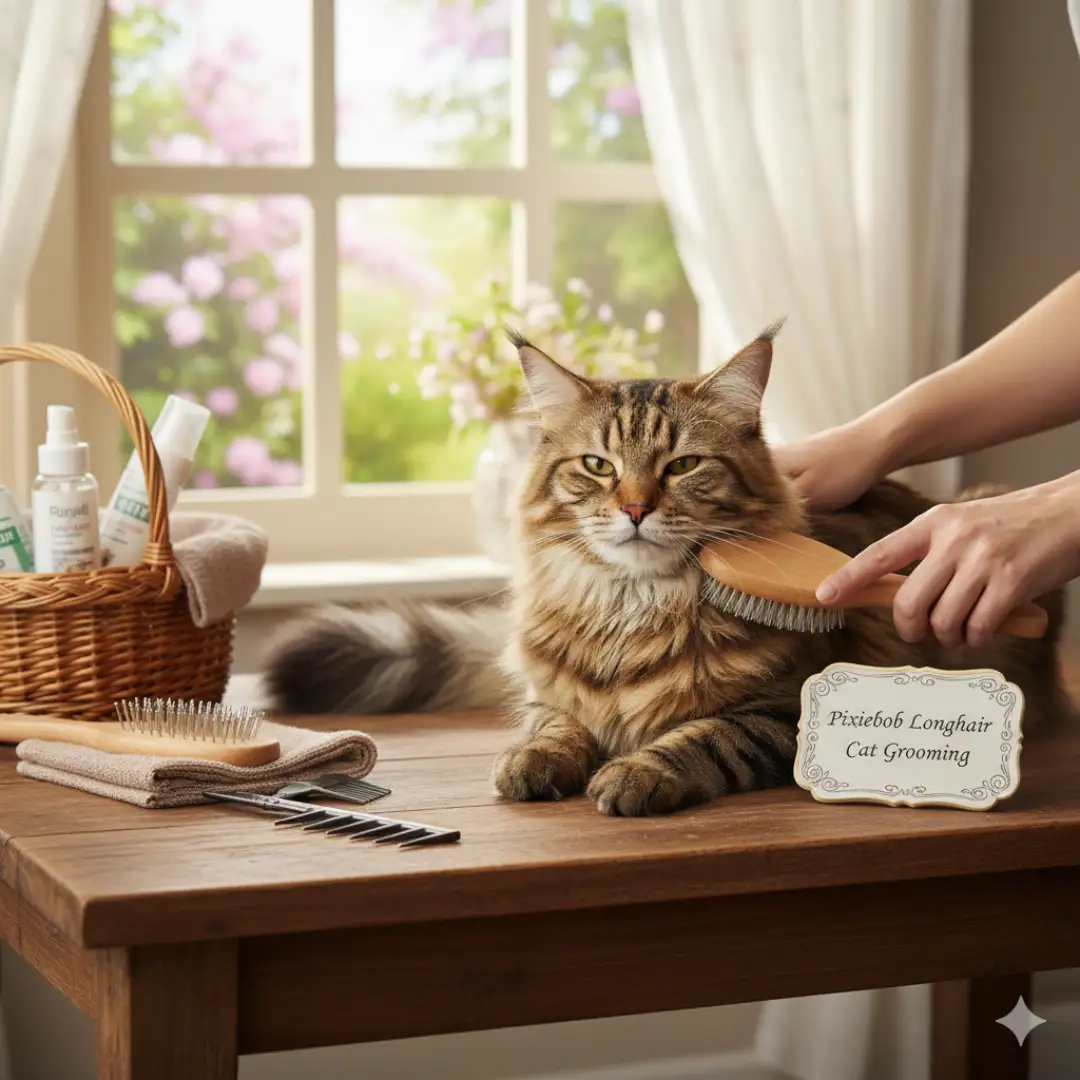
Pixiebob longhair cats are unique because of their soft, dense, and fluffy coats. Unlike short-haired cats, their fur can grow thick under the body and around the tail. Grooming is important not only to keep them looking beautiful but also to prevent tangles, mats, and skin problems. Even if your cat spends most of the time indoors, regular grooming helps remove loose hair, reduces hairballs, and keeps their skin healthy.
Long-haired Pixiebobs also have seasonal shedding cycles. In spring and fall, they may shed more because their undercoat adjusts to the temperature. Without proper brushing, this can lead to large mats forming behind the ears, under the legs, and around the tail. Mats are painful for cats, and removing them incorrectly can hurt the skin. Regular grooming keeps your cat comfortable and happy.
Kittens, adults, and senior cats have different grooming needs. Kittens have finer fur and may not tolerate long brushing sessions. Adult Pixiebobs usually handle brushing better but still require patience. Senior cats often have slower grooming habits and may need extra care because their skin can be fragile and joints stiff. Understanding your cat’s age and coat type helps create a safe grooming routine.
Finally, grooming isn’t just about hair. While brushing and combing are the main tasks, it’s also a chance to check your cat for lumps, bumps, parasites, or skin irritations. Pixiebobs are generally friendly but may be nervous if grooming is rushed. Start grooming in a calm, quiet environment and use gentle strokes. This helps your cat trust you and even enjoy the process over time.
Daily & Weekly Grooming Routine (Brushing + Tools)
Brushing your Pixiebob longhair should be part of your regular routine. Start with short sessions, especially for kittens, and gradually increase the time as your cat gets used to it. Use a combination of a slicker brush and a wide-tooth comb to reach all layers of fur. Begin with gentle strokes along the back and sides, then move to areas that mat easily, such as under the legs, around the neck, and behind the ears.
Daily grooming is ideal for Pixiebob longhairs with very dense coats, while a weekly routine may work for cats with less undercoat. The key is consistency. Even short brushing sessions prevent tangles from forming and help remove loose hair before it turns into mats. Always observe your cat’s reactions. If your cat becomes tense, stop and try again later. Positive reinforcement with treats or gentle petting can help your cat associate brushing with a good experience.
Mats form when fur gets tangled and clumps together. Avoid pulling or cutting mats without proper tools, as this can cause pain and bleeding. For stubborn tangles, use a mat splitter or detangling comb and work slowly. If a mat is too tight, it’s safer to ask a professional groomer to remove it. Regular brushing prevents these problems before they start.
shows recommended grooming tools and what each is used for with long-haired Pixiebobs:
| Tool | Purpose | Tips for Use |
|---|---|---|
| Slicker brush | Removes loose hair and surface tangles | Brush gently in the direction of hair growth |
| Wide-tooth comb | Works through undercoat | Start at ends and move toward skin to prevent pulling |
| Mat splitter | Breaks small mats | Use only on mats, not on smooth fur |
| Soft bristle brush | Finishing brush for shine | Use for daily light brushing to distribute natural oils |
| Grooming gloves | Remove loose fur while petting | Good for nervous cats who dislike brushes |
Nail Trimming, Bathing & Other Care Essentials
Nail trimming is an essential part of grooming for all cats. Pixiebobs’ nails grow quickly and can get sharp if not trimmed regularly. Always use a proper cat nail trimmer and avoid cutting the quick, which is the pink part inside the nail containing nerves and blood vessels. Trimming just the tip is usually safe. If your cat resists, try wrapping them gently in a towel or using short sessions with breaks.
Bathing is not required for every long-haired cat. Most Pixiebobs can stay clean with regular brushing and spot cleaning. Only bathe your cat if they are very dirty, sticky, or have a skin condition advised by a vet. When bathing, use lukewarm water, a gentle cat shampoo, and avoid getting water in their ears or eyes. Dry them thoroughly with a soft towel. Never use human shampoo as it can irritate a cat’s skin.
Ear and eye care are simple but important. Check your cat’s ears weekly for wax buildup or unusual odor, which may indicate an infection. Use a damp cotton ball to gently clean the outer ear. For eyes, wipe away tear stains or discharge with a soft, damp cloth. Never use cotton swabs inside the ear canal, as this can cause serious injury.
provides a safe checklist for bath and nail care:
| Task | How Often | Safety Tip |
|---|---|---|
| Nail trimming | Every 2-3 weeks | Trim only the tip, avoid the quick |
| Bathing | Only as needed | Use cat-specific shampoo, lukewarm water |
| Ear cleaning | Weekly | Clean only outer ear with cotton ball |
| Eye wiping | Weekly or as needed | Use damp cloth, do not touch eyeball |
| Spot cleaning fur | As needed | Use waterless shampoo or damp cloth for small dirty spots |
Safety, Stress Signals & Common Grooming Mistakes
Grooming should be a calm experience for your Pixiebob. Watch their body language carefully. Flattened ears, twitching tails, dilated pupils, or growling are signs your cat is stressed. Stop the session and allow your cat to relax before continuing. For very nervous cats, try shorter sessions, grooming gloves, or brushing during quiet bonding time.
Some common mistakes include brushing too fast, pulling on mats, trimming nails too short, or bathing unnecessarily. Over-brushing can irritate the skin, while under-brushing can cause mats and hairballs. Avoid forcing your cat to stay still. Using treats, soft words, and gentle strokes helps your cat feel safe and builds trust.
Stress signals during grooming can be subtle. Cats may lick their lips, yawn repeatedly, or shift their weight. Learning to recognize these signals prevents injury to both you and your cat. Always handle your Pixiebob with care, supporting their body and avoiding sudden movements.
shows common stress signals and what to do:
| Stress Signal | Meaning | Action |
|---|---|---|
| Flattened ears | Fear or irritation | Stop brushing, allow calm time |
| Tail flicking | Annoyance or stress | Pause, try gentle petting first |
| Dilated pupils | Anxiety | Speak softly, reduce handling time |
| Hissing or growling | Definite discomfort | Stop session immediately |
| Attempting to escape | High stress | Wrap in towel if needed, resume later |
Grooming Frequency Guide & Quick Reference
Maintaining a schedule helps keep your Pixiebob longhair healthy and reduces the chance of matting or hairballs. Daily brushing is ideal for cats with very dense coats, while weekly brushing is sufficient for others. Nails should be checked every two weeks, with trimming every 2–3 weeks. Bathing is only as needed, and ear and eye checks should happen weekly. Senior cats may need shorter, more frequent sessions to prevent stress.
Seasonal shedding may require extra brushing in spring and fall. Indoor cats may shed less than outdoor cats but still need grooming. Keep grooming sessions short and consistent. Over time, your cat will learn to enjoy the routine, which strengthens the bond between you.
shows a simple grooming planner for reference:
| Task | Daily | Weekly | Monthly | Seasonal |
|---|---|---|---|---|
| Brushing | ✔ | Optional for short sessions | Extra sessions during shedding | |
| Nail check | ✔ | Trim if needed | ||
| Bathing | Only if dirty | |||
| Ear cleaning | ✔ | |||
| Eye cleaning | ✔ | |||
| Spot cleaning | As needed |
Regular grooming is more than a chore — it is an opportunity to connect with your Pixiebob, monitor their health, and prevent painful mats or infections. With patience, gentle handling, and consistency, your cat will remain comfortable, healthy, and happy throughout their life. If you encounter severe mats, stubborn behavior, or skin problems, consult a professional groomer or veterinarian.For more tips on keeping your long-haired cat healthy, visit ASPCA Cat Care.

Ata Ur Rehman is the founder of Pet Age in Human Years Calculator, an educational platform that provides age conversion charts and lifespan guides for dogs, cats, birds, and other companion animals. His work focuses on helping pet owners understand how animal ages translate into human years using commonly accepted age conversion formulas and published lifespan averages.
The website compiles breed and species lifespan data from kennel clubs, breed organizations, and general animal lifespan studies to present simple and easy-to-understand guides for pet owners worldwide.
This website was created to centralize animal age conversion charts into one easy reference platform for pet owners.