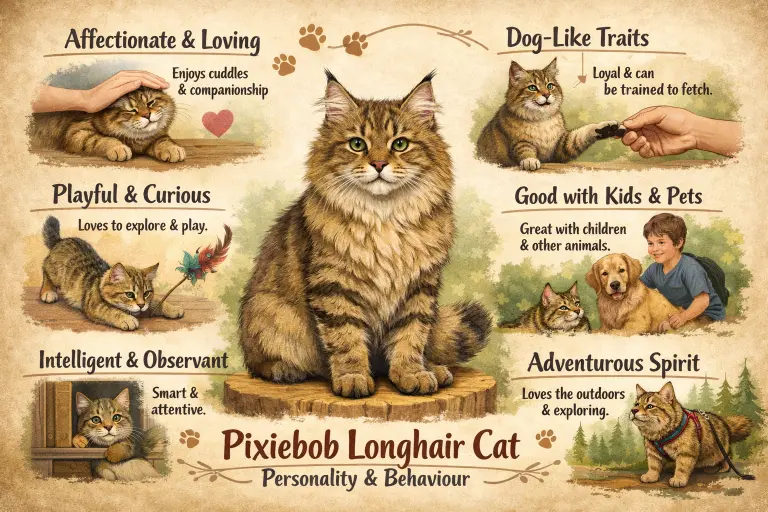
The Pixiebob Longhair is a cat that many people describe as friendly, playful, and curious. Unlike some cat types that seem shy or distant, Pixiebobs often act like they truly want to be part of your family’s daily life. They are built like medium to large cats with a sturdy body and expressive faces, and their behavior often matches this bold, confident look. When you spend time with a Pixiebob Longhair, you may notice they study their surroundings carefully, follow you around the house, and react to small changes in routines. This doesn’t happen by accident — it’s a part of who they are.
Many people wonder why Pixiebobs seem so “different” from other cats. Part of it comes from their natural instincts, which make them very aware of what’s happening around them. They notice sounds, movement, and even small objects better than many other cats. This awareness can show up as curiosity — the Pixiebob might tap an object with its paw, explore a new box right away, or find the sunny spots in the home before anyone else.
One of the most interesting traits of Pixiebob Longhairs is how social they can be. Yes, cats are often thought of as independent, and Pixiebobs are no exception, but they also form strong bonds with their family members. Many will approach you without being called, sit near you on the couch, and even greet you at the door. This behavior doesn’t look like clinginess; it’s more like friendly teamwork. They want to be around you, but they won’t demand attention loudly or aggressively.
It is also important to remember that every Pixiebob Longhair has its own unique personality, just like people. Some will be more outgoing and playful, while others may be quieter and calm. The name “Pixiebob” might remind you of a fairy tale creature — and in many ways, their behavior is just as charming and magical. The rest of this article will help you understand how they think, how they express themselves, and what makes their personality so special.
Core Personality Traits
When people search for information about Pixiebob Longhairs, they often want to understand what makes these cats behave the way they do. Below is a clear table that shows common behavior traits of Pixiebob Longhairs and what these traits usually mean. This table is designed so anyone can skim it quickly and understand key personality features.
| Trait | Typical Behavior | What it Means |
|---|---|---|
| Social Bonding | Often follows family around | Friendly and people-oriented |
| Affection Style | Likes gentle cuddles or sitting near a person | Warm but not clingy |
| Playfulness | Enjoys chasing toys, interactive play | Needs stimulation and engagement |
| Vocalization | Chirps, trills, and soft meows | Communicates moods without loud demands |
| Intelligence | Learns routines, responds to play cues | Quick to solve simple problems |
| Curiosity | Explores new objects and areas | Loves novelty and mental stimulation |
| Independence | Comfortable alone for short times | Not overly needy |
Social Bonding
Pixiebob Longhairs are often described as “people cats.” This does not mean they are clingy or needy, but it does mean they enjoy being part of what you are doing. You might find your Pixiebob following you from room to room, lying nearby while you work, or curling up on the couch beside you. This behavior shows that they feel safe and connected to their humans.
Affection Style
Each cat shows affection differently, and Pixiebob Longhairs are no exception. Some will enjoy long cuddle sessions, while others may prefer gentle head bumps or leaning against your legs. What makes them stand out is their calm, respectful way of showing love. They rarely seem pushy or demanding. Instead, they communicate with soft gestures that are easy to understand once you pay attention.
Playfulness & Intelligence
These cats are smart and playful. Pixiebobs love toys that move, puzzles that hide treats, and routines that allow them to learn new games. Their intelligence shows in how they watch your actions and mimic simple behaviors. For example, many Pixiebobs will learn where toys are stored and bring them to you when playtime begins. They are quick to figure out interactive toys and often prefer toys they can chase, pounce on, or bat around.
Vocalization
When Pixiebob Longhairs “talk,” they do so in friendly, often soft sounds. Many owners describe their Pixiebobs as chirping or trilling, especially when excited or curious. These sounds are not usually loud or demanding; they are more like a conversation starter. Some Pixiebobs also have a soft meow they use to get your attention, but most are not as vocal as breeds like Siamese cats. Their vocal style is gentle and expressive.
How They Communicate
Understanding how Pixiebob Longhairs communicate is an important part of bonding with them. Cats use more than just meows — they use body language, eye contact, tail movement, and even the position of their ears to communicate feelings and intentions. When you learn these signals, it becomes easier to know what your Pixiebob is trying to say.
Body Language
A relaxed Pixiebob will often hold its body in a comfortable, loose posture. Their tail might be upright or gently swaying, their ears forward, and their eyes soft. If the cat is interested in something, you might notice it leaning forward, ears alert, and eyes widening slightly. When frightened or unsure, a Pixiebob might tuck its tail, flatten its ears, or lower its body close to the ground.
One common body language behavior is head bumping. When your Pixiebob bumps its head against you, it is marking you with scent glands in its cheeks and showing a strong social bond. Another common behavior is slow blinking. If your Pixiebob looks at you and slowly closes its eyes, this is a sign of trust — you can even slow blink back to show comfort and calm connection.
Tail Signals
The tail is one of the most expressive parts of a cat’s body. Pixiebob Longhairs with a gently raised tail are usually content and comfortable. A fast swishing tail may show excitement or focus during play. A puffed up tail, on the other hand, can mean the cat feels startled or defensive. Understanding the tail signals helps you respond in a way that makes your cat feel safe.
Vocalizations Explained
Pixiebob Longhairs communicate with a range of vocal sounds. Trills and chirps are common when they are happy or curious. Soft meowing can be an invitation to interact, while a series of short chirps might happen when they watch birds, insects, or something moving outside. Unlike some talkative breeds, Pixiebobs generally speak when they have something to “say,” instead of being continuously chatty.
Social Behavior With Humans, Pets & Environment
Pixiebob Longhairs are known for their social but balanced behavior. They enjoy being part of the family without being overly demanding. Let’s break this down into how they relate to people, other animals, and their surroundings.
Interaction With Humans
Many Pixiebob Longhairs enjoy interacting with adults, children, and even guests once they feel safe. Most are patient and tolerant, but it’s important to remember that each cat has its own comfort zone. Some may enjoy being held, while others prefer to sit nearby and observe. Respecting a Pixiebob’s personal space while offering gentle play and affection builds trust over time.
Because of their intelligence and curiosity, Pixiebobs often learn household routines quickly. They may greet you when you come home, follow you to the kitchen, or sit near you during quiet moments. This behavior is not clingy — it’s simply an expression of comfort and attachment. Many owners describe their Pixiebobs as “loyal but not smothering.”
Behavior With Other Cats
Pixiebob Longhairs generally do well with other cats, especially when properly introduced and given time to adjust. They tend to be calm and respectful, though they may show competitive behavior during play or when resources like food bowls and resting spots are close together. This competition is normal cat behavior, not aggression.
Introducing a new cat to a Pixiebob should happen slowly. Allow them to smell each other under closed doors, swap bedding, and spend short supervised time together before full interaction. With gradual introductions, Pixiebobs can build friendly relationships with housemates.
Interaction With Dogs and Small Animals
Many Pixiebob Longhairs adapt well to living with dogs, especially gentle and calm ones. Because Pixiebobs are confident but not overly bold, they typically observe new animals carefully before interacting. Slow, supervised introductions help both pets learn each other’s signals. Some Pixiebobs may prefer to keep a respectful distance from smaller animals like rabbits or rodents to avoid stress.
Comfort With Environment
Pixiebob Longhairs are curious explorers. They often enjoy climbing on cat trees, watching outside from window perches, and investigating boxes or new toys. Providing safe spaces for climbing, perching, and resting can help satisfy their natural curiosity and reduce stress. A secure environment makes them feel confident and relaxed.
Common Behavior Questions (FAQs)
People often have questions about how Pixiebob Longhairs behave. Here are some of the most asked questions about their personality and what these behaviors usually mean.
Are Pixiebob Longhairs Friendly?
Yes, most Pixiebob Longhairs are friendly with people and enjoy being part of a household. They are not usually shy or fearful, but like all cats, they may take time to warm up to new people.
Do Pixiebobs Like to Be Held?
Some do and some don’t. Many Pixiebobs enjoy gentle petting and close contact, but they might prefer to be near you rather than held for long periods. Understanding your cat’s preference helps build trust.
Are They Easy to Train?
Pixiebob Longhairs are intelligent and can learn routines, tricks, and interactive games. They respond well to positive encouragement and play-based interaction.
Why Does My Pixiebob Chirp?
Chirping often means curiosity or excitement. Cats may chirp when they see birds, watch moving objects, or want to interact with you. It’s their way of communicating attention or interest.
Do Pixiebobs Get Along With Other Pets?
Most do, especially with slow introductions and respectful boundaries. Every cat is different, but many Pixiebobs adapt well to living with other cats and calm dogs.
Are They High-Energy Cats?
They tend to be active and playful, especially when young. However, they balance this with calm, relaxed periods. Offering interactive play helps meet their activity needs.
Do Pixiebobs Like to Cuddle?
Many enjoy sitting near their favorite person and may lean against your leg or rest beside you. They may not always want to be held tightly, but they do enjoy gentle physical closeness.
What Makes Pixiebobs Unique?
Pixiebob Longhairs combine friendly attachment with curiosity and intelligence. They interact with their environment in a way that feels social and engaging, yet still respect personal space and independence.
Real‑World Owner Tips
Living with a Pixiebob Longhair can be rewarding. Here are some simple tips to better understand their behavior and strengthen your bond:
- Play Daily: Use toys that mimic hunting motions. Pixiebobs enjoy chase and pounce play.
- Respect Their Space: Let them approach you on their terms and avoid forcing interaction.
- Provide Perches: Cats feel safe when they can observe from above.
- Observe Signals: Watch their tail, ears, and eyes to understand mood before approaching.
- Routine Matters: Pixiebobs enjoy stable routines and predictable play times.
Every Pixiebob is different, so your experience might not match exactly what others describe — and that’s part of what makes each cat special.For more detailed feline behavior insights from experts, you can visit the Cornell Feline Behavior website at https://www.vet.cornell.edu/departments-centers-and-institutes/cornell-feline-health-center.

Ata Ur Rehman is the founder of Pet Age in Human Years Calculator, an educational platform that provides age conversion charts and lifespan guides for dogs, cats, birds, and other companion animals. His work focuses on helping pet owners understand how animal ages translate into human years using commonly accepted age conversion formulas and published lifespan averages.
The website compiles breed and species lifespan data from kennel clubs, breed organizations, and general animal lifespan studies to present simple and easy-to-understand guides for pet owners worldwide.
This website was created to centralize animal age conversion charts into one easy reference platform for pet owners.