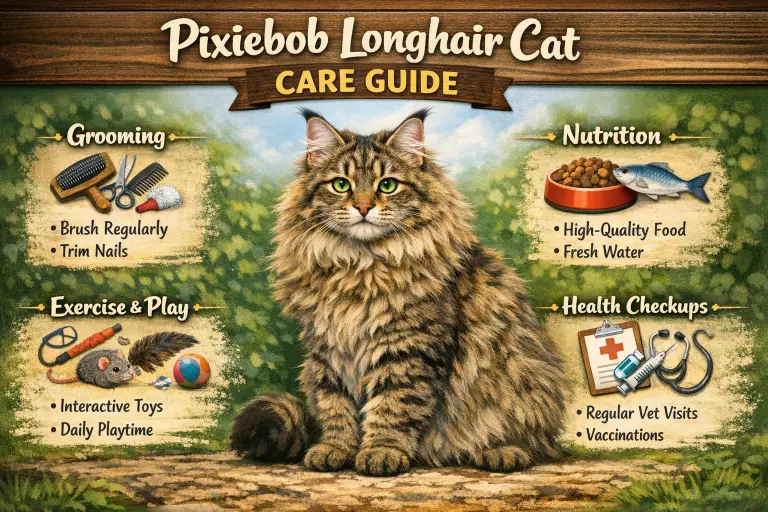
The Pixiebob Longhair is a rare and striking cat breed known for its unique bobtail and dog-like personality. Many people are drawn to this breed because of its wild appearance, yet friendly and social nature. Pixiebob Longhairs are often mistaken for miniature bobcats, but they are fully domestic cats with no actual bobcat DNA. Their long, soft coats and spotted patterns make them stand out in any household, and they are highly adaptable pets.
This breed is known for its playful, curious, and intelligent personality. Pixiebob Longhairs often enjoy interactive play, exploring their surroundings, and forming strong bonds with their families. They are sometimes described as “dog-like cats” because they can follow their owners around, play fetch, and even learn to walk on a leash. Despite their energetic side, they are also affectionate and enjoy quiet cuddle time, making them versatile companions.
Pixiebob Longhairs are moderately large cats with muscular builds. Adult males typically weigh between 12 and 17 pounds, while females are slightly smaller, usually weighing 9 to 14 pounds. They grow to a medium-to-large height and have long, strong legs that support their athletic nature. Their long fur can make them appear larger than they are, and their bobbed tails add to their exotic, wild look.
In addition to their appearance and personality, Pixiebob Longhairs are relatively healthy and have a lifespan of 12 to 15 years on average. Regular veterinary care and proper nutrition can help them live long, happy lives. Overall, they make excellent pets for families, active singles, and anyone looking for a social, intelligent, and playful cat.
Quick Facts Table
| Feature | Details |
|---|---|
| Breed Name | Pixiebob Longhair |
| Origin | United States |
| Size | Medium to large |
| Weight | Males: 12-17 lbs, Females: 9-14 lbs |
| Lifespan | 12-15 years |
| Coat | Long, thick, soft, often spotted |
| Tail | Bobbed, varies in length |
| Temperament | Friendly, social, playful, intelligent |
| Activity Level | Moderate to high |
| Suitable For | Families, apartments, multi-pet households |
Appearance & Physical Traits
Pixiebob Longhairs are instantly recognizable due to their long, soft fur and bobbed tails. Their coats often feature spotted patterns, including classic tabby markings or rare solid colors. The long fur is silky but dense, helping them stay warm during colder months. Seasonal shedding may occur, so regular brushing is recommended to prevent matting and hairballs.
The breed has a muscular build, giving them an athletic and agile look. They are medium to large cats with strong legs, broad chests, and rounded paws. Despite their size, they are known for being graceful and light on their feet, making them excellent climbers and jumpers. Their bobbed tails, which range from stubby to medium length, are a defining feature and give them a wild appearance similar to a bobcat.
Pixiebob Longhairs have striking facial features, including high cheekbones, large expressive eyes, and ears that are slightly rounded at the tips. Eye colors can range from gold to green, adding to their exotic appearance. Their nose is typically brick-red or brownish, and they may have a slight break or slope, which enhances the bobcat-like impression.
To help readers quickly understand the breed’s physical traits, the following table compares Pixiebob Longhairs with Pixiebob Shorthairs and another similar breed, the Maine Coon:
Physical Comparison Table
| Feature | Pixiebob Longhair | Pixiebob Shorthair | Maine Coon |
|---|---|---|---|
| Coat Length | Long, dense | Short, thick | Long, silky |
| Average Weight | 12-17 lbs (M), 9-14 lbs (F) | 10-15 lbs (M), 8-12 lbs (F) | 13-18 lbs (M), 8-12 lbs (F) |
| Tail | Bobbed | Bobbed | Long, bushy |
| Eye Colors | Gold, green | Gold, green | Green, gold, copper |
| Personality | Dog-like, playful | Playful, social | Gentle, sociable |
| Activity Level | Moderate-high | Moderate | Moderate |
Temperament & Behavior
Pixiebob Longhairs are often described as friendly, intelligent, and social cats. They are curious explorers who enjoy interactive play and solving simple puzzles. Many owners notice that their Pixiebob Longhairs can be very dog-like, following them around the house and even enjoying activities such as fetch or leash walking.
Affection levels are high in this breed, though they balance social time with independence. A Pixiebob Longhair will often seek attention and sit on your lap or next to you, but they can also spend time alone without stress. They tend to bond closely with one or two family members but generally get along with everyone in the household.
When it comes to children, Pixiebob Longhairs are patient and playful, making them great family pets. They enjoy interactive games and often tolerate gentle handling, though supervision is recommended with very young children. In multi-cat households, Pixiebob Longhairs usually adapt well, especially when introduced gradually. They are friendly toward other pets, including dogs, if socialized properly from a young age.
Vocalization is moderate in this breed. They may chirp, meow, or purr to communicate, but they are not overly loud. They are intelligent cats and enjoy mental stimulation, so puzzle feeders and interactive toys are recommended. They are agile climbers and may prefer elevated spaces for resting and playing, so cat trees or shelves can help satisfy their instincts.
Temperament Score Table
| Trait | Score (1-5) | Notes |
|---|---|---|
| Affection | 5 | Bonds closely, enjoys laps |
| Energy | 4 | Playful but balanced |
| Intelligence | 5 | Learns quickly, enjoys puzzles |
| Sociability | 5 | Gets along with children, cats, and dogs |
| Vocalization | 3 | Moderate, not excessive |
| Independence | 4 | Comfortable alone for periods |
Care, Grooming & Health
Pixiebob Longhairs require regular grooming due to their long, dense coats. Brushing at least 2-3 times a week is recommended to prevent mats and tangles. Bathing is generally only needed occasionally. Nail trimming, ear cleaning, and dental care should also be performed regularly to maintain overall health.
Their health is generally strong, but like many breeds, they have some predispositions. Common health concerns include hypertrophic cardiomyopathy (HCM) and polycystic kidney disease (PKD). Maintaining regular veterinary checkups can help detect issues early and ensure a long, healthy life. A balanced diet and exercise are also important for weight control and preventing obesity.
Pixiebob Longhairs live an average of 12 to 15 years. Preventative screenings, including heart, kidney, and dental checkups, are recommended. Proper care, nutrition, and attention to mental stimulation contribute to their overall well-being.
Grooming & Healthcare Checklist Table
| Task | Frequency | Notes |
|---|---|---|
| Brushing | 2-3 times per week | Prevent tangles and mats |
| Bathing | Occasionally | Only when needed |
| Nail Trimming | Every 2-3 weeks | Keep claws healthy |
| Ear Cleaning | Monthly | Remove dirt and wax buildup |
| Dental Care | Daily or weekly brushing | Prevent gum disease |
| Vet Checkups | Every 6-12 months | Early detection of health issues |
Pros & Cons, Cost & Owner Suitability
Pixiebob Longhairs are wonderful cats for the right owners, but they do have some considerations. Their affectionate and playful nature makes them ideal for families, singles, and active households. They are intelligent and social, which makes training easier than some other breeds. However, their long fur requires regular grooming, and their playful energy means they need mental and physical stimulation daily.
When it comes to cost, Pixiebob Longhair kittens can range from $600 to $1,200, depending on breeder, location, and lineage. Ongoing costs include food, veterinary care, grooming supplies, and occasional toys. While not the most expensive breed, they are an investment in both time and resources.
This breed suits families with children, multi-pet homes, and apartment dwellers who can provide enrichment and attention. First-time cat owners can manage a Pixiebob Longhair, but they should be prepared for regular grooming and active play sessions. Seniors or low-energy owners may find them slightly demanding in terms of playtime but rewarding in companionship.
Pros & Cons Table
| Pros | Cons |
|---|---|
| Friendly and social | Requires regular grooming |
| Intelligent and trainable | Needs daily mental and physical stimulation |
| Dog-like behaviors (fetch, leash walking) | Can be slightly demanding for attention |
| Gets along with children, cats, dogs | Rare, may be expensive |
| Medium-to-large size, muscular | Seasonal shedding |
Pixiebob Longhairs are affectionate, playful, and intelligent cats with a striking appearance. They are well-suited to families, first-time owners, and multi-pet households who are prepared for grooming and active play. With proper care, a Pixiebob Longhair can become a beloved companion for over a decade.For more detailed breed standards and care tips, you can visit The International Cat Association (TICA) Pixiebob Breed Page.

Ata Ur Rehman is the founder of Pet Age in Human Years Calculator, an educational platform that provides age conversion charts and lifespan guides for dogs, cats, birds, and other companion animals. His work focuses on helping pet owners understand how animal ages translate into human years using commonly accepted age conversion formulas and published lifespan averages.
The website compiles breed and species lifespan data from kennel clubs, breed organizations, and general animal lifespan studies to present simple and easy-to-understand guides for pet owners worldwide.
This website was created to centralize animal age conversion charts into one easy reference platform for pet owners.