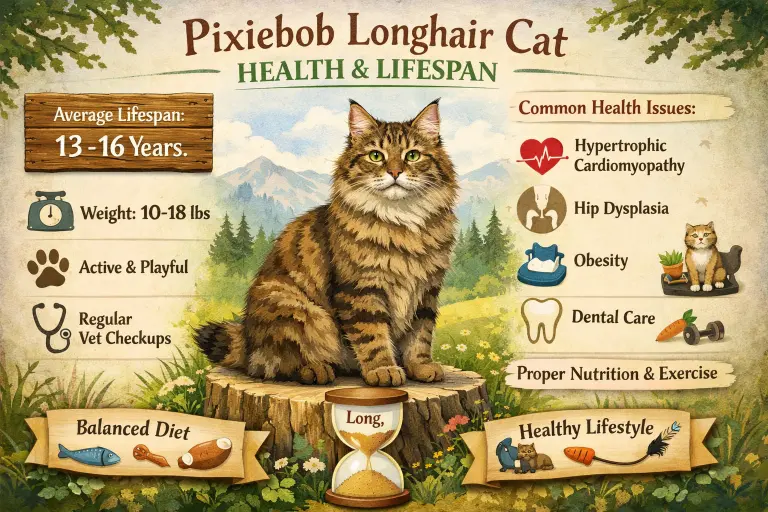
Pixiebob Longhairs are known for their wild look and gentle personality, and many owners want to know how long they can expect to share life with this special cat. On average, Pixiebob Longhairs live a solid and rewarding lifespan when they receive steady care, good nutrition, and regular veterinary checkups. Most well-cared-for Pixiebobs live between 13 and 16 years, and some may live longer. Like all cats, there is no exact number, but this range helps set realistic expectations for owners.
One of the biggest influences on lifespan is whether a Pixiebob Longhair lives indoors or outdoors. Indoor cats are usually protected from dangers like traffic, predators, harsh weather, and infectious diseases. Because of this, indoor Pixiebob Longhairs often live longer than cats who roam freely outside. Outdoor access does not always shorten a cat’s life, but it does increase risk, so many owners choose indoor living with safe enrichment instead.
Another important factor is early and consistent care throughout the cat’s life. Kittens who receive proper vaccines, parasite prevention, and gentle handling often grow into healthier adults. Adult Pixiebobs benefit from routine wellness exams that help catch small changes early. Senior Pixiebob Longhairs often need closer monitoring as their bodies naturally slow down with age. Each life stage plays a role in overall longevity.
It is also helpful for owners to remember that “average lifespan” does not mean a guarantee. Genetics, lifestyle, stress levels, and even personality can affect how a cat ages. Some Pixiebob Longhairs stay active and playful well into their senior years, while others slow down earlier. The goal is not to reach a certain age, but to support comfort, health, and quality of life at every stage.
Typical Lifespan Expectations
| Living Situation | Common Lifespan Range |
|---|---|
| Indoor only | 14–16+ years |
| Indoor with safe outdoor access | 13–15 years |
| Outdoor roaming | 10–13 years (higher risk) |
Health Overview: Common Issues Seen in Pixiebob Longhairs
Pixiebob Longhairs are generally considered a healthy and sturdy breed, but no cat is completely free from health concerns. Most health issues seen in Pixiebobs are the same ones seen in many domestic cats. This is reassuring for owners, because it means that common veterinary care and good home habits go a long way in keeping them well.
One of the most common health concerns is dental disease. Plaque and tartar can build up quietly over time, especially as cats age. Dental problems may cause bad breath, sore gums, or difficulty eating, but early stages are often easy to miss. Regular dental checks during vet visits are an important part of long-term health for Pixiebob Longhairs.
Weight gain and obesity are another issue to watch for. Pixiebobs are muscular cats with solid bodies, which can sometimes hide extra weight. Too much weight can place stress on joints and organs and may increase the risk of other conditions later in life. Monitoring body shape, activity level, and food intake helps owners notice changes early.
Pixiebob Longhairs may also experience urinary or kidney concerns, especially as they get older. These conditions are common across many cat breeds and are often linked to hydration, diet, and age. Subtle signs like changes in litter box habits or drinking behavior may appear before serious illness develops. Routine blood and urine testing during vet visits can help monitor these systems over time.
Some Pixiebobs have polydactyl paws, meaning they have extra toes. This trait is not harmful by itself, but it does require a little extra attention. Extra nails can grow in unusual directions and may need trimming more often. Regular paw checks help prevent overgrown or broken nails that could cause discomfort.
Common Health Concerns (High-Level Overview)
| Health Area | Why It Matters |
|---|---|
| Dental health | Supports comfort, eating, and overall wellness |
| Weight management | Reduces strain on joints and organs |
| Urinary and kidney health | Important for hydration and aging cats |
| Nail and paw care | Especially important for polydactyl cats |
| General aging changes | Normal shifts that need monitoring |
Preventive Care Essentials for Long-Term Health
Preventive care is one of the strongest tools Pixiebob Longhair owners have. Instead of waiting for illness, preventive care focuses on keeping the cat healthy and catching changes early. This approach supports both lifespan and daily comfort.
Routine veterinary visits are a key part of prevention. Annual exams for adult cats and more frequent visits for seniors allow veterinarians to track weight, teeth, heart, and overall condition. These visits often include gentle physical exams and may include lab work as cats age. Even when a Pixiebob seems perfectly fine, these checkups provide valuable baseline information.
Nutrition also plays a large role in long-term health. Pixiebob Longhairs do best on balanced diets that meet their life stage needs. Kittens, adults, and seniors all have different nutritional requirements. Feeding measured portions and avoiding too many treats helps reduce the risk of weight gain. Fresh water access is especially important to support kidney and urinary health.
Grooming is another important part of preventive care for longhaired Pixiebobs. Their coats are soft and thick, and regular brushing helps prevent mats and reduces hairballs. Grooming sessions also give owners a chance to notice skin changes, lumps, or sore spots early. This gentle routine can become a bonding activity rather than a chore.
Parasite prevention and vaccinations protect Pixiebob Longhairs from preventable illnesses. Even indoor cats may be exposed to parasites in subtle ways, such as through humans or other pets. Following a veterinarian’s recommended preventive schedule helps reduce unnecessary health risks over the years.
Preventive Care Checklist
| Care Area | General Timing | Owner Benefit |
|---|---|---|
| Wellness exams | Yearly (adults), twice yearly (seniors) | Early detection of changes |
| Dental checks | At routine visits | Supports eating and comfort |
| Weight monitoring | Monthly at home | Prevents obesity |
| Grooming | Weekly brushing | Coat and skin health |
| Parasite prevention | As advised by vet | Prevents avoidable illness |
Early Warning Signs Every Pixiebob Owner Should Watch
Cats are skilled at hiding discomfort, and Pixiebob Longhairs are no exception. Many health problems start with small, quiet changes rather than obvious symptoms. Knowing what to watch for helps owners act early without panic.
Changes in appetite or weight are often early clues that something may be off. Eating more, eating less, or slowly losing or gaining weight should be noted, even if the cat still seems active. These changes do not always mean serious illness, but they are worth discussing with a veterinarian.
Behavior changes can also signal health concerns. A Pixiebob Longhair who suddenly hides more, plays less, or becomes unusually irritable may be reacting to discomfort. Cats may also vocalize more or less than usual when something feels wrong. Behavior shifts are often subtle but meaningful.
Litter box habits provide important health information. Changes in how often a cat urinates, the size of clumps, or accidents outside the box can point to urinary or digestive issues. Monitoring the litter box daily helps owners notice trends early rather than after a problem grows.
Physical changes such as coat condition, mobility, or breathing should also be observed. A dull coat, stiffness when jumping, or open-mouth breathing are not normal and should never be ignored. Noticing a sign does not mean something severe is happening, but it does mean the cat deserves professional attention.
Early Signs That Deserve Attention
| Area to Watch | Possible Early Change |
|---|---|
| Eating habits | Less interest in food |
| Weight | Slow gain or loss |
| Behavior | Hiding or reduced play |
| Litter box use | More or less frequent trips |
| Coat and movement | Matted fur or stiffness |
Supporting Quality of Life as Your Pixiebob Ages
As Pixiebob Longhairs grow older, their needs naturally change. Aging is not a disease, but it does bring physical and mental shifts that owners can support with thoughtful care. Many senior Pixiebobs continue to enjoy life deeply when their environment matches their abilities.
Older Pixiebobs may move more slowly or jump less often. Providing steps, ramps, or lower perches can help them access favorite spots without strain. Soft bedding in warm, quiet areas supports joint comfort and rest. Small changes like these can greatly improve daily ease.
Mental health is just as important as physical comfort. Senior Pixiebob Longhairs still enjoy interaction, routine, and gentle play. Short play sessions, puzzle feeders, and regular human attention help keep their minds engaged. Maintaining familiar routines can also reduce stress as cats age.
Nutrition may need adjustment in later years. Senior cats often benefit from diets designed to support aging bodies. Owners should watch for changes in appetite, chewing comfort, and hydration. These observations help guide conversations with a veterinarian about supportive care.
Quality of life is about more than age numbers. A Pixiebob Longhair who eats well, moves comfortably, interacts with family, and rests peacefully is experiencing good daily well-being. Supporting these basics helps ensure that senior years are calm, dignified, and enjoyable.
Senior Support Tips
| Area | Helpful Adjustment |
|---|---|
| Mobility | Ramps or low steps |
| Comfort | Warm, soft bedding |
| Mental health | Gentle play and routine |
| Nutrition | Age-appropriate food |
| Monitoring | Regular vet visits |
Final Note
covers all planned sections for Pixiebob Longhair health issues and lifespan. It is designed to educate, reassure, and support owners without diagnosing or treating medical conditions.For additional general feline health information from a trusted authority, you can visit the American Veterinary Medical Association’s cat care resources:
https://www.avma.org/resources-tools/pet-owners/petcare/cats

Ata Ur Rehman is the founder of Pet Age in Human Years Calculator, an educational platform that provides age conversion charts and lifespan guides for dogs, cats, birds, and other companion animals. His work focuses on helping pet owners understand how animal ages translate into human years using commonly accepted age conversion formulas and published lifespan averages.
The website compiles breed and species lifespan data from kennel clubs, breed organizations, and general animal lifespan studies to present simple and easy-to-understand guides for pet owners worldwide.
This website was created to centralize animal age conversion charts into one easy reference platform for pet owners.