Persian cats are one of the most beautiful cat breeds—but that beauty comes with responsibility. Unlike short-haired cats, Persians cannot rely on self-grooming alone to keep their coat healthy. Their long, fine, dense fur mats easily, traps dirt and moisture, and can quickly become uncomfortable or even painful if grooming is skipped.
Daily grooming isn’t about making a Persian cat look fancy. It’s about preventing real problems such as tight mats pulling on the skin, hidden sores under the coat, excessive hairballs, and irritation around the eyes caused by their flat facial structure. Many of the grooming issues seen in Persians don’t appear overnight—they build quietly when brushing is delayed or done incorrectly.
This guide is written for normal cat owners, not professional groomers or show breeders. You don’t need perfection or expensive tools. What you do need is consistency, basic technique, and an understanding of what your Persian actually needs to stay comfortable and healthy at home.
If you’re new to Persian cats, grooming may feel overwhelming at first. That’s normal. With the right routine and expectations, grooming becomes a calm, manageable part of daily care—and often a bonding moment rather than a battle.
Best Food Options for Persian Cats (Wet vs Dry vs Mixed)
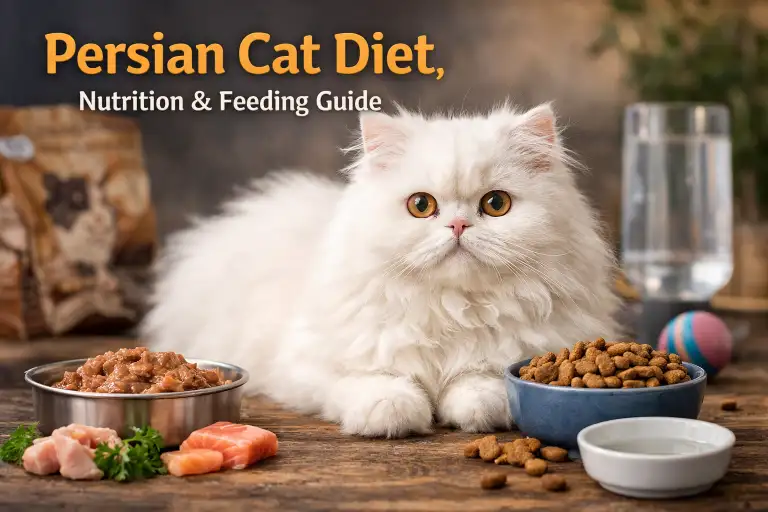
Choosing the right food for a Persian cat can feel confusing, especially with so many options available. Most owners want to know one simple thing: should I feed wet food, dry food, or both? The good news is that each option can work well when chosen and used correctly.
Wet vs Dry vs Mixed Feeding for Persian Cats
| Feeding Type | Benefits | Limitations | Best For |
|---|---|---|---|
| Wet Food | Adds moisture, easier to eat, strong smell | Spoils faster, higher cost | Cats that drink little water |
| Dry Food | Easy to store, convenient | Low moisture, calorie-dense | Owners needing convenience |
| Mixed Feeding | Combines hydration and convenience | Needs portion control | Most Persian households |
Wet food is often a great choice for Persian cats. It contains a high amount of moisture, which helps with hydration. Many cats do not drink enough water on their own, and wet food helps make up for that. Wet food is also softer and easier to eat, which can be helpful for Persian cats with flat faces. Because it smells stronger, it can be more appealing to picky eaters.
Dry food is popular because it is easy to store and serve. It does not spoil quickly and works well for owners who are away during the day. Dry food is more calorie-dense, which means small portions contain a lot of energy. This is why portion control is important, especially for indoor Persian cats that are not very active. Dry food also requires more chewing, but it should not be relied on as a solution for dental health.
Mixed feeding means offering both wet and dry food. This approach is common and works well for many Persian cats. Wet food can help with hydration and meal satisfaction, while dry food adds convenience. When using mixed feeding, it’s important to adjust portions so your cat is not eating too many calories overall.
Food texture and shape matter for Persian cats. Because of their flat faces, some Persians find it hard to pick up certain kibble shapes or eat from deep bowls. Shallow bowls and easy-to-chew food can make mealtime less frustrating and more comfortable.
No matter which option you choose, the food should be made for cats and labeled as complete and balanced. The best choice is one that your Persian cat eats well, digests comfortably, and maintains a healthy body condition on.
How Much and How Often to Feed a Persian Cat
Many Persian cat owners worry about feeding the right amount. This is a good concern, because Persians can gain weight easily. Their long fur can hide extra weight, so portion control really matters.
General Feeding Frequency by Age
| Life Stage | Meals per Day | Notes |
|---|---|---|
| Kitten | 3–4 | Supports growth |
| Adult | 2 | Helps with routine |
| Senior | 2–3 | Smaller, frequent meals |
Most adult Persian cats do well with two meals a day, one in the morning and one in the evening. Kittens need to eat more often, usually three to four small meals a day, because they are growing. Senior cats may do better with smaller meals spread out during the day, especially if their appetite changes.
How much food your Persian cat needs depends on the food type, calorie content, and your cat’s activity level. Dry food is very calorie-dense, so even a small scoop can be a full meal. Wet food usually looks like more food in the bowl, but it often has fewer calories because of the high water content. This is why measuring food and following feeding guidelines is important.
Food labels can help, but they are only a starting point. The amounts listed are averages, not exact rules. Some cats need more, and some need less. Watching your cat’s body shape and energy level matters more than sticking to a number on the package.
Signs of Overfeeding vs Underfeeding
| Overfeeding Signs | Underfeeding Signs |
|---|---|
| Weight gain | Visible ribs |
| Low activity | Low energy |
| Always begging | Dull coat |
Signs of overfeeding include steady weight gain, less movement, and always acting hungry even after meals. Signs of underfeeding may include visible ribs, low energy, or a dull coat. If you notice big changes in weight or appetite, it’s a good idea to speak with a veterinarian.
Free-feeding, where food is left out all day, can work for some cats. However, for many Persian cats, it often leads to overeating. Scheduled meals make it easier to control portions and notice changes in eating habits.
Feeding Persian Cats Through Different Life Stages
Persian cats need different types of feeding as they grow older. What works for a kitten will not always work for an adult or senior cat. Making small changes at the right time helps keep your Persian healthy and comfortable.
Persian Cat Nutrition by Life Stage
| Life Stage | Focus | Owner Tip |
|---|---|---|
| Kitten | Growth and energy | Feed small meals often |
| Adult | Maintenance | Watch body condition |
| Senior | Hydration and digestion | Monitor appetite |
Persian kittens grow quickly and need more energy than adult cats. They should eat three to four small meals a day. Kitten food is made to support growth, muscle development, and strong bones. At this stage, regular meals help build good eating habits and steady growth.
Adult Persian cats usually need fewer calories than kittens. Most adults do well with two meals a day. Because many Persians live indoors and are less active, it’s important to watch weight closely. Feeding the right amount and avoiding too many treats helps prevent slow weight gain over time.
Senior Persian cats may eat less or become more picky with food. Some seniors do better with smaller meals offered more often. Hydration becomes more important as cats age, so wet food can be helpful. Changes in appetite, weight, or eating behavior should be noticed early and discussed with a veterinarian if they last.
When moving from one life stage to another, changes in food should be made slowly. Mixing old and new food over several days helps avoid stomach upset and makes the transition easier for your cat.
Treats, Hydration, and Common Persian Feeding Mistakes
Treats can be a fun way to bond with your Persian cat, but they should only be a small part of the diet. Too many treats can quickly add extra calories and lead to weight gain. Treats should never replace regular meals, and they are best given in small amounts.
Treat Do’s and Don’ts
| Do | Don’t |
|---|---|
| Use treats sparingly | Replace meals with treats |
| Count treat calories | Give daily human snacks |
| Use treats for training | Free-feed treats |
Human food is another common problem. Some foods people eat are not safe for cats, and even safe foods can upset a cat’s stomach. Persian cats do best when most of their food comes from cat food made to meet their nutrition needs. If you’re unsure about a food, it’s safer not to offer it.
Water is just as important as food. Many Persian cats do not drink enough on their own. Wet food helps increase water intake, but fresh, clean water should always be available. Some cats drink more when water bowls are placed away from food or refreshed often.
Common Persian Feeding Mistakes
| Mistake | Why It Happens | Better Habit |
|---|---|---|
| Overfeeding | Fluffy coat hides weight | Check body shape |
| Too many treats | Feeding out of love | Set treat limits |
| Low water intake | Dry food only | Add wet food |
There are a few feeding mistakes Persian owners often make. One is overfeeding because the cat looks fluffy, not overweight. Another is giving too many treats out of love or habit. Some owners also ignore small weight changes until they become a bigger problem. Paying attention to body shape, not just the scale, helps catch issues early.
You should consider speaking with a veterinarian if your Persian cat has ongoing changes in appetite, sudden weight gain or loss, vomiting, diarrhea, or refuses food for more than a day. These signs may need professional advice.
For more information on how complete and balanced cat foods are defined, you can review the nutritional standards set by the Association of American Feed Control Officials (AAFCO).

Ata Ur Rehman is the founder of Pet Age in Human Years Calculator, an educational platform that provides age conversion charts and lifespan guides for dogs, cats, birds, and other companion animals. His work focuses on helping pet owners understand how animal ages translate into human years using commonly accepted age conversion formulas and published lifespan averages.
The website compiles breed and species lifespan data from kennel clubs, breed organizations, and general animal lifespan studies to present simple and easy-to-understand guides for pet owners worldwide.
This website was created to centralize animal age conversion charts into one easy reference platform for pet owners.