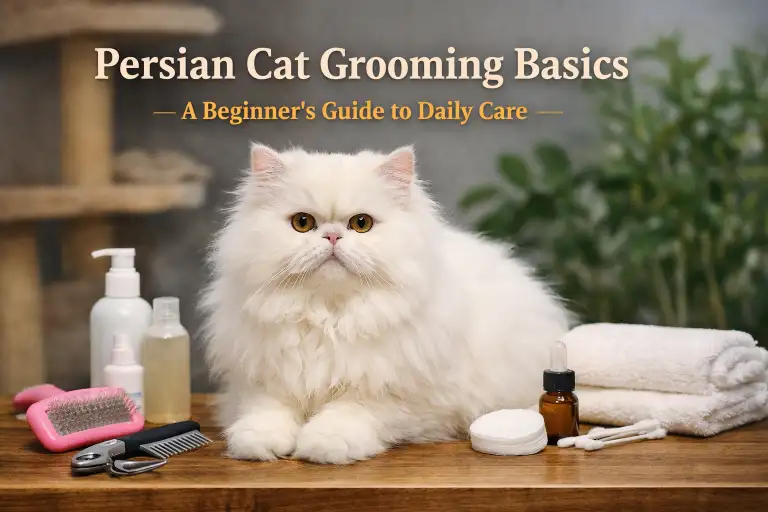
Persian cats are one of the most beautiful cat breeds—but that beauty comes with responsibility. Unlike short-haired cats, Persians cannot rely on self-grooming alone to keep their coat healthy. Their long, fine, dense fur mats easily, traps dirt and moisture, and can quickly become uncomfortable or even painful if grooming is skipped.
Daily grooming isn’t about making a Persian cat look fancy. It’s about preventing real problems such as tight mats pulling on the skin, hidden sores under the coat, excessive hairballs, and irritation around the eyes caused by their flat facial structure. Many of the grooming issues seen in Persians don’t appear overnight—they build quietly when brushing is delayed or done incorrectly.
This guide is written for normal cat owners, not professional groomers or show breeders. You don’t need perfection or expensive tools. What you do need is consistency, basic technique, and an understanding of what your Persian actually needs to stay comfortable and healthy at home.
If you’re new to Persian cats, grooming may feel overwhelming at first. That’s normal. With the right routine and expectations, grooming becomes a calm, manageable part of daily care—and often a bonding moment rather than a battle.
Understanding Persian Cat Grooming Needs
Persian cats need more grooming than most cats because of their coat and face shape. Their fur is long, soft, and very thick. This makes it easy for the hair to tangle and form mats, especially if brushing is skipped even for one or two days.
Mats do not just sit on top of the fur. They pull on the skin underneath, which can hurt your cat and lead to skin problems. Once mats get tight, they cannot be safely fixed at home.
Persian cats also have flat faces. This means their eyes often water more than other cats. Without regular cleaning, this moisture can cause staining, smell, or skin irritation around the eyes.
Grooming needs also change with age:
- Kittens need gentle grooming to learn that brushing is safe and normal
- Adult Persians need steady daily care to prevent mats and hairballs
- Senior Persians may groom themselves less and need extra help, especially on the belly and back legs
Most Persian cats live indoors, but indoor cats still shed, collect loose hair, and form mats. Indoor life does not reduce grooming needs—it often increases them because loose fur stays trapped in the coat.
Understanding these needs makes grooming feel less confusing. You are not grooming “too much.” You are doing what this breed requires to stay clean, comfortable, and healthy.
Persian Grooming Challenges & Why They Happen
| Grooming Issue | Why It’s Common in Persians | What It Can Lead To |
|---|---|---|
| Matting | Dense, fine double coat | Pain, skin infections |
| Tear staining | Flat facial structure | Eye irritation |
| Hairballs | Heavy shedding + long fur | Digestive discomfort |
| Skin issues | Trapped moisture under coat | Hot spots |
Brushing and Coat Care for Persian Cats
Brushing is the most important part of grooming a Persian cat. For this breed, brushing is needed every day. Skipping brushing can quickly lead to tangles and mats that are painful and hard to fix.
Persian cats get mats most often in these areas:
- Under the front legs
- Around the neck and chest
- Behind the ears
- On the belly and back legs
When brushing, you should reach gently down to the skin, not just brush the top layer of fur. Brushing only the surface can hide mats underneath. Always brush slowly and stop if your cat becomes upset.
It helps to know the difference between hair problems:
- Tangles are small knots that can usually be brushed out gently
- Mats are tight clumps of hair that pull on the skin
- A pelted coat means large areas of fur are stuck together and brushing is not safe
Never pull hard on the fur. Never cut mats with scissors. Cat skin is thin and easy to cut by accident.
Short, calm brushing sessions work best. Even five to ten minutes every day is enough if you stay consistent. Brushing also helps reduce shedding and lowers the chance of hairballs.
If you feel unsure or find mats you cannot handle, it is safer to stop and get help from a professional groomer or a vet.
Brushing Frequency by Coat Condition
| Coat Condition | Brushing Frequency | Notes |
|---|---|---|
| Well-maintained | Daily | Short, gentle sessions |
| Mild tangles | Daily + extra care | Stop if cat shows stress |
| Early mats | Daily + professional check | Do not cut |
| Pelted coat | No home brushing | Vet or groomer only |
Essential Grooming Tasks Beyond Brushing
Brushing is the main grooming task for Persian cats, but it is not the only one. A few other simple tasks help keep your cat clean, comfortable, and healthy.
Nail trimming is important because long fur can hide sharp nails. Most Persian cats need their nails trimmed every two to four weeks. If nails get too long, they can snag in the fur or scratch skin by accident. Trim only the sharp tip and stop if your cat becomes stressed.
Bathing is sometimes helpful, but it is not needed often. Persian cats may need a bath if their coat feels greasy, smells bad, or sheds heavily. For most pet Persians, bathing every four to eight weeks is enough. The most important part of bathing is drying. A wet Persian coat can cause mats and skin problems if not fully dried.
Eye cleaning is usually needed more often. Because Persians have flat faces, their eyes may water daily. Gently wiping the eye area helps prevent staining and skin irritation. Use soft, gentle methods and never rub hard.
Ear care should be simple. Check your cat’s ears once a week. Clean them only if you see dirt or wax. Healthy ears should not smell bad or look red.
Dental care also matters. Even simple steps, like checking the mouth and offering basic dental care, can help prevent pain that makes grooming harder for your cat.
Grooming Task Frequency Guide
| Grooming Task | How Often | Notes |
|---|---|---|
| Nail trimming | Every 2–4 weeks | Stop if cat resists |
| Bathing | Every 4–8 weeks (if needed) | Dry completely |
| Eye cleaning | Daily to every few days | Use gentle methods |
| Ear checking | Weekly | Clean only if needed |
| Dental care | Weekly | Keep expectations realistic |
Grooming Frequency, Safety, and When to Get Help
Grooming a Persian cat works best when it follows a simple routine. Daily care does not have to be long or hard, but it must be regular.
Most Persian cats need:
- Daily brushing to prevent mats
- Weekly checks of ears, eyes, and skin
- Nail trimming every few weeks
- Occasional baths when the coat feels dirty or greasy
Always watch your cat during grooming. Cats show stress before they become aggressive. Early signs include tail flicking, ears turning sideways, or a stiff body. If you see growling, hissing, or swatting, stop grooming right away and try again later.
Never force grooming. Forcing can make your cat afraid and harder to groom in the future. Short, calm sessions are safer and more effective than trying to do everything at once.
Some situations are not safe to handle at home. You should get help from a professional groomer or a vet if:
- Your cat has tight mats close to the skin
- Large areas of fur are stuck together
- The skin looks red, sore, or infected
- Your cat becomes very aggressive during grooming
Asking for help is not a failure. Persian cats have special grooming needs, and professional care can protect your cat from pain and injury.
Grooming Stress Signals to Watch For
| Early Signs | Moderate Signs | Stop Immediately |
|---|---|---|
| Tail flicking | Growling | Biting |
| Ears turning sideways | Hissing | Screaming |
| Tensing body | Swatting | Full escape attempts |
For more veterinary-backed guidance on safe grooming and coat care, you can also read the American Society for the Prevention of Cruelty to Animals (ASPCA) guide on cat grooming.

Ata Ur Rehman is the founder of Pet Age in Human Years Calculator, an educational platform that provides age conversion charts and lifespan guides for dogs, cats, birds, and other companion animals. His work focuses on helping pet owners understand how animal ages translate into human years using commonly accepted age conversion formulas and published lifespan averages.
The website compiles breed and species lifespan data from kennel clubs, breed organizations, and general animal lifespan studies to present simple and easy-to-understand guides for pet owners worldwide.
This website was created to centralize animal age conversion charts into one easy reference platform for pet owners.