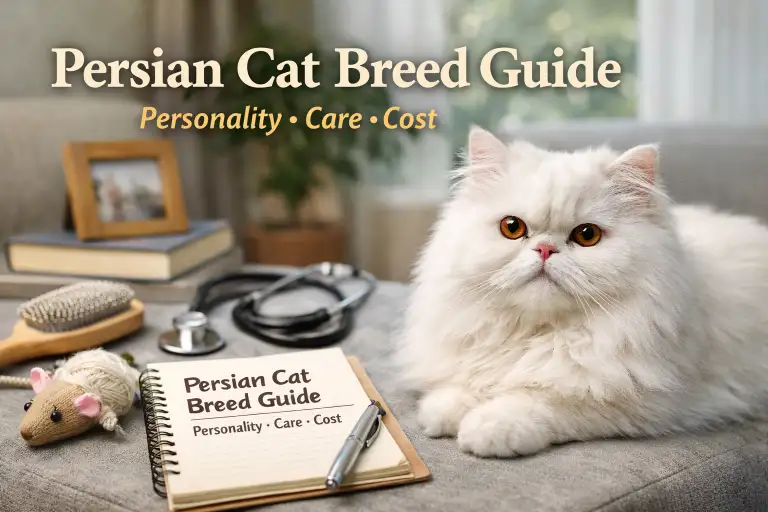
The Persian cat is one of the most recognizable and distinctive cat breeds in the world, known for its long, flowing coat, calm temperament, and unmistakable flat-faced appearance. But living with a Persian is less about looks and more about lifestyle. This is a breed built for quiet homes, predictable routines, and owners who value companionship over constant activity.
Persians are typically gentle, affectionate cats that prefer peaceful environments. They are not climbers, sprinters, or attention-demanding entertainers. Instead, they enjoy soft beds, familiar spaces, and being near their people without needing to be the center of every moment. Many owners describe them as emotionally present but undemanding—content to sit beside you rather than on top of you all day.
Physically, the Persian is a medium-sized cat with a compact, sturdy build and a luxurious coat that defines the breed. While their appearance often draws people in, it’s their laid-back personality and quiet nature that keep them deeply loved by long-term owners. Persians are almost always happiest as indoor-only cats and do best in homes where noise, chaos, and constant change are kept to a minimum.
To quickly understand whether this breed aligns with your lifestyle, the snapshot below highlights the Persian cat’s core traits at a glance.
| Trait | Persian Cat |
|---|---|
| Origin | Persia (modern-day Iran), refined in Europe |
| Size | Medium |
| Adult Weight | 7–12 lbs |
| Energy Level | Low |
| Temperament | Calm, gentle, affectionate |
| Vocalization | Quiet, soft voice |
| Grooming Needs | Very high |
| Indoor/Outdoor | Indoor only |
| Apartment Friendly | Yes |
| Best For | Quiet homes, routine-based lifestyles |
At a high level, the Persian cat is ideal for people who want a serene, visually striking companion and are fully prepared for the grooming and daily care that comes with the breed. For the right owner, a Persian is not just a pet—it’s a calm presence woven into everyday life.
Persian Cat Appearance: Size, Coat Types, Colors & Facial Structure
The Persian cat has a very unique look that makes it easy to recognize. This breed is known for its round body, short legs, long thick fur, and flat or gently rounded face. Everything about a Persian’s appearance gives a soft, plush, and calm impression.
Persian cats are medium in size, but they feel heavier than they look because of their solid body and thick coat. They are not long or slim like some other breeds. Instead, they have a compact shape and move in a slow, relaxed way.
| Feature | Description |
|---|---|
| Body Type | Compact and sturdy |
| Legs | Short and strong |
| Chest | Wide and deep |
| Tail | Short and fluffy |
| Growth Style | Slow, fully mature around 2–3 years |
One of the most important parts of a Persian cat’s appearance is its coat. Persian cats have long, fine hair that grows thick all over the body. The coat is soft but easily tangled if not brushed often. This long coat is beautiful, but it also means daily care is needed to keep the cat comfortable.
Persian cats come in many colors and patterns. This is one reason they are popular with breeders and cat lovers around the world.
| Coat Feature | Details |
|---|---|
| Coat Length | Long and full |
| Texture | Fine and soft |
| Common Colors | White, black, blue, cream, red |
| Patterns | Solid, tabby, bicolor, colorpoint |
The face of a Persian cat can look different depending on the type. Some Persians have a very flat face, while others have a more natural nose shape.
Flat-faced Persians have a short nose and large, round eyes. This look is often seen in show cats. Doll-face Persians have a longer nose and a face that looks closer to a normal cat. Many pet owners prefer the doll-face type because it can have fewer breathing and eye problems.
Because of their face shape, Persian cats often have large, bright eyes. These eyes may water more than other breeds, which is normal for Persians and part of their daily care.
Persian Cat Temperament, Behavior & Compatibility With Families and Pets
Persian cats are calm, gentle, and quiet by nature. They enjoy peaceful homes and do not like loud noise or sudden changes. This breed prefers a slow and relaxed life and often chooses comfort over adventure.
Persians are affectionate cats, but they show love in a soft way. They like to sit near their owners, sleep close by, or follow them from room to room. Many Persian cats enjoy lap time, but they usually decide when and for how long. They do not like being forced to cuddle.
| Behavior Trait | Persian Cat |
|---|---|
| Affection Level | High but gentle |
| Independence | Moderate |
| Energy Level | Low |
| Vocalization | Very quiet |
| Attention Style | Calm and relaxed |
Persian cats are not very talkative. When they do make sounds, their voice is soft and sweet. They usually meow only when they need something, like food or attention.
This breed does well with calm children who know how to be gentle. Persian cats do not like rough play or being chased. In homes with young children, it is important to teach kids how to handle cats softly and respectfully.
Persians usually get along well with other pets if the home is quiet. They are not dominant and do best with calm cats or gentle dogs. Loud or very active pets can stress them.
| Household Type | Persian Cat Fit |
|---|---|
| Families with kids | Yes (best with calm children) |
| First-time owners | Yes, if grooming is understood |
| Seniors | Excellent |
| Other cats | Good with calm breeds |
| Dogs | Good with quiet, friendly dogs |
| Busy homes | Not ideal |
Persian cats are perfect for apartment living. They do not need much space and are happiest indoors. Outdoor life is not safe for them because of their coat, face shape, and gentle nature.
Persian Cat Care: Grooming, Activity Level & Daily Maintenance
Persian cats need more daily care than many other cat breeds. Their long fur, flat face, and calm lifestyle mean owners must spend time each day keeping them clean and comfortable.
Grooming is the most important part of Persian cat care. Their long hair tangles easily and can form painful mats if not brushed every day. Most Persian owners use a soft brush or comb once a day to keep the coat smooth and clean.
| Care Task | How Often |
|---|---|
| Brushing | Every day |
| Eye cleaning | Every day |
| Bathing | Every 4–6 weeks |
| Nail trimming | Every 2–3 weeks |
| Ear cleaning | Once a month |
Because of their face shape, Persian cats often have watery eyes. Gently wiping the eyes daily helps prevent stains and skin problems. This is normal care for the breed, not a health problem by itself.
Persian cats have low energy levels. They enjoy short play times but do not like long or rough play. Simple toys, slow-moving games, and quiet play sessions work best. Two or three short play times each day are usually enough.
| Activity Need | Persian Cat |
|---|---|
| Daily exercise | Low |
| Play style | Gentle and slow |
| Climbing | Minimal |
| Mental needs | Moderate |
| Best toys | Soft toys, wand toys |
Persians like routine. Feeding, grooming, and play at the same time each day helps them feel safe and relaxed. Sudden changes in schedule or environment can make them stressed.
Common mistakes new owners make include skipping daily brushing, choosing very active homes, or expecting the cat to entertain itself for long hours. Persian cats do best when their care needs are understood from the start.
Persian Cat Health, Lifespan, Cost & Final Ownership Verdict
Persian cats can live long and happy lives, but they do need special care. Most Persian cats live 12 to 15 years, and some live even longer when they receive good grooming, regular vet visits, and a calm home.
Because of how they are bred, Persian cats can have some health problems. Not every Persian will get these issues, but owners should be aware of them before choosing this breed.
| Health Issue | What It Means |
|---|---|
| Breathing problems | Flat faces can make breathing harder |
| Eye issues | Watery eyes and tear stains are common |
| Dental problems | Crowded teeth need regular checks |
| PKD (kidney disease) | Genetic issue; testing is important |
Good breeders test their cats for genetic diseases. Regular vet checkups help catch problems early and keep your cat comfortable.
Owning a Persian cat also costs more than owning many other cat breeds. The biggest costs come from grooming and medical care.
| Expense Type | Estimated Cost |
|---|---|
| Kitten price | $800–$2,500 |
| Grooming per year | $500–$1,500 |
| Vet care per year | $300–$800 |
| Pet insurance | Strongly recommended |
Persian cats are not cheap to care for, but many owners feel the calm love and gentle nature of the breed is worth the cost.
So, is a Persian cat right for you?
A Persian cat may be perfect if you:
- Want a quiet, calm, loving cat
- Live in an apartment or peaceful home
- Have time for daily grooming
- Enjoy routine and slow-paced life
A Persian cat may not be a good fit if you:
- Want a very active or playful cat
- Have a loud or busy household
- Do not want daily grooming duties
- Are away from home for long hours
For the right person, a Persian cat is a gentle and loyal companion that brings peace and beauty into the home.
For official breed standards and detailed information about Persian cats, you can also visit the Cat Fanciers’ Association (CFA) Persian breed page.

Ata Ur Rehman is the founder of Pet Age in Human Years Calculator, an educational platform that provides age conversion charts and lifespan guides for dogs, cats, birds, and other companion animals. His work focuses on helping pet owners understand how animal ages translate into human years using commonly accepted age conversion formulas and published lifespan averages.
The website compiles breed and species lifespan data from kennel clubs, breed organizations, and general animal lifespan studies to present simple and easy-to-understand guides for pet owners worldwide.
This website was created to centralize animal age conversion charts into one easy reference platform for pet owners.