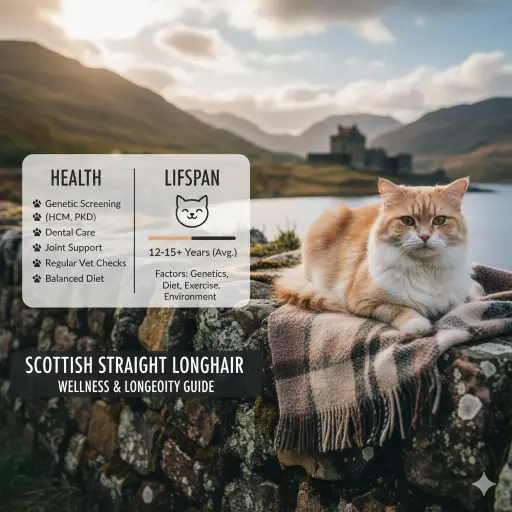
The Scottish Straight Longhair is often described as a calm, gentle, and well-balanced cat. Many people are drawn to this breed because it has the soft look of Scottish cats but without folded ears. When it comes to health, owners usually want one clear answer: is this breed healthy overall? The honest answer is that Scottish Straight Longhairs are generally considered healthy cats, but like all purebred and mixed cats, they can have certain health tendencies.
This guide is meant to help cat owners understand health and lifespan topics in a clear and non-scary way. It does not diagnose illness or replace veterinary care. Instead, it explains what owners commonly ask about, what is considered normal, and how everyday care plays a big role in long-term health. Every cat is an individual, and health outcomes can vary even within the same breed.
Scottish Straight Longhairs share ancestry with Scottish Folds, but their ears remain straight. This difference is important because ear structure is connected to bone and cartilage development. While straight-eared cats do not have the same level of risk linked to folded ears, responsible breeding and overall genetics still matter. This is why health should always be viewed as a mix of genetics, environment, and daily care.
It is also important to remember that many health issues seen in cats are not breed-specific. Problems like dental disease, weight gain, kidney changes with age, and urinary issues are common in cats of all backgrounds. Understanding this helps owners focus on prevention and early attention instead of worry.
Scottish Straight Longhair Lifespan & Life Expectancy
Scottish Straight Longhairs usually have a lifespan similar to many well-cared-for domestic cats. On average, they may live between 12 and 16 years, and some live even longer with good care. Lifespan numbers are estimates, not promises, and they depend on many factors such as diet, activity level, stress, genetics, and access to routine veterinary care.
One of the biggest influences on lifespan is whether a cat lives indoors or outdoors. Indoor cats are generally protected from traffic, fights, parasites, and many infectious diseases. Outdoor cats may experience more risks, which can shorten life expectancy. Because of this, many veterinarians recommend indoor living or supervised outdoor access.
Nutrition also plays a strong role in longevity. Cats that maintain a healthy weight and receive balanced food often experience fewer stress-related health problems over time. Obesity, which is common in many indoor cats, can slowly affect joints, digestion, and overall comfort. Lifespan is not just about years lived, but about how well a cat feels during those years.
Stress and environment matter more than many people realize. A calm home, predictable routines, safe resting areas, and gentle interaction can support both physical and emotional health. Cats that feel secure tend to eat better, groom regularly, and stay active longer into their senior years.
Average Lifespan Expectations
| Living Situation | Typical Lifespan Range |
|---|---|
| Indoor only | 13–16 years |
| Indoor with supervised outdoor time | 12–15 years |
| Outdoor or free-roaming | Often shorter and less predictable |
| Well-cared-for senior cats | May reach late teens |
Common Health Issues in Scottish Straight Longhairs
Scottish Straight Longhairs are not known for extreme or rare health problems, but they can experience some conditions that are common in many cats. These should be seen as possible concerns, not guaranteed outcomes. Most cats will not experience all of them, and many will live comfortable lives with basic preventive care.
Joint and movement changes can sometimes appear as cats age. Owners may notice stiffness, slower movement, or less jumping. These changes are often linked to aging rather than breed alone. Watching how a cat moves over time helps owners notice small changes early.
Dental disease is one of the most common health issues in cats, including Scottish Straight Longhairs. Tartar buildup, gum irritation, and tooth discomfort can affect eating and behavior. Dental problems often develop quietly, which is why regular mouth checks during vet visits are important.
Weight-related issues are another common concern. Longhaired cats can hide weight gain under their fur, making it harder to notice changes. Gradual weight gain can affect joints, grooming ability, and energy levels. Monitoring body shape and activity is more helpful than relying on the scale alone.
Kidney and urinary system changes may occur as cats grow older. These are widely seen in aging cats across many breeds. Early changes may be subtle, such as increased thirst or litter box use. This is why routine health monitoring becomes more important with age.
Skin and coat health can also reflect overall wellness. Dull fur, mats, or reduced grooming may signal that something has changed, even if the issue is not serious. Longhaired cats benefit from regular grooming to reduce discomfort and hair-related issues.
Common Health Concerns Overview
| Health Area | Often Seen At | General Focus |
|---|---|---|
| Dental health | Adult to senior years | Routine checks and cleaning |
| Weight management | Any age | Balanced diet and activity |
| Joint comfort | Middle age and older | Observation of movement |
| Kidney and urinary health | Senior years | Early awareness |
| Skin and coat health | Any age | Grooming and observation |
Preventive Care That Supports a Longer Life
Preventive care is one of the most powerful tools owners have to support a long and comfortable life for their Scottish Straight Longhair. This does not mean constant worry or over-checking. It means paying attention to small details and keeping regular routines.
Routine veterinary visits help track changes that are hard to notice at home. Even when a cat seems healthy, these visits can provide reassurance and baseline information. Early attention often leads to better outcomes, especially as cats age.
Healthy weight maintenance is another key factor. Feeding measured portions, choosing appropriate food, and encouraging gentle play can make a big difference over time. Interactive toys, short play sessions, and climbing spaces can help keep cats mentally and physically active.
Dental care supports more than just the mouth. Healthy teeth and gums allow cats to eat comfortably and maintain good nutrition. While owners are not expected to diagnose dental issues, being aware of breath changes or chewing habits is helpful.
Parasite prevention and basic hygiene also support long-term health. Fleas, worms, and other parasites can affect comfort and overall wellness, even in indoor cats. Preventive steps are often simpler and less stressful than dealing with problems later.
Preventive Care Checklist
| Care Area | Why It Matters | General Frequency |
|---|---|---|
| Vet wellness visits | Tracks changes early | Yearly or as advised |
| Weight monitoring | Prevents strain on body | Ongoing |
| Dental checks | Supports eating and comfort | During vet visits |
| Grooming | Prevents mats and skin issues | Weekly or more |
| Parasite prevention | Protects overall health | As recommended |
Aging, Quality of Life & When to See a Vet
As Scottish Straight Longhairs grow older, their needs may change gradually. Aging is not a disease, and many senior cats continue to enjoy life with small adjustments to their care. Understanding what is normal aging versus concerning changes helps owners respond calmly and appropriately.
Senior cats may sleep more, move more slowly, or prefer warmer resting spots. These changes are often normal. What matters is whether the cat still enjoys food, interaction, grooming, and comfortable movement. Quality of life is about comfort, interest, and daily habits, not just age.
Owners should pay attention to changes that last or worsen over time. Sudden appetite loss, strong behavior changes, difficulty breathing, repeated vomiting, or noticeable pain should always be discussed with a veterinarian. These signs do not always mean something serious, but they do deserve professional attention.
Creating a senior-friendly environment can make a big difference. Easy access to food, water, litter boxes, and favorite resting spots helps older cats stay independent. Soft bedding, ramps, and calm routines support comfort and confidence.
Adult vs Senior Cat Changes
| Area | Adult Cats | Senior Cats |
|---|---|---|
| Activity | Active and playful | Slower, more rest |
| Grooming | Regular self-grooming | May need help |
| Appetite | Stable | May change |
| Mobility | Flexible | Stiffer movements |
| Vet needs | Routine care | Closer monitoring |
Final Note for Readers
Scottish Straight Longhairs are often described as gentle, adaptable, and rewarding companions. With basic preventive care, attention to daily habits, and regular veterinary support, many live long and comfortable lives. Health is not about perfection, but about awareness, balance, and care over time.
For additional general feline health guidance from an international veterinary organization, you can visit:
https://icatcare.org

Ata Ur Rehman is the founder of Pet Age in Human Years Calculator, an educational platform that provides age conversion charts and lifespan guides for dogs, cats, birds, and other companion animals. His work focuses on helping pet owners understand how animal ages translate into human years using commonly accepted age conversion formulas and published lifespan averages.
The website compiles breed and species lifespan data from kennel clubs, breed organizations, and general animal lifespan studies to present simple and easy-to-understand guides for pet owners worldwide.
This website was created to centralize animal age conversion charts into one easy reference platform for pet owners.