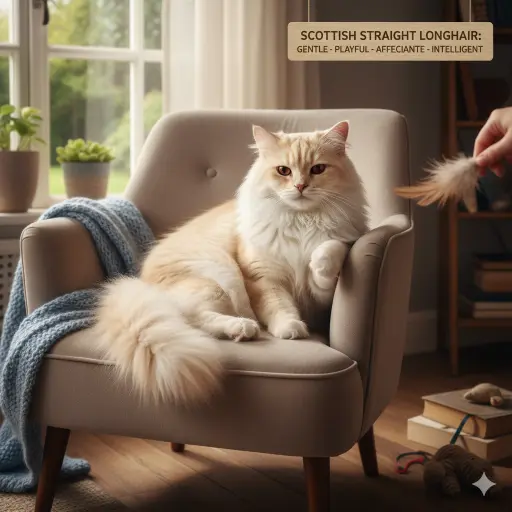
Scottish Straight Longhairs are often described as calm, gentle, and quietly affectionate cats. Their personality is not loud or demanding, but it is steady and emotionally warm. Many owners notice that these cats like to be near their people without always needing to be on top of them. This balance makes them a good fit for homes that enjoy peaceful companionship rather than constant activity.
Personality in cats is shaped by both nature and experience. While the Scottish Straight Longhair breed tends to share certain emotional traits, every cat is still an individual. Some will be more playful, some more reserved, and some more outgoing. The breed description helps set expectations, but daily life, early handling, and the home environment all play a role in how a cat behaves.
One common feature of this breed is emotional stability. Scottish Straight Longhairs usually respond to new situations with curiosity instead of fear. They may watch from a safe distance at first, then slowly join in once they feel comfortable. This thoughtful approach can sometimes be mistaken for shyness, but it is more about careful observation than anxiety.
This breed is often well suited for apartments, families, and quieter households. They usually enjoy routine and do best when their day follows a familiar pattern. Loud chaos or sudden changes may make them retreat for a while, but once things settle, they tend to return to their normal relaxed behavior. Their personality is best understood as calm confidence rather than bold attention-seeking.
Core Personality Traits of the Scottish Straight Longhair
Scottish Straight Longhairs are known for a small group of core personality traits that shape how they interact with the world. These traits are not extreme. Instead, they show up in gentle and balanced ways that make the cat easy to live with. Understanding these traits helps owners interpret behavior without worry or confusion.
Affection is one of the most talked-about traits of this breed. Scottish Straight Longhairs are usually affectionate, but not in an intense way. Many prefer sitting close by, following their owner from room to room, or sleeping nearby rather than sitting on laps all the time. This is often called a “proximity affection” style. The cat shows love by choosing to be near you.
Another important trait is independence. These cats can spend time alone without becoming stressed or destructive. They are comfortable entertaining themselves or resting quietly. At the same time, independence does not mean lack of attachment. When their favorite person comes home, they often greet them calmly and stay close for the rest of the evening.
Curiosity is present, but it is soft and controlled. Scottish Straight Longhairs like to explore new objects and spaces, but they rarely rush in. They prefer to watch first, then approach. This thoughtful curiosity makes them less likely to get into trouble and more likely to adapt smoothly to changes.
Emotional sensitivity is also common. These cats tend to notice tone of voice, mood, and routine changes. They respond best to gentle handling and calm communication. Harsh voices or rough play may cause them to withdraw, while kindness builds trust quickly.
Scottish Straight Longhair Personality Traits and Daily Behavior
| Personality Trait | How It Shows in Daily Life |
|---|---|
| Affectionate but calm | Sits near you, follows you, sleeps nearby |
| Independent | Comfortable being alone for short periods |
| Emotionally balanced | Rarely overreacts to noise or visitors |
| Curious but cautious | Observes first, explores later |
| Sensitive to mood | Responds well to calm voices and routines |
Scottish Straight Longhair Behavior With Humans and Pets
Scottish Straight Longhairs usually form strong bonds with their human family. They often choose one or two people as their main companions but remain friendly with others in the household. Their bonding style is steady rather than dramatic. Instead of demanding attention, they quietly invite interaction.
With adults, this breed tends to enjoy gentle daily routines. Sitting together during quiet moments, being talked to softly, or sharing space while someone works or reads are common bonding activities. They often like being included in daily life without being the center of attention.
With children, Scottish Straight Longhairs generally do well when the children are taught gentle handling. They are patient cats, but they also have clear boundaries. If play becomes too rough, they are more likely to walk away than to react aggressively. This makes them a good match for calm, respectful children.
When it comes to other cats, this breed is usually tolerant and peaceful. They prefer slow introductions and time to observe. Once settled, they often coexist comfortably, sharing space without constant interaction. They are not usually dominant or pushy, which helps reduce tension in multi-cat homes.
With dogs or other pets, their behavior is similar. They may watch from a safe distance at first. Over time, if the other animal is calm and respectful, they often accept their presence. Their calm nature helps them adjust without fear or hostility.
Social Situations and Typical Scottish Straight Longhair Responses
| Situation | Typical Behavior |
|---|---|
| Owner comes home | Calm greeting, follows quietly |
| Visitors arrive | Observes from a distance, may join later |
| Children playing nearby | Watches calmly, moves away if overwhelmed |
| New cat in home | Cautious observation, slow acceptance |
| Calm dog present | Tolerant after adjustment period |
Playfulness, Activity Level, and Daily Behavior Patterns
Scottish Straight Longhairs have a moderate activity level. They enjoy play, but they are not constantly energetic. Their play sessions are usually short and focused, followed by long periods of rest. This makes them a good fit for owners who enjoy playtime but do not want a very high-energy cat.
Their favorite play often involves interactive toys that move slowly or unpredictably. Wand toys, soft balls, or gentle chase games tend to hold their interest. They may not leap wildly, but they stay mentally engaged. Play is more about stimulation than speed for this breed.
Daily behavior patterns are usually predictable. Many Scottish Straight Longhairs follow a routine of morning activity, afternoon rest, and evening companionship. They often become more social in the evening when their owners are relaxed. Nighttime activity is usually limited, especially if they have enough daytime stimulation.
Scratching, climbing, and perching are normal behaviors. They often enjoy high spots where they can watch the room quietly. This behavior is not about dominance. It is about feeling safe and informed. A window perch or shelf can become a favorite resting place.
Hiding behavior is usually minimal unless there is stress or change. When they do hide, it is often temporary. Once they feel secure again, they return to open spaces. Understanding this pattern helps owners avoid unnecessary worry.
Commonly Misunderstood Scottish Straight Longhair Behaviors
Because Scottish Straight Longhairs are subtle in their communication, their behavior is often misunderstood. One common misunderstanding is thinking the cat is aloof. In reality, many of these cats show affection quietly. Sitting nearby, slow blinking, or choosing to rest close by are all strong signs of trust and love.
Another misunderstanding is labeling them as lazy. Their calm nature and love of rest can look like low energy. However, they are mentally active and alert. They simply prefer peaceful engagement over constant movement. This does not mean they are bored or unhappy.
Quiet vocal behavior is also sometimes misread. Scottish Straight Longhairs are often soft-spoken. They may chirp or make small sounds instead of loud meows. Silence does not mean they have nothing to say. It often means they are content.
Some owners worry when their cat prefers routine and familiar spaces. This is not fearfulness. It is comfort-seeking. Familiar environments help this breed feel relaxed and confident.
Misunderstood Behaviors and What They Really Mean
| Behavior | Common Misinterpretation | What It Usually Means |
|---|---|---|
| Sitting nearby, not on lap | Distant or cold | Showing trust and attachment |
| Long periods of rest | Lazy | Calm and emotionally balanced |
| Quiet vocalization | Uninterested | Content and relaxed |
| Watching before acting | Shy | Thoughtful and observant |
| Prefers routine | Anxious | Feels safe with predictability |
For more science-based insight into normal cat behavior and communication, you can visit the Cornell Feline Health Center’s behavior resources:
https://www.vet.cornell.edu/departments-centers-and-institutes/cornell-feline-health-center/health-information/cat-behavior

Ata Ur Rehman is the founder of Pet Age in Human Years Calculator, an educational platform that provides age conversion charts and lifespan guides for dogs, cats, birds, and other companion animals. His work focuses on helping pet owners understand how animal ages translate into human years using commonly accepted age conversion formulas and published lifespan averages.
The website compiles breed and species lifespan data from kennel clubs, breed organizations, and general animal lifespan studies to present simple and easy-to-understand guides for pet owners worldwide.
This website was created to centralize animal age conversion charts into one easy reference platform for pet owners.