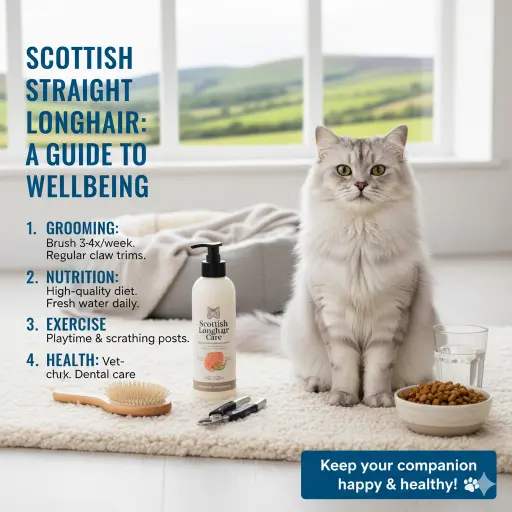
Scottish Straight Longhair cats are calm, gentle, and quietly affectionate. Many people choose them because they look soft and plush but act relaxed and friendly. This guide is for new owners and experienced cat parents who want clear, honest, and practical care advice. It focuses on daily life with this cat, not just looks or breed history.
Unlike short-haired cats, Scottish Straight Longhairs need steady coat care and a stable home routine. They are not high-energy cats, but that does not mean they are low-maintenance. Their long coat, calm personality, and love of comfort can lead to common problems like weight gain, mats in the fur, or boredom if owners are not prepared.
This guide helps you understand what your cat actually needs day to day. It explains how to care for the coat, how to set up your home, and how to notice early warning signs before small issues become big ones. Everything is written in simple language so it is easy to follow, even for first-time cat owners.
Scottish Straight Longhair Daily & Weekly Care Needs
Daily care for a Scottish Straight Longhair is mostly about routine. These cats like calm schedules. Feeding at the same times, keeping the litter box clean, and spending a little time together each day helps them feel safe and relaxed.
Most adult cats do well with two measured meals a day. Because this breed is calm and not very active, it is easy to overfeed. Owners often say their cat always looks hungry, but portion control is very important. Fresh water should be available at all times, and many cats drink more from wide bowls or water fountains.
Litter boxes should be scooped every day. Long fur around the back legs can trap litter if the box is dirty. This can lead to mess in the house or even skin irritation. A clean box helps prevent both problems.
Weekly care includes checking your cat’s body and behavior. Run your hands along the belly, legs, and tail to feel for small mats or sore spots. Look at the eyes and ears for redness or discharge. These quick checks often catch problems early.
Daily, Weekly, and Occasional Care Tasks
| Care Task | How Often | Why It Matters |
|---|---|---|
| Feed measured meals | Daily | Prevents weight gain |
| Fresh water | Daily | Supports kidney health |
| Scoop litter box | Daily | Prevents hygiene issues |
| Gentle play time | Daily | Prevents boredom |
| Full body check | Weekly | Finds issues early |
| Wash bedding | Monthly | Reduces fur and oils |
Grooming & Coat Maintenance for Scottish Straight Longhairs
The long coat is beautiful, but it needs regular care. Scottish Straight Longhairs have soft fur that can mat easily, especially behind the ears, under the legs, and around the tail. Brushing is not optional. It is part of basic care.
Most cats need brushing at least three times a week. During heavy shedding seasons, usually spring and fall, daily brushing is best. Use a wide-tooth comb first to remove tangles, then a soft slicker brush to smooth the coat. Brushing should be slow and gentle. If your cat pulls away, stop and try again later.
Bathing is rarely needed. Many owners make the mistake of bathing too often, which dries the skin. A bath every few months is enough unless the cat gets very dirty. Always use cat-safe shampoo and dry the coat fully to prevent chills and mats.
Hairballs are common in longhaired cats. Regular brushing is the best prevention. Some cats also benefit from hairball-control treats or gels, but grooming does most of the work.
Grooming Tasks, Tools, and Frequency
| Grooming Task | Tool Needed | Frequency |
|---|---|---|
| Brushing | Comb and slicker brush | 3–7 times a week |
| Nail trimming | Cat nail clippers | Every 2–4 weeks |
| Ear check | Soft cloth | Weekly |
| Eye cleaning | Damp cotton pad | As needed |
| Bathing | Cat shampoo | Every few months |
Health, Behavior & Common Owner Mistakes
Scottish Straight Longhairs are generally healthy, but no cat is problem-free. Regular vet visits, usually once a year for adults, help catch issues early. Dental care is often skipped by owners, but dental disease is very common in cats. Using dental treats or brushing teeth a few times a week can help.
Behavior-wise, these cats are gentle and people-oriented. They enjoy being near you but do not always demand attention. A sudden change, like hiding more or skipping meals, is often the first sign that something is wrong.
Many owners make the same mistakes. One is assuming a calm cat does not need play. Short daily play sessions keep muscles strong and minds active. Another mistake is ignoring small mats until they become painful tangles that need shaving.
Warning Signs vs Normal Behavior
| Normal Behavior | Warning Sign |
|---|---|
| Calm resting | Lethargy or weakness |
| Regular appetite | Skipping meals |
| Light shedding | Bald spots or skin redness |
| Quiet affection | Hiding or aggression |
Special Care Situations & Long-Term Care Tips
Kittens need early grooming training. Gentle brushing for a few minutes teaches them that grooming is safe. Senior cats may need shorter grooming sessions because of joint pain. Always adjust care as your cat ages.
In multi-cat homes, make sure each cat has its own space, food bowl, and litter box. Stress can show up as over-grooming or hiding. Scottish Straight Longhairs do best in calm homes with predictable routines.
Most owners keep this breed indoors. Indoor life is safer for longhaired cats because dirt, parasites, and mats are harder to manage outside. If your cat has outdoor access, daily coat checks are very important.
Long-term good care is about consistency, not perfection. If you feed measured meals, brush regularly, and watch behavior closely, you are already doing most things right. This completes the article.
For more expert-backed feline care guidance, visit the International Cat Care website: https://icatcare.org

Ata Ur Rehman is the founder of Pet Age in Human Years Calculator, an educational platform that provides age conversion charts and lifespan guides for dogs, cats, birds, and other companion animals. His work focuses on helping pet owners understand how animal ages translate into human years using commonly accepted age conversion formulas and published lifespan averages.
The website compiles breed and species lifespan data from kennel clubs, breed organizations, and general animal lifespan studies to present simple and easy-to-understand guides for pet owners worldwide.
This website was created to centralize animal age conversion charts into one easy reference platform for pet owners.