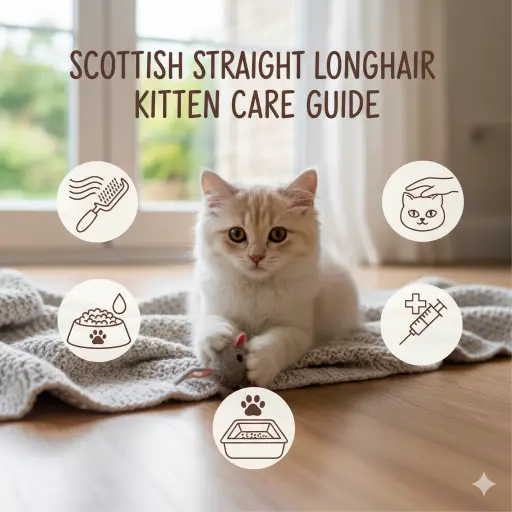
Bringing home a Scottish Straight Longhair kitten is exciting, but it can also feel a little scary if this is your first kitten. This breed is known for being calm, gentle, and people-friendly. Most Scottish Straight Longhair kittens enjoy being near their humans without always demanding attention. They often follow you from room to room, sit nearby, and quietly watch what you are doing. This calm nature makes them a good choice for families, apartments, and first-time cat owners.
Your kitten is still a baby, even if they look fluffy and confident. In the first few weeks at home, it is normal for them to hide, move slowly, or act shy. Some kittens settle in right away, while others need a few days to feel safe. Both reactions are normal. Give your kitten time to explore at their own pace. Talking softly and sitting on the floor can help them feel less scared.
Scottish Straight Longhair kittens are playful but not usually wild or rough. They enjoy gentle games like chasing a toy on a string or batting a soft ball. Short play sessions several times a day work better than long, tiring ones. If your kitten suddenly runs around the house, jumps on furniture, or zooms through rooms, do not panic. This is normal kitten energy and usually happens in short bursts.
It is also important to understand what “normal” looks like. Kittens sleep a lot, often 16 to 20 hours a day. They may eat small amounts many times a day. They may purr loudly one moment and ignore you the next. All of this is part of healthy kitten behavior.
Typical Scottish Straight Longhair Kitten Traits
| Trait | What to Expect |
|---|---|
| Calm personality | Usually gentle and relaxed |
| Affection style | Likes being near people |
| Energy level | Playful in short bursts |
| Noise level | Not very vocal |
| Adaptability | Adjusts well to indoor homes |
Preparing Your Home for a Scottish Straight Longhair Kitten
Before your kitten arrives, it helps to prepare your home so everything feels safe and simple. You do not need to buy many things or turn your house upside down. A calm, quiet setup is often better than a crowded one. Choose one small room or area where your kitten can stay during the first few days. This space helps them feel secure and makes learning the litter box easier.
Remove or block anything that could hurt a curious kitten. Loose wires, small objects on the floor, open windows, and cleaning products should be kept out of reach. Scottish Straight Longhair kittens are curious but not reckless, yet they can still get into trouble if something looks interesting. Soft bedding, a litter box, food bowls, and a few toys are enough to start.
Because this breed has long fur, think about cleanliness early. Place food and water bowls away from the litter box. Choose a litter box with low sides so your kitten can enter easily. Avoid loud machines or strong smells near your kitten’s area. Calm surroundings help them adjust faster and reduce stress.
Many new owners worry about buying the “perfect” supplies. The truth is that kittens care more about feeling safe than having expensive items. You can always add more toys or beds later. Start simple and watch what your kitten enjoys. Next, we will talk about feeding and daily care, which are big concerns for most new kitten owners.
Basic Home Setup Checklist
| Item | Why It Matters |
|---|---|
| Litter box | Helps with fast litter training |
| Food and water bowls | Supports healthy eating |
| Soft bed or blanket | Gives comfort and warmth |
| Scratching post | Protects furniture |
| Safe toys | Encourages play and learning |
Feeding and Daily Care Needs
Feeding your Scottish Straight Longhair kitten does not have to be confusing. Kittens grow fast and need regular meals to support their energy and development. Most kittens eat several small meals throughout the day rather than one or two big ones. Try to keep feeding times consistent, as routines help kittens feel secure.
Choose food made for kittens, not adult cats. Kitten food is designed to support growth and energy. Offer fresh water at all times in a clean bowl. Some kittens prefer shallow bowls so their whiskers do not touch the sides. If your kitten eats slowly or walks away and comes back later, that is normal. Do not force them to finish food.
Daily care also includes the litter box. Place your kitten in the litter box after meals or naps so they learn where to go. Most kittens naturally understand litter boxes and need very little training. Scoop the litter box daily to keep it clean. A clean box helps prevent accidents and keeps long fur from getting dirty.
Your kitten will sleep a lot, often more than they play. Short play sessions before meals can help them use energy and rest better afterward. A simple daily routine helps your kitten feel safe and calm.
Kitten Age and Daily Routine Overview
| Age Range | Feeding | Sleep | Play |
|---|---|---|---|
| 8–12 weeks | 3–4 meals daily | Very frequent | Short play sessions |
| 3–6 months | 3 meals daily | Still long hours | More active play |
| 6–12 months | 2–3 meals daily | Gradually less | Regular daily play |
Grooming and Hygiene for a Longhaired Kitten
Grooming is one of the most important parts of caring for a Scottish Straight Longhair kitten. Their soft, long fur can tangle if it is not brushed regularly. The good news is that grooming can be a calm and bonding time if you start early. Begin with short brushing sessions and speak softly so your kitten learns that brushing is safe.
You do not need to brush for a long time. A few minutes, two or three times a week, is often enough for kittens. Focus on areas where tangles can form, such as behind the ears, under the legs, and around the tail. If your kitten tries to walk away, do not force them. Stop and try again later.
Hygiene also includes keeping the fur around the litter area clean. Longhaired kittens may sometimes get litter stuck in their fur. Gently wiping with a damp cloth can help. Avoid bathing unless truly needed, as most kittens clean themselves well. Regular brushing often prevents the need for baths.
Grooming Tasks and Frequency
| Task | How Often | Purpose |
|---|---|---|
| Brushing | 2–3 times a week | Prevents tangles |
| Fur check | Weekly | Spots dirt or mats |
| Eye and ear check | Weekly | Basic cleanliness |
| Litter area cleaning | As needed | Keeps fur clean |
Health, Safety, and First-Year Care Tips
Your Scottish Straight Longhair kitten does not need constant medical attention, but basic health awareness is important. A healthy kitten is usually active, curious, and has a good appetite. Their eyes should look clear, and their coat should feel soft and clean. Small changes in behavior can happen as they grow, so focus on overall patterns rather than one bad day.
Plan a first vet visit soon after bringing your kitten home. This visit helps set a health baseline and gives you a chance to ask general care questions. Try to stay calm and relaxed during vet visits, as kittens can sense stress. Regular checkups during the first year support healthy growth, but you do not need to worry about every small behavior change.
Safety is especially important for indoor kittens. Keep windows and balconies secure, store harmful items out of reach, and supervise play around furniture. Scottish Straight Longhair kittens are usually careful, but accidents can still happen. Creating a safe indoor environment allows your kitten to explore without danger.
The first year is a learning time for both you and your kitten. Mistakes will happen, and that is okay. Focus on routines, gentle care, and patience. Your kitten does not need perfection, only consistency and kindness. With time, your Scottish Straight Longhair kitten will grow into a calm and loving companion.
For more general cat care information, you can visit this trusted resource: https://www.aspca.org/pet-care/cat-care

Ata Ur Rehman is the founder of Pet Age in Human Years Calculator, an educational platform that provides age conversion charts and lifespan guides for dogs, cats, birds, and other companion animals. His work focuses on helping pet owners understand how animal ages translate into human years using commonly accepted age conversion formulas and published lifespan averages.
The website compiles breed and species lifespan data from kennel clubs, breed organizations, and general animal lifespan studies to present simple and easy-to-understand guides for pet owners worldwide.
This website was created to centralize animal age conversion charts into one easy reference platform for pet owners.