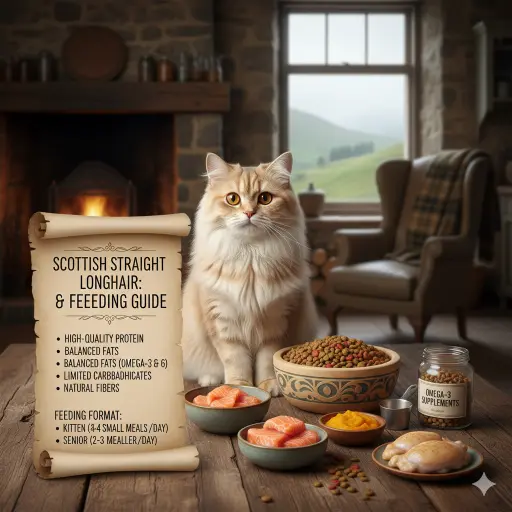
Scottish Straight Longhair cats are known for their calm nature, sweet personality, and soft, flowing coat. Even though they look very fluffy and fancy, their food needs are not very different from other healthy domestic cats. The key is understanding what all cats truly need to stay strong, active, and comfortable throughout life. Good nutrition supports their muscles, coat quality, digestion, and long-term health.
Cats are obligate carnivores. This means their bodies are made to eat meat as the main part of their diet. Protein from animal sources helps keep their muscles strong and supports healthy organs. Scottish Straight Longhairs do not need special or rare foods just because of their breed. What matters most is feeding a complete and balanced diet made for cats, not trends or marketing claims.
Because this breed often has a calm or indoor lifestyle, weight control becomes very important. Their long fur can hide weight gain, so owners may not notice changes right away. Feeding the right amount and avoiding extra treats helps prevent slow weight gain over time. A healthy diet should support a lean body, not just a fluffy look.
Another important point is coat care. While food alone will not prevent shedding or tangles, a balanced diet with enough protein and fats helps keep the skin healthy and the coat shiny. Poor nutrition can lead to dull fur or dry skin, which is often noticed first in longhair cats. This makes everyday feeding choices more important than many owners realize.
Best Food Choices for Scottish Straight Longhair Cats
When choosing food for a Scottish Straight Longhair, the goal is balance and quality, not perfection. Most healthy cats do well on commercial cat foods that meet recognized nutrition standards. These foods are designed to give cats the right mix of protein, fats, vitamins, and minerals in every meal.
Wet food is often helpful for longhair cats because it contains more moisture. Cats naturally drink little water, and wet food helps support hydration. Good hydration supports digestion and overall comfort. Dry food, on the other hand, is convenient, easy to store, and can help with feeding routines, especially in multi-cat homes.
Many owners choose mixed feeding, which means offering both wet and dry food. This approach combines the moisture benefits of wet food with the convenience of dry food. Mixed feeding can also make meals more interesting for cats who get bored easily.
No matter the food type, always look for labels that say the food is “complete and balanced” for cats. Avoid foods made mainly for dogs or foods with unclear labeling. High-quality protein should be listed early in the ingredient list, but you do not need to chase rare ingredients or exotic meats.
Wet vs Dry vs Mixed Feeding Comparison
| Feeding Type | Moisture Level | Main Benefits | Possible Drawbacks | Suitability for Longhair Cats |
|---|---|---|---|---|
| Wet Food | High | Supports hydration, easy to chew | Spoils quickly, higher cost | Very suitable |
| Dry Food | Low | Convenient, longer shelf life | Lower moisture | Suitable with water access |
| Mixed Feeding | Medium | Balanced approach | Needs planning | Highly suitable |
How Much and How Often to Feed a Scottish Straight Longhair
How much food a Scottish Straight Longhair needs depends on age, activity level, and body size. Many owners overfeed without realizing it, especially when cats ask for food or look thin under their fur. Portion control is one of the most important parts of healthy feeding.
Meal feeding is often better than leaving food out all day. Scheduled meals help control intake and make it easier to notice appetite changes. Free-feeding dry food can lead to slow weight gain, especially in calm or indoor cats. Measuring food using a cup or scale can help keep portions consistent.
Kittens usually need more frequent meals because they are growing fast. Adult cats do well with two meals a day, while seniors may prefer smaller meals more often. Always watch your cat’s body condition instead of relying only on feeding charts on packaging.
It is also important to remember that calorie density matters more than bowl size. Some foods are very rich, so a small amount may be enough. If your cat is gaining or losing weight, adjust portions slowly and observe changes over a few weeks.
General Feeding Frequency by Age and Activity Level
| Life Stage | Activity Level | Meals per Day | Feeding Notes |
|---|---|---|---|
| Kitten | High | 3–4 | Supports growth |
| Adult | Moderate | 2 | Maintain routine |
| Adult | Low | 2 | Watch weight |
| Senior | Low–Moderate | 2–3 | Smaller portions |
Feeding Scottish Straight Longhairs at Different Life Stages
Scottish Straight Longhair kittens need food that supports growth and development. Kitten food is higher in protein and energy to support growing muscles and bones. Frequent meals help meet their energy needs and support steady growth.
Adult cats need maintenance diets that support muscle health without adding extra calories. This is the stage where weight gain often begins if portions are too large or treats are frequent. Adult feeding should focus on balance and routine rather than variety.
Senior Scottish Straight Longhairs may eat less or become more sensitive to food changes. Older cats benefit from foods that are easy to chew and digest. Maintaining muscle mass becomes more important with age, so protein quality still matters.
Transitions between life stages should be slow. Changing food too quickly can upset digestion. Mixing old and new food over several days helps cats adjust without stress.
Life Stage Nutrition Focus
| Life Stage | Main Nutrition Focus | Common Owner Mistakes |
|---|---|---|
| Kitten | Growth and energy | Switching foods too early |
| Adult | Weight balance | Overfeeding |
| Senior | Digestibility | Ignoring appetite changes |
Treats, Hydration, and Common Feeding Mistakes to Avoid
Treats can be part of a healthy diet, but they should never replace balanced meals. Treats should make up only a small part of daily food intake. Over-treating is a common cause of weight gain, especially in longhair cats whose body shape is harder to judge.
Human food can be risky for cats. Many foods safe for people are not safe for cats, and some can upset digestion. It is best to stick with cat-specific treats and avoid sharing table food.
Hydration is often overlooked. Fresh water should always be available. Some cats prefer wide bowls, quiet locations, or moving water. Wet food can also help increase water intake naturally.
Common feeding mistakes include sudden food changes, feeding based on appearance alone, and believing breed cats need special diets. Paying attention to routine, portions, and body condition helps avoid these problems.
Do’s and Don’ts of Feeding Scottish Straight Longhairs
| Do | Don’t |
|---|---|
| Feed balanced cat food | Overfeed treats |
| Measure portions | Rely on fluff for weight checks |
| Provide fresh water | Change food suddenly |
| Watch body condition | Follow trends blindly |
For general feline nutrition standards and guidance, you can visit the World Small Animal Veterinary Association nutrition resources:
https://wsava.org/global-guidelines/global-nutrition-guidelines/

Ata Ur Rehman is the founder of Pet Age in Human Years Calculator, an educational platform that provides age conversion charts and lifespan guides for dogs, cats, birds, and other companion animals. His work focuses on helping pet owners understand how animal ages translate into human years using commonly accepted age conversion formulas and published lifespan averages.
The website compiles breed and species lifespan data from kennel clubs, breed organizations, and general animal lifespan studies to present simple and easy-to-understand guides for pet owners worldwide.
This website was created to centralize animal age conversion charts into one easy reference platform for pet owners.