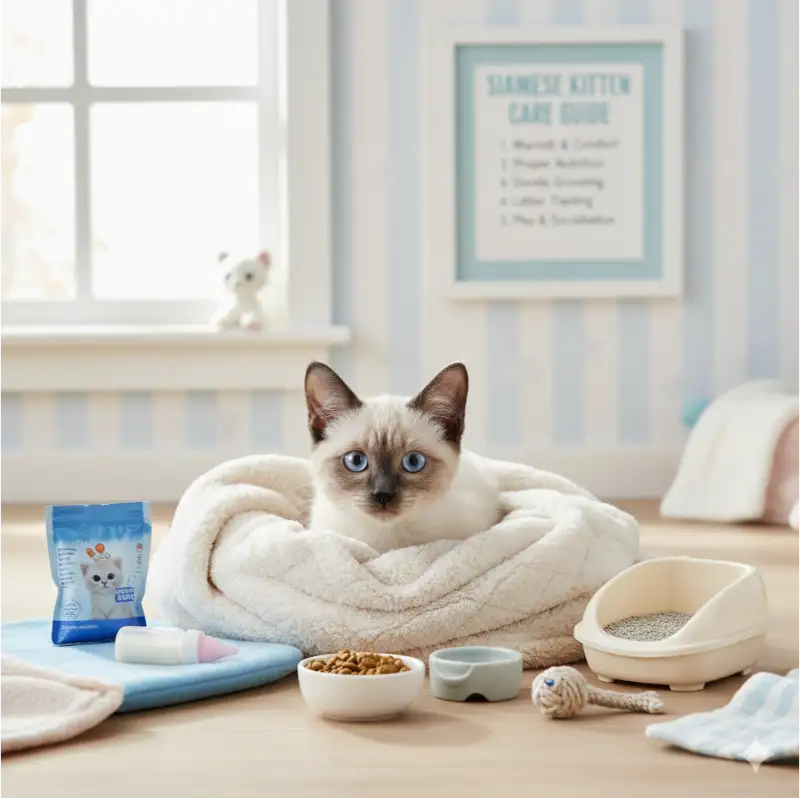
Bringing home a Siamese kitten is exciting, but it can also feel overwhelming. Siamese kittens are not quiet, distant cats. They are active, curious, and very social from a young age. They want to be near you, follow you, and “talk” to you with their soft but constant voice. If you understand this early, you will avoid many common mistakes. Siamese kittens do not like being ignored for long hours. They need attention, play, and daily interaction to feel safe and happy.
In the first few weeks of life, kittens depend fully on their mother. By the time most people bring a Siamese kitten home (around 8–12 weeks old), they are eating solid food, using the litter box, and learning social skills. This is a very important learning stage. Your kitten is forming habits that can last a lifetime. Gentle handling, calm voices, and short play sessions will help build trust.
Siamese kittens grow quickly. You may notice changes almost every week. One week they seem tiny and sleepy, and the next week they are climbing your curtains. This fast development is normal. They are building muscles, confidence, and coordination. You might also notice their color points (ears, face, paws, tail) becoming darker over time. That is a natural breed trait.
Here is a simple guide to help you understand early development:
| Age | What Happens | What You Should Do |
|---|---|---|
| 0–4 weeks | Eyes open, limited movement | Stay with mother, keep warm |
| 5–8 weeks | Play begins, baby teeth grow | Start gentle handling |
| 8–12 weeks | Very playful, learning rules | Begin home routine |
| 3–6 months | High energy, teething | Provide toys and scratching posts |
If your kitten seems very active, vocal, or follows you everywhere, do not worry. This is normal Siamese behavior. They are known for strong bonding and emotional connection. The key is to provide structure, attention, and a safe space.
Feeding & Nutrition for Siamese Kittens
Good nutrition supports growth, brain development, and energy levels. Siamese kittens burn a lot of energy because they are active and playful. They need high-quality kitten food that is rich in protein and healthy fats. Always choose food labeled “complete and balanced for kittens.” Adult cat food is not enough for a growing kitten.
Young kittens need small meals many times a day. Their stomachs are small, and they cannot eat large amounts at once. As they grow, you can slowly reduce the number of meals while increasing portion size. Fresh water must always be available. Some Siamese kittens enjoy running water, so a small pet fountain can help encourage drinking.
Below is a simple feeding guide:
| Age | Food Type | How Often |
|---|---|---|
| 8–12 weeks | Wet kitten food + small amount of dry | 4 meals per day |
| 3–6 months | Wet + dry kitten food | 3 meals per day |
| 6–12 months | Mostly kitten formula | 2–3 meals per day |
Avoid giving cow’s milk. Many kittens cannot digest it well. Also avoid salty human food, bones, or sweets. Treats should be small and limited. Overfeeding can lead to stomach upset and unhealthy weight gain.
If your kitten seems very hungry all the time, this is often normal during growth spurts. However, sudden loss of appetite is not normal. In that case, contact your veterinarian for advice.
Socialization, Behavior & Training Essentials
Siamese kittens are very social. They do not like to be alone for long hours. They bond deeply with their owners and often choose one favorite person. Because they are smart, they learn fast. This means they can learn good habits quickly, but they can also learn bad habits if you are not consistent.
Start socialization early. Let your kitten meet different people in a calm way. Allow gentle petting and short visits. If you have other pets, introduce them slowly. Keep first meetings short and supervised. Never force contact. A slow, calm introduction builds confidence.
Play biting and scratching are common problems. Kittens explore with their mouth and claws. If your Siamese kitten bites your hand during play, do not shout or hit. Instead, stop play immediately and offer a toy. This teaches them that hands are not toys. Consistency is very important.
Here is a quick behavior guide:
| Do | Avoid |
|---|---|
| Use toys for play | Use hands as toys |
| Reward calm behavior | Punish loudly |
| Keep play sessions short | Overstimulate with rough play |
| Provide scratching posts | Allow furniture scratching |
Daily play is not optional for Siamese kittens. They need at least 20–30 minutes of active play each day. Wand toys, soft balls, and puzzle feeders are great choices. Without enough mental and physical activity, Siamese kittens may become noisy or destructive.
Grooming, Hygiene & Health Basics
Siamese kittens have short, fine coats that are easy to maintain. They do not need heavy grooming, but regular brushing helps reduce shedding and builds trust. Brushing two or three times a week is enough. Use a soft brush and keep sessions short and calm.
Nail trimming should start early. Even if the nails are small, gently touching paws helps your kitten get used to handling. Trim only the sharp tips. If you are unsure, ask your veterinarian to show you how. Clean ears gently with a soft cloth if you see dirt, but do not push anything deep inside the ear.
Here is a simple care checklist:
| Care Task | How Often | Why It Matters |
|---|---|---|
| Brushing | 2–3 times weekly | Reduces shedding |
| Nail trimming | Every 2–3 weeks | Prevents scratches |
| Ear check | Monthly | Prevents buildup |
| Vet check | As advised | Tracks growth |
Your first vet visit should happen soon after bringing your kitten home. The veterinarian will check weight, teeth, eyes, and overall health. Regular checkups help catch small problems early. Watch for warning signs such as constant diarrhea, extreme tiredness, or refusal to eat. If you notice these signs, contact a vet.
Safety, Environment & Daily Routine
Siamese kittens are curious and love to climb. Your home should be safe before they arrive. Remove loose wires, small objects, and toxic plants. Keep windows closed or covered with secure screens. Store cleaning supplies and medicines in closed cabinets.
Create a quiet sleeping area. Kittens sleep 16–20 hours per day. This is normal. They often have short bursts of energy followed by deep naps. Try to keep a simple daily routine so your kitten feels secure.
Here is an example daily routine:
| Time | Activity |
|---|---|
| Morning | Feeding + short play |
| Afternoon | Nap + calm time |
| Evening | Feeding + longer play |
| Night | Quiet time + sleep |
Indoor-only living is safest for kittens. Outdoor areas have risks like traffic and disease. If you want fresh air experiences, use a secure harness or cat-safe enclosure.
Common mistakes new owners make include skipping playtime, feeding too many treats, and allowing rough play. Structure and patience are the keys to raising a confident Siamese cat.
This guide covers the main needs of a Siamese kitten: care basics, feeding, behavior, grooming, and safety. With love, structure, and daily attention, your kitten will grow into a loyal and affectionate adult cat.
For more trusted feline health information, you can visit the American Veterinary Medical Association website: https://www.avma.org

Ata Ur Rehman is the founder of Pet Age in Human Years Calculator, an educational platform that provides age conversion charts and lifespan guides for dogs, cats, birds, and other companion animals. His work focuses on helping pet owners understand how animal ages translate into human years using commonly accepted age conversion formulas and published lifespan averages.
The website compiles breed and species lifespan data from kennel clubs, breed organizations, and general animal lifespan studies to present simple and easy-to-understand guides for pet owners worldwide.
This website was created to centralize animal age conversion charts into one easy reference platform for pet owners.