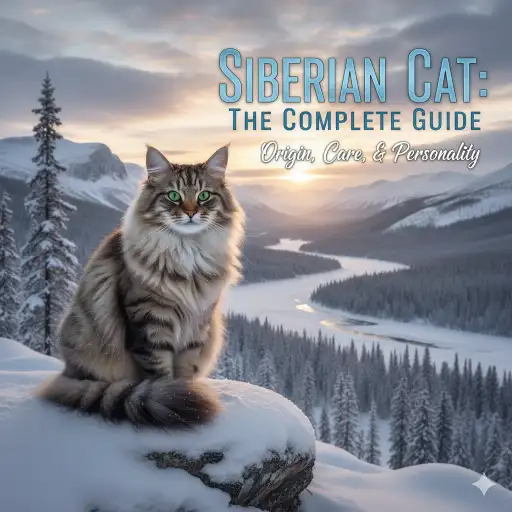
The Siberian cat is a strong, fluffy, and loving breed that comes from the cold forests of Russia. This natural breed has lived for hundreds of years in harsh weather, which helped shape its thick coat and powerful body. When people search for a “Siberian cat breed guide,” they often want to know one thing first: what makes this cat special? The answer is simple. The Siberian is both wild-looking and sweet-natured. It has the beauty of a forest cat and the heart of a family pet.
Siberians are known for their large size, round eyes, and thick triple coat. Unlike some modern breeds that were carefully designed by humans, the Siberian developed naturally. This means the breed kept strong survival traits. Their bodies are muscular, their legs are sturdy, and their coats are water-resistant. In winter, their fur becomes even thicker. In summer, it sheds heavily to prepare for warmer weather.
Another reason people are interested in this breed is the idea that Siberians may be hypoallergenic. While no cat is fully allergy-free, some Siberians produce lower levels of the Fel d 1 protein, which causes allergies in many people. This makes them a popular choice for families who want a cat but struggle with mild allergies. Still, allergy reactions vary from person to person.
Siberians are also known for their balanced personality. They are affectionate but not too clingy. They enjoy playtime but also like quiet moments. Many owners say their Siberian follows them around the house like a small shadow, yet still keeps an independent spirit.
Here is a quick snapshot of the breed:
| Trait | Details |
|---|---|
| Origin | Russia (Siberian forests) |
| Size | Medium to large |
| Weight | 8–17 pounds (3.5–7.7 kg) |
| Lifespan | 12–16 years (some live longer) |
| Coat | Triple-layer, water-resistant |
| Energy Level | Moderate to high |
| Hypoallergenic | Lower Fel d 1 in some lines |
Appearance & Physical Traits
The Siberian cat has a strong and rounded body. Males are usually larger than females. Adult males often weigh between 12 and 17 pounds, while females usually weigh 8 to 12 pounds. They are slow to mature and may not reach full size until they are 4 or even 5 years old. This slow growth gives them time to develop thick muscles and a solid frame.
Their coat is one of their most famous features. The Siberian has a triple coat. This means it has a soft undercoat for warmth, a middle layer for insulation, and longer guard hairs on top to repel water. This coat helped them survive freezing Russian winters. During spring, they shed heavily. Many owners call this the “coat blow,” and it can look dramatic. Regular brushing during this time is important.
Siberians come in many colors and patterns. The Neva Masquerade is a colorpoint type of Siberian with blue eyes. It has darker colors on the ears, face, paws, and tail, similar to a Siamese pattern. Other Siberians may have green or gold eyes.
Here are common coat patterns:
| Pattern | Description |
|---|---|
| Tabby | Stripes or classic swirls |
| Solid | One single color |
| Bi-color | White mixed with another color |
| Colorpoint | Dark face, ears, paws, tail |
| Tortoiseshell | Mixed black and red tones |
Their head is round, with medium ears that often have small lynx tips. Their eyes are large and expressive. Their tail is thick and fluffy. Their back legs are slightly longer than their front legs, which helps them jump high. Many Siberians love climbing tall cat trees.
Temperament & Behavior
Siberians are known for being gentle and confident. They are friendly with their family and often greet guests without fear. They are not usually shy, but they are also not overly loud or dramatic. Compared to a Siamese cat, a Siberian is quieter. They may chirp, trill, or make soft sounds when they want attention.
This breed forms strong bonds with people. Some owners say their Siberian chooses one favorite person but still loves the whole family. They enjoy sitting near you on the couch. Some will sit in your lap, while others prefer to stay close without being held. They like being involved in daily life, whether you are cooking, cleaning, or watching TV.
Siberians are playful well into adulthood. They enjoy chasing toys, playing fetch, and even splashing in water. Many owners are surprised to see their Siberian tapping water in a bowl or joining them near a sink. Because they are smart, they can learn simple tricks like “sit” or “high five.” They respond well to positive rewards like treats and praise.
This breed is usually good with children and other pets. Their strong body helps them handle active play with kids. They are patient but still need respect. When raised with dogs, they often adjust well, especially if the dog is calm. Early socialization helps them feel comfortable in multi-pet homes.
Care & Health Essentials
Even though Siberians have long fur, they are not as high-maintenance as some people think. Weekly brushing is usually enough during most of the year. During heavy shedding season, brushing two to three times a week is better. This helps remove loose hair and prevents mats. Their coat does not tangle as easily as some other long-haired breeds.
They need daily play to stay healthy. Siberians have moderate to high energy. A tall cat tree, scratching posts, and interactive toys are very helpful. Without enough activity, they may become bored and climb on kitchen counters or shelves. Mental games like puzzle feeders are also a good idea.
Like all breeds, Siberians can have certain health risks. Hypertrophic cardiomyopathy (HCM) is a heart condition seen in many cat breeds, including Siberians. Polycystic kidney disease (PKD) is another concern in some lines. Responsible breeders test their cats before breeding.
Here is a simple care overview:
| Category | Expectation |
|---|---|
| Grooming | Weekly brushing; more during spring |
| Exercise | Daily play and climbing space |
| Health Risks | HCM, PKD, obesity if inactive |
| Lifespan | 12–16 years |
| Vet Care | Annual checkups, heart screening |
Regular vet visits, good food, and active play help a Siberian live a long and healthy life.
Buying, Cost & Breed Comparison
Siberian kittens are not cheap. The price usually ranges from $1,200 to $3,000 depending on the breeder, location, and bloodline. Show-quality kittens may cost more. The Neva Masquerade type can also have higher pricing in some areas. It is important to buy from a breeder who provides health testing records.
Besides the kitten price, owners must think about long-term costs. Food, litter, grooming tools, toys, and vet visits all add up. Pet insurance can help with unexpected medical bills, especially since heart screening may be recommended.
When comparing the Siberian to other large breeds, many people also look at the Maine Coon or Norwegian Forest Cat. All three are forest-type cats with thick coats. However, Siberians are often described as slightly more rounded in face shape and more water-resistant in coat.
Here is a simple comparison:
| Trait | Siberian | Maine Coon | Norwegian Forest Cat |
|---|---|---|---|
| Origin | Russia | United States | Norway |
| Size | Large | Very Large | Large |
| Coat | Triple-layer | Long and shaggy | Dense double coat |
| Energy | Moderate-High | Moderate | Moderate |
| Personality | Affectionate, balanced | Gentle, social | Calm, independent |
The Siberian is a great choice for families who want a strong, loving, and playful cat. They do best in homes where they have space to climb and people to interact with daily. They may not be ideal for someone who wants a very quiet or low-energy pet.
If you are thinking about bringing a Siberian into your home, take time to research breeders and meet the cat in person if possible. A healthy and well-socialized kitten will grow into a wonderful companion.
For more detailed breed standards and official recognition information, you can visit The International Cat Association (TICA) at https://tica.org.

Ata Ur Rehman is the founder of Pet Age in Human Years Calculator, an educational platform that provides age conversion charts and lifespan guides for dogs, cats, birds, and other companion animals. His work focuses on helping pet owners understand how animal ages translate into human years using commonly accepted age conversion formulas and published lifespan averages.
The website compiles breed and species lifespan data from kennel clubs, breed organizations, and general animal lifespan studies to present simple and easy-to-understand guides for pet owners worldwide.
This website was created to centralize animal age conversion charts into one easy reference platform for pet owners.