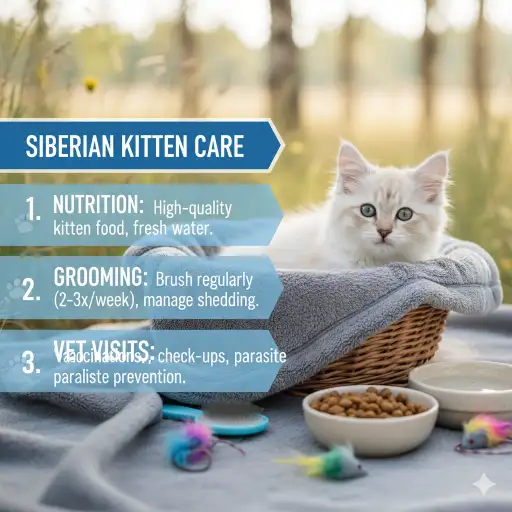
Bringing home a Siberian kitten is exciting, but it can also feel overwhelming, especially if this is your first cat. Siberian kittens are not quiet, sleepy ornaments. They are strong, playful, curious, and very people-focused. They grow into large, muscular cats with thick triple coats, but as kittens they are bundles of energy who want to explore everything. Knowing this from the start helps you set the right expectations.
Siberian kittens mature more slowly than many other breeds. They may not look fully grown until around 3 to 5 years of age. In the first year, you will see fast growth, big paws, and a fluffy coat that keeps getting thicker. They are smart and often follow their owners from room to room. Many owners say their Siberian acts more like a small dog than a cat because they love attention and interaction.
Before your kitten arrives, prepare a quiet, safe space. This can be a bedroom or a calm corner of your home. Place a litter box, food and water bowls, a soft bed, and a scratching post in this area. Keep loud noises and too many visitors away for the first few days. Even confident kittens need time to adjust to new smells and sounds.
You should also kitten-proof your home. Hide electrical cords, remove small objects that can be swallowed, and secure windows and balconies. Siberian kittens love to climb, so make sure shelves are stable and breakable items are out of reach. Think like a curious toddler. If it dangles, rolls, or crinkles, your kitten will want to investigate it.
In the first 24 to 48 hours, let your kitten explore slowly. Do not force cuddles. Sit on the floor and let them come to you. Speak softly. Offer gentle play with a feather wand. This builds trust. Many new owners worry if their kitten hides at first. This is normal. Give them time and space, and most Siberian kittens adjust quickly.
Feeding & Daily Nutrition for Growing Kittens
Feeding your Siberian kitten the right way supports healthy growth, strong bones, and a thick shiny coat. Kittens need more calories and nutrients than adult cats because they are growing fast. Choose a high-quality kitten food that says it is complete and balanced for growth. This means it contains the nutrients kittens need during their first year.
Young kittens eat small amounts but need meals more often. At 8 to 12 weeks old, most kittens do best with 3 to 4 small meals a day. As they grow, you can slowly reduce the number of meals. Always make changes slowly over several days so their stomach can adjust.
Here is a simple feeding guide to make it easy:
| Age | Meals Per Day | Feeding Notes |
|---|---|---|
| 8–12 weeks | 3–4 | Small meals, watch appetite and energy |
| 3–6 months | 3 | Growing fast, high play energy |
| 6–12 months | 2–3 | Growth slows a little, adjust portions |
Wet food helps with hydration, which is important for all cats. Dry food can be convenient and good for grazing if your kitten does not overeat. Some owners use a mix of both. Fresh water should always be available. Clean the bowl daily.
Do not give too many treats. It is easy to overfeed a fluffy Siberian kitten because they always seem hungry. Rapid growth is normal, but steady weight gain is better than sudden changes. If your kitten is active, playful, and has a shiny coat, these are good signs they are eating well.
Litter Training & Household Routines That Work
The good news is that most Siberian kittens learn litter box habits very quickly. Many kittens come home already trained by their breeder. Still, a new home can confuse them at first. Show your kitten where the litter box is as soon as you bring them home. Gently place them inside after meals and naps.
Choose a large litter box, even for a small kitten. Siberians grow into big cats, and they like space. Place the box in a quiet area, not next to loud machines like washing machines. Keep it away from food bowls. Cats prefer privacy and cleanliness.
Scoop the litter box at least once a day. A dirty box is one of the main reasons kittens start having accidents. If an accident happens, stay calm. Do not yell. Clean the area well to remove the smell, and guide your kitten back to the box. Most problems are caused by stress, a dirty box, or sudden changes.
Daily routines help your kitten feel safe. Try to feed, play, and clean the litter box at similar times each day. Siberian kittens have bursts of energy, often in the morning and evening. Plan short play sessions during these times. A tired kitten is less likely to get into trouble at night.
Grooming & Care for the Siberian Coat & Hygiene
Siberians have a thick triple coat. Even as kittens, their fur is soft and full. Starting grooming early makes life much easier later. Brush your kitten gently a few times a week. Use a soft brush and keep sessions short and positive. Offer praise or a small treat after brushing.
During seasonal changes, especially in spring and fall, they may shed more. Regular brushing helps prevent tangles and hairballs. Many owners are surprised that kittens can get small mats behind the ears or under the legs. Check these areas often.
Trim your kitten’s nails every 2 to 3 weeks. If you start when they are young, they get used to it quickly. Press gently on the paw to extend the claw and trim only the sharp tip. If you are unsure, ask your vet or a groomer to show you how.
Bathing is usually not needed unless your kitten gets very dirty. Siberians are generally clean cats. Instead of full baths, focus on brushing, nail trimming, and checking ears and eyes for dirt. Keep grooming calm and gentle so your kitten learns that handling is safe.
Kitten Safety, Health Basics & Everyday Confidence
Keeping your Siberian kitten safe indoors is one of the best ways to protect their health. Secure windows and balconies. Remove toxic plants. Store cleaning products in closed cabinets. Small objects like hair ties, rubber bands, and string can be dangerous if swallowed.
Siberian kittens are strong climbers. Provide safe climbing options like a cat tree. This helps prevent them from jumping onto unsafe surfaces. Scratching posts are also important. They protect your furniture and allow your kitten to stretch and mark territory in a healthy way.
You may wonder what is normal behavior. It is normal for kittens to have zoomies, chew on things, and test boundaries. It is normal for them to sleep many hours a day. It is also normal for appetite to change slightly during growth spurts. If your kitten is playful, alert, and using the litter box regularly, these are good signs.
Here is a simple growth and behavior guide:
| Age Range | What’s Normal | What to Expect |
|---|---|---|
| 8–12 weeks | Learning routines | Short play bursts, lots of sleep |
| 3–6 months | Rapid growth | Climbing, chasing, testing limits |
| 6–12 months | More strength | Longer play sessions, more confidence |
Schedule regular vet visits during the first year. Your vet will guide you on vaccines, parasite prevention, and spaying or neutering. Keep a small notebook or phone note with dates and any questions you have. This keeps things simple and organized.
Many new owners worry they are doing something wrong. In most cases, patience and routine solve small problems. Siberian kittens are social and loving. Spend time playing, brushing, and talking softly to your kitten. This builds a strong bond that lasts for many years.
Caring for a Siberian kitten is a journey. There will be playful chaos, small mistakes, and learning moments. But there will also be warm cuddles, funny jumps, and a deep connection. Stay calm, keep routines simple, and focus on daily care. With time, your tiny fluffy kitten will grow into a confident, beautiful Siberian cat.
For more general cat care guidance, you can also visit the American Association of Feline Practitioners at https://catvets.com for trusted educational resources.

Ata Ur Rehman is the founder of Pet Age in Human Years Calculator, an educational platform that provides age conversion charts and lifespan guides for dogs, cats, birds, and other companion animals. His work focuses on helping pet owners understand how animal ages translate into human years using commonly accepted age conversion formulas and published lifespan averages.
The website compiles breed and species lifespan data from kennel clubs, breed organizations, and general animal lifespan studies to present simple and easy-to-understand guides for pet owners worldwide.
This website was created to centralize animal age conversion charts into one easy reference platform for pet owners.