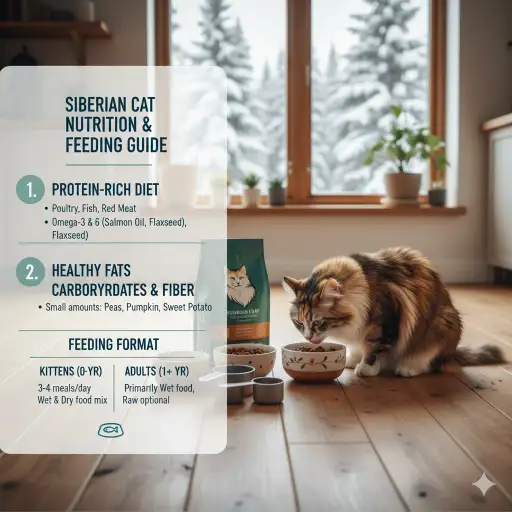
Siberian cats are large, strong, and slow to mature. They have thick triple coats, powerful muscles, and playful energy even as adults. Because of their size and build, many owners wonder if they need a special breed diet. The truth is simple: Siberians do not need a “breed-specific” formula, but they do need high-quality, balanced nutrition that supports muscle, healthy skin, steady growth, and long-term heart health.
All cats, including Siberians, are obligate carnivores. This means their bodies are designed to use animal protein as their main fuel. They need nutrients that naturally come from meat, such as taurine, arachidonic acid, and certain vitamins. A good Siberian cat diet should focus on high-quality animal protein first, not fillers or trendy marketing claims.
Protein is the most important part of a Siberian’s diet. Because this breed is muscular and athletic, protein helps maintain lean body mass and supports normal growth in kittens. But quality matters more than just a high number on the label. Look for named animal sources like chicken, turkey, beef, or fish as the first ingredients. “Meat by-products” are not automatically bad, but clearly named protein sources give better clarity and consistency.
Fat is also important. It provides energy and helps support that famous Siberian coat. Healthy fats contain omega-3 and omega-6 fatty acids, which support skin health and reduce dryness. However, fat is calorie-dense. If portions are not controlled, too much fat can lead to weight gain, especially in indoor or neutered cats.
Carbohydrates are often misunderstood. Cats do not require carbohydrates in the same way they require protein and fat, but small to moderate amounts can be used for energy. The key is balance. A food that is extremely high in carbohydrates and low in protein is not ideal. At the same time, “grain-free” does not automatically mean healthier. What matters most is that the food is complete and balanced for cats.
Taurine deserves special attention. It is an essential amino acid for heart and eye health. Unlike some animals, cats cannot make enough taurine on their own. Commercial cat foods that meet recognized standards include taurine at safe levels. This is one reason feeding a properly balanced commercial diet is safer than trying to create homemade meals without professional guidance.
When choosing food, look for a statement that says it is “complete and balanced” for your cat’s life stage. In the United States, this usually means it meets AAFCO standards. In other countries, similar regulatory guidelines apply. This statement helps confirm the food contains the right balance of nutrients.
Below is a simple guide to help you understand what to look for:
| Nutrient | Why It Matters for Siberians | What to Look for on Label |
|---|---|---|
| Protein | Builds muscle, supports growth | Named animal protein as first ingredient |
| Fat | Energy, coat health | Moderate fat, includes omega fatty acids |
| Taurine | Heart and eye health | Added taurine listed |
| Vitamins & Minerals | Overall body function | “Complete and balanced” statement |
| Carbohydrates | Extra energy source | Not listed as primary ingredient |
Feeding a Siberian is not about chasing trends. It is about steady, balanced nutrition that supports their size, coat, and active personality.
How Much and How Often Should You Feed a Siberian Cat?
Many Siberian cats look bigger than they really are because of their thick fur. This can make portion control tricky. Feeding the right amount is just as important as choosing the right food. Overfeeding is one of the most common mistakes owners make, especially with large breeds.
The amount your Siberian needs depends on weight, age, and activity level. A playful young adult who runs and climbs daily will need more calories than a calm indoor senior. Always start with the feeding guideline on the package, but treat it as a starting point, not a rule. Watch your cat’s body shape and adjust slowly.
Kittens need more frequent meals because they are growing. Adult cats usually do well with two measured meals per day. Free-feeding, where food is left out all day, can lead to overeating. Many Siberians enjoy food and may eat out of boredom if it is always available.
Neutered and spayed cats often have slightly lower energy needs. Their appetite may increase, but their metabolism can slow down. This is when portion control becomes very important.
Here is a simple feeding frequency guide:
| Life Stage | Meals Per Day | Feeding Style |
|---|---|---|
| Kitten (under 6 months) | 3–4 | Scheduled small meals |
| Young Adult | 2–3 | Measured portions |
| Adult | 2 | Measured portions |
| Senior | 2 | Measured, monitor appetite |
Portion needs vary, but this conceptual table gives a basic idea:
| Weight Range | Activity Level | General Portion Guidance |
|---|---|---|
| 8–10 lbs | Moderate | Follow label lower range |
| 10–15 lbs | Moderate | Follow middle range |
| 15+ lbs | Active | Upper label range, monitor body shape |
Body condition matters more than weight alone. You should be able to feel your cat’s ribs with gentle pressure, but not see them. From above, there should be a slight waist behind the ribs.
| Area to Check | Ideal | Overweight Sign |
|---|---|---|
| Ribs | Felt, not seen | Hard to feel |
| Waist | Slight curve | No visible curve |
| Belly | Small tuck | Sagging or round |
Wet vs Dry vs Mixed Feeding for Siberian Cats
Both wet and dry food can support a healthy Siberian cat if they are complete and balanced. The choice often depends on your budget, schedule, and your cat’s preferences.
Wet food contains much more moisture. This helps support hydration and can be useful for cats who do not drink much water. It also tends to be less calorie-dense, which can help with portion control. Some owners find wet food helpful for weight management.
Dry food is convenient and often more affordable. It has a longer shelf life and is easy to measure. However, it is calorie-dense, so portions must be controlled carefully. A small scoop can contain many calories.
Some owners choose mixed feeding, which combines wet and dry food. This approach can offer variety and increase moisture intake. When mixing, it is important to adjust portions so you do not accidentally double the calories.
Here is a simple comparison:
| Feature | Wet Food | Dry Food | Mixed Feeding |
|---|---|---|---|
| Moisture | High | Low | Moderate |
| Calorie Density | Lower per gram | Higher per gram | Depends on ratio |
| Cost | Usually higher | Usually lower | Medium |
| Portion Control | Easier to limit calories | Must measure carefully | Requires planning |
| Hydration Support | Strong | Low | Moderate |
Dental health is often mentioned in dry food marketing. While dry kibble may provide mild mechanical cleaning, it does not replace proper dental care. Regular checkups remain important.
Life Stage Feeding: From Siberian Kitten to Senior
Siberian cats mature slowly compared to many breeds. They may continue growing for up to three to five years. During kittenhood, they need extra protein and calories to support healthy development. However, growth should be steady, not rapid. Overfeeding large-breed kittens can stress developing joints.
Kittens under six months usually need three to four meals per day. After six months, meals can slowly reduce to two or three per day. Transition from kitten food to adult food should happen gradually, usually around 12 months, but large breeds may benefit from a slightly longer kitten phase. Your veterinarian can guide timing.
Adult Siberians need balanced calories to maintain muscle without gaining excess weight. Because they are fluffy, extra fat may be hidden. Regular body checks are important.
Senior cats may become less active. Some may eat less, while others maintain strong appetites. Digestibility and hydration become more important in older years. Monitoring appetite changes is essential, as sudden changes can signal health concerns.
Here is a life stage overview:
| Life Stage | Key Focus | Feeding Adjustment |
|---|---|---|
| Kitten | Growth, muscle development | Higher calories, frequent meals |
| Adult | Muscle maintenance | Controlled portions |
| Senior | Hydration, steady weight | Monitor intake, easy-to-digest food |
Transitions between foods should always be gradual over 7–10 days to reduce digestive upset.
Common Feeding Mistakes and Smart Owner Tips
One common mistake with Siberians is assuming their large size means unlimited food. Big breed does not mean unlimited calories. Obesity can increase health risks and reduce activity levels.
Another mistake is relying only on appearance. Their thick coat hides weight gain. Hands-on body checks are more accurate than visual checks alone.
Treats can also add up quickly. Even small treats contain calories. A good rule is to keep treats under 10% of daily calorie intake.
| Category | Guideline |
|---|---|
| Daily Treat Limit | Under 10% of total calories |
| Training Treats | Very small pieces |
| High-Calorie Snacks | Limit frequency |
Some human foods are safe in tiny amounts, but many are not.
| Safe (Small Amounts) | Unsafe |
|---|---|
| Plain cooked chicken | Chocolate |
| Plain cooked turkey | Onions |
| Small pieces of cooked egg | Garlic |
| Plain pumpkin | Grapes & raisins |
Always avoid foods seasoned with salt, garlic, or spices.
Hydration is often overlooked. Fresh water should always be available. Some Siberians prefer moving water, so a fountain may encourage drinking.
If you notice sudden weight loss, refusal to eat, vomiting, diarrhea, or major behavior changes, consult a veterinarian. Nutrition guides support general education, but they do not replace professional medical advice.
To check if your Siberian’s diet is balanced, use this quick list:
| Question | Yes/No |
|---|---|
| Is the food complete and balanced? | |
| Are portions measured? | |
| Is body condition checked monthly? | |
| Are treats limited? | |
| Is fresh water always available? |
If most answers are yes, you are likely on the right path.
Feeding a Siberian cat is about balance, observation, and steady habits. Choose complete food, measure portions, monitor body shape, and adjust as your cat grows. Trends will change, but basic feline nutrition stays consistent.
For more general feline nutrition standards, you can review guidelines from the Association of American Feed Control Officials (AAFCO): https://www.aafco.org

Ata Ur Rehman is the founder of Pet Age in Human Years Calculator, an educational platform that provides age conversion charts and lifespan guides for dogs, cats, birds, and other companion animals. His work focuses on helping pet owners understand how animal ages translate into human years using commonly accepted age conversion formulas and published lifespan averages.
The website compiles breed and species lifespan data from kennel clubs, breed organizations, and general animal lifespan studies to present simple and easy-to-understand guides for pet owners worldwide.
This website was created to centralize animal age conversion charts into one easy reference platform for pet owners.