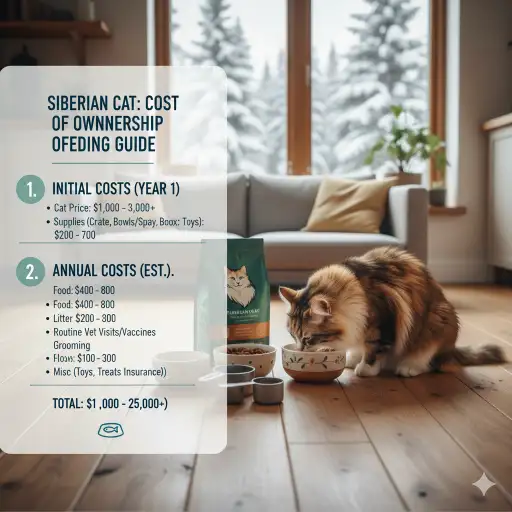
If you are thinking about bringing home a Siberian cat, the first cost you will face is the purchase price. Siberians are a purebred and not as common as many other cats. Because of this, they usually cost more than mixed-breed cats from shelters. Most people buy them from breeders who focus on health testing and proper care. This higher price often reflects the breeder’s work, including vaccinations, early socialization, pedigree papers, and screening for genetic problems.
In general, a Siberian kitten from a responsible breeder can cost much more than the average cat. The price usually depends on the breeder’s reputation, bloodline, and location. Some breeders also include early vet visits and spay or neuter surgery in the price, while others do not. It is important to ask what is included so you understand what you are paying for. A lower price does not always mean a better deal. Sometimes it means health testing was skipped.
Adoption is possible, but rare. Siberians do not often end up in shelters. If you do find one through rescue, the fee will likely be much lower than buying from a breeder. However, you may not get full medical history or health screening records. This does not mean the cat is unhealthy, but it does mean there is more unknown risk.
Besides the purchase price, you must plan for initial vet care and home supplies. Even if the breeder provides vaccinations, you should still schedule a check-up soon after bringing your cat home. You may also need to pay for microchipping or spay/neuter if it was not already done. Then there are supplies. Siberians are large and strong cats. They need sturdy scratching posts, a strong carrier, a large litter box, and a tall cat tree that can hold their weight safely. Their thick coat also means you will need good grooming tools from the start.
Below is a realistic estimate of common upfront costs. These are general ranges and can vary by region and lifestyle.
| Item | Lower Range | Average Range | Higher-End Range |
|---|---|---|---|
| Siberian kitten (breeder) | $1,200 | $1,800 | $3,000+ |
| Adoption (rare) | $100 | $300 | $500 |
| Initial vet visit | $75 | $150 | $250 |
| Spay/neuter (if needed) | $150 | $300 | $500 |
| Basic supplies setup | $300 | $600 | $1,000+ |
| First-year total estimate | $1,800 | $2,800 | $5,000+ |
For most owners, the first year is the most expensive. After that, costs become more predictable, but they do not disappear. Next, we will look at the monthly and ongoing costs of owning a Siberian.
Monthly and Ongoing Costs of Owning a Siberian
After the first year, your main focus will be monthly care. Food is usually the biggest regular cost. Siberians are larger than many house cats and can weigh 12 to 20 pounds. Bigger bodies need more calories. If you choose high-quality wet food, your monthly cost will be higher than feeding only dry food. Many owners use a mix of both to balance nutrition and budget.
Litter is another steady expense. Larger cats often produce more waste, and Siberians are no exception. Clumping litter tends to cost more but lasts longer and controls odor better. If you have more than one cat, litter costs can double or even triple. This is something many first-time owners forget to calculate.
Grooming is also part of the monthly picture. Siberians have a thick, triple-layer coat. While they are not as high-maintenance as some long-haired breeds, they still need brushing several times a week. Buying a quality brush at the start helps reduce future grooming costs. Some owners also choose professional grooming once or twice a year, especially during heavy shedding seasons.
Preventive care includes parasite control and small health items. Even indoor cats can need flea prevention in some areas. You may also buy supplements if recommended by your vet. Toys, scratching posts, and cat trees wear out over time. Strong cats can destroy cheap items quickly, so you may need to replace things more often than expected.
Here is a simple monthly estimate:
| Expense | Budget | Average | Premium |
|---|---|---|---|
| Food | $30 | $60 | $120+ |
| Litter | $15 | $25 | $40 |
| Preventive care | $10 | $20 | $40 |
| Grooming/toys replacement | $10 | $20 | $50 |
| Estimated monthly total | $65 | $125 | $250+ |
For many households, the average monthly cost falls between $100 and $150. However, choices about food and lifestyle can quickly increase that number. Next, we will look at annual, medical, and unexpected expenses.
Annual, Medical, and Unexpected Expenses
Even healthy Siberians need yearly vet visits. An annual exam helps detect problems early. Vaccines may be required depending on your area and whether your cat goes outside. Basic yearly vet care can cost a few hundred dollars, even without illness.
Dental care is another cost that many owners ignore. Cats can develop dental disease over time. A professional cleaning under anesthesia can be expensive. While it may not be needed every year, it is wise to expect this cost at least once every few years.
Emergencies are the hardest costs to predict. Cats can swallow objects, develop urinary blockages, or get injured. Emergency visits often cost much more than regular vet visits. Even a single emergency can cost hundreds or thousands of dollars. This is why financial planning is important before bringing a cat home.
Siberians are generally healthy, but they can be at risk for hypertrophic cardiomyopathy (HCM), a heart condition seen in many cat breeds. Responsible breeders screen for this, but no screening removes all risk. If your cat develops a chronic illness later in life, monthly medication and repeat testing can add to your yearly budget.
As your Siberian ages, vet visits may become more frequent. Senior cats often need bloodwork to check organ health. Joint supplements and special diets may also become necessary. These aging-related costs are part of long-term ownership and should not be ignored.
Lifetime Cost of a Siberian Cat
Siberians usually live 12 to 15 years, and many live even longer with good care. When you multiply monthly and yearly costs over that time, the total becomes significant. This is why looking only at the purchase price does not give you the full picture.
If we combine average monthly costs with annual medical care and some unexpected expenses, the lifetime cost can reach tens of thousands of dollars. A conservative estimate assumes few emergencies and average spending. A higher estimate assumes premium food, regular professional grooming, and at least one major medical event.
Here is a simplified lifetime estimate:
| Scenario | Estimated Lifetime Cost (12–15 years) |
|---|---|
| Conservative | $15,000 |
| Average realistic | $20,000–$25,000 |
| Higher-spend household | $30,000+ |
Indoor cats may cost less in emergency care compared to outdoor cats, which face more injury risks. However, indoor cats still need enrichment and medical care. Multi-cat homes increase costs in a direct way. Two Siberians do not cost exactly double, but food, litter, and vet bills do increase significantly.
The biggest factors that change lifetime cost are diet choices, health events, and how often equipment must be replaced. Strong, active Siberians may wear out cat trees faster than smaller breeds. Planning for long-term replacement is wise.
Is a Siberian Cat Worth the Cost? A Financial Reality Check
Siberians are loving, playful, and intelligent cats. Many owners feel they are worth every dollar. However, love does not remove financial responsibility. Before buying one, ask yourself if the upfront cost already feels stressful. If the purchase price stretches your savings too far, the ongoing costs may become a burden.
One common mistake is focusing only on the kitten price. Some people save for months to afford the breeder fee but forget about vet care and monthly expenses. Others underestimate emergency costs. A single serious health issue can cost more than the original purchase price.
There are also hidden costs people forget. Boarding or pet sitting during travel can add up. Moving to a new apartment may require pet deposits. Replacing damaged furniture from scratching can cost more than expected. These are real-life expenses that many new owners do not think about at first.
Ask yourself simple questions. Do you have stable income? Can you handle a surprise vet bill without panic? Are you prepared for 15 years of responsibility? If the answer is yes, a Siberian can be a wonderful companion. If not, it may be better to wait until you are more financially ready.
Frequently asked questions often include whether Siberians eat more than other cats. Yes, because they are larger. People also ask if they are expensive to maintain. Compared to many mixed-breed cats, they usually are. Another common question is whether buying from a breeder is worth it. Paying more upfront for health testing can reduce some risks, but it does not remove all future costs.
In summary, owning a Siberian cat is a long-term financial commitment. The first year is costly, monthly care is steady, and lifetime expenses can reach $20,000 or more. Planning ahead helps you give your cat a safe and healthy life. Responsible ownership means thinking beyond the excitement of bringing home a beautiful kitten.
For more general guidance on responsible pet ownership budgeting, you can visit the American Veterinary Medical Association website at https://www.avma.org for helpful educational resources.Tools

Ata Ur Rehman is the founder of Pet Age in Human Years Calculator, an educational platform that provides age conversion charts and lifespan guides for dogs, cats, birds, and other companion animals. His work focuses on helping pet owners understand how animal ages translate into human years using commonly accepted age conversion formulas and published lifespan averages.
The website compiles breed and species lifespan data from kennel clubs, breed organizations, and general animal lifespan studies to present simple and easy-to-understand guides for pet owners worldwide.
This website was created to centralize animal age conversion charts into one easy reference platform for pet owners.