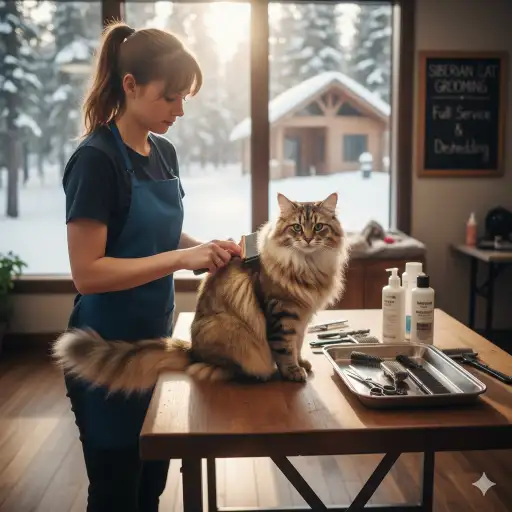
The Siberian cat has a beautiful, thick, triple-layer coat that looks wild and luxurious. Many people believe that because this breed comes from cold climates, the coat is “natural” and does not need much care. That is not true. While Siberians are strong self-groomers, their dense undercoat still needs regular brushing to stay healthy. If you skip grooming, loose fur can get trapped close to the skin and turn into mats.
A Siberian’s coat has three layers: long guard hairs on top, middle awn hairs, and a soft, thick undercoat underneath. The undercoat is the main reason grooming is important. It sheds heavily during certain times of the year. This big shed is often called a “coat blow.” Owners are sometimes shocked at how much fur comes out during spring. It may look like your cat is losing half its body weight in hair. This is normal, but it needs extra brushing to manage.
Many new owners ask, “Do Siberian cats need grooming?” The answer is yes, but not in the same way as flat-faced or very silky long-haired breeds. Siberians do not usually tangle as quickly as some other fluffy cats. However, their undercoat can pack down tightly if it is not brushed properly. Surface brushing is not enough. You must gently reach the deeper layers to prevent hidden mats.
Indoor and outdoor lifestyle also affects grooming needs. Indoor cats may shed more evenly throughout the year because of artificial lighting and heating. Outdoor Siberians often follow seasonal changes more clearly. Climate matters too. In humid areas, fur can clump more easily. In dry climates, static can cause flyaway hair. Paying attention to these small details helps you adjust your grooming routine.
Below is a simple overview of how seasonal changes affect grooming:
| Season | What Happens to the Coat | Grooming Adjustment |
|---|---|---|
| Spring | Heavy undercoat shedding | Brush daily or every other day |
| Summer | Lighter, thinner coat | Maintain regular brushing |
| Fall | Coat thickens again | Increase undercoat checks |
| Winter | Dense insulation coat | Check for hidden mats weekly |
Understanding how the coat works is the first step to safe grooming. Once you know what is happening under all that fluff, you can brush with purpose instead of guessing.
How to Brush a Siberian Cat Properly (And How Often)
Brushing is the most important part of Siberian cat grooming. In normal seasons, brushing two to three times a week is enough for most cats. During heavy shedding seasons, you may need to brush daily. If you notice loose clumps of fur, small tangles, or thicker patches near the legs or belly, it is time to increase brushing.
Start brushing when your cat is calm. Choose a quiet space. Many Siberians enjoy grooming when they are relaxed after a meal or nap. Place your cat on a stable surface or let them sit on your lap. Use slow movements. Sudden pulling can scare them and create fear around grooming.
The biggest mistake owners make is brushing only the top layer. The outer guard hairs look smooth, but the real shedding happens underneath. Use a gentle technique called line brushing. This means lifting small sections of fur and brushing from the skin outward in layers. Move slowly across the body. Focus on common mat areas like under the front legs, behind the ears, the belly, and the fluffy back legs known as “britches.”
If you feel resistance, do not pull hard. Stop and gently work through the area. If a mat is tight against the skin, do not cut it with scissors. Siberian skin is thin and easy to injure. Tight mats should be handled by a professional groomer or vet.
Here is a simple grooming frequency guide:
| Task | Light Shedding Season | Heavy Shedding Season |
|---|---|---|
| Brushing | 2–3 times weekly | Daily or every other day |
| Undercoat check | Weekly | Every brushing session |
| Nail trim | Every 3–4 weeks | Every 3–4 weeks |
| Ear check | Once a month | Once a month |
Watch your cat’s body language during brushing. A relaxed tail, soft eyes, and normal breathing mean your cat is comfortable. If the tail starts flicking hard, ears move back, or the body becomes stiff, take a break. Short positive sessions are better than long stressful ones.
Bathing, Nail Trimming, and Basic Hygiene Care
Many people think long-haired cats must be bathed often. Siberians usually do not need frequent baths. Their coat is naturally water-resistant and does a good job staying clean. In most cases, regular brushing is enough to remove dirt and loose fur.
Bathing may be needed if your cat gets into something sticky, greasy, or smelly. It may also help if the coat feels heavy with built-up undercoat during shedding season. Before any bath, always brush out tangles. Water makes mats tighter and harder to remove.
Drying is very important. Because the coat is thick, moisture can stay trapped close to the skin. This can cause new mats or even skin irritation. Towel dry as much as possible. If using a dryer, keep it on a low, gentle setting and make sure your cat feels safe. Never leave damp fur in the undercoat.
Nail trimming is another basic part of grooming. Indoor Siberians usually need nail trims every three to four weeks. Outdoor cats may wear their nails down naturally, but you should still check them. Pay special attention to dewclaws, which do not touch the ground and can overgrow.
Ear and eye checks are simple but important. Clean ears should look pale pink with little to no odor. If you see redness, dark debris, or swelling, contact a vet. For eyes, wipe away small tear stains gently with a soft damp cloth. Dental care is also helpful. Brushing teeth a few times a week can reduce plaque and keep gums healthy.
Here is a quick guide to when bathing is truly needed:
| Situation | Bath Needed? |
|---|---|
| Normal shedding | No |
| Minor dirt | No |
| Greasy coat | Sometimes |
| Sticky spill | Yes |
| Tight mats | No, seek professional help first |
Preventing Mats, Managing Shedding, and Avoiding Common Mistakes
Mat prevention is easier than mat removal. Mats often form in places where there is friction. This includes under the legs, around the collar area, the belly, and behind the ears. During shedding season, loose undercoat gets trapped and twists together. If not removed, it forms tight clumps.
A common mistake is waiting until mats are visible. By the time you see a mat on the surface, it may already be tight near the skin. Regular undercoat checks help you catch small tangles early. Another mistake is shaving the coat in summer. Siberian fur protects against both cold and heat. Shaving can damage the coat texture and may cause uneven regrowth.
Many owners also brush too hard or too fast. This can irritate the skin and make the cat dislike grooming. Gentle, steady brushing works better. If your Siberian resists grooming, try shorter sessions. Even five minutes daily can prevent big problems later.
Below are common high-risk mat zones:
| Area | Why It Mats |
|---|---|
| Armpits | Constant movement and friction |
| Behind ears | Fine soft undercoat |
| Belly | Dense and soft fur |
| Back legs | Thick fluffy coat |
Pay attention to heavy shedding signs. You may notice more fur on furniture or in your hands after petting. That is your signal to increase brushing. Staying ahead of shedding keeps the coat healthy and reduces hairballs.
Special Situations and When to Seek Professional Help
Kittens should be introduced to grooming early. Even if their coat is still short, gentle brushing teaches them that grooming is normal. Keep sessions short and positive. Offer praise and calm handling so they build trust.
Senior Siberians may need extra help. As cats age, they may groom themselves less. Arthritis or stiffness can make it hard for them to reach certain areas. This can lead to hidden mats along the back or hips. Be gentle and check sensitive joints while brushing.
Some Siberians are strong-willed or nervous. If your cat becomes aggressive during grooming, do not force them. Break grooming into small steps. You might brush one side of the body one day and the other side the next. Calm handling builds long-term success.
Professional help is needed if you see tight mats against the skin, sudden coat thinning, red or irritated skin, or strong odor from ears. Severe matting can pull on the skin and cause pain. A professional groomer has tools to remove mats safely. A veterinarian should check any signs of infection or skin disease.
Quick grooming reminder checklist:
- Brush more during spring shedding
- Check undercoat weekly
- Trim nails every few weeks
- Never cut tight mats with scissors
- Stop if your cat shows stress
Siberian grooming is not about making your cat look perfect. It is about keeping the coat healthy, preventing pain, and strengthening your bond. When you understand the triple coat and stay consistent, grooming becomes simple and manageable. Small regular efforts prevent big problems later.
For more information about the Siberian breed and its characteristics, you can visit The International Cat Association: https://tica.org/breeds/browse-all-breeds/siberian/

Ata Ur Rehman is the founder of Pet Age in Human Years Calculator, an educational platform that provides age conversion charts and lifespan guides for dogs, cats, birds, and other companion animals. His work focuses on helping pet owners understand how animal ages translate into human years using commonly accepted age conversion formulas and published lifespan averages.
The website compiles breed and species lifespan data from kennel clubs, breed organizations, and general animal lifespan studies to present simple and easy-to-understand guides for pet owners worldwide.
This website was created to centralize animal age conversion charts into one easy reference platform for pet owners.