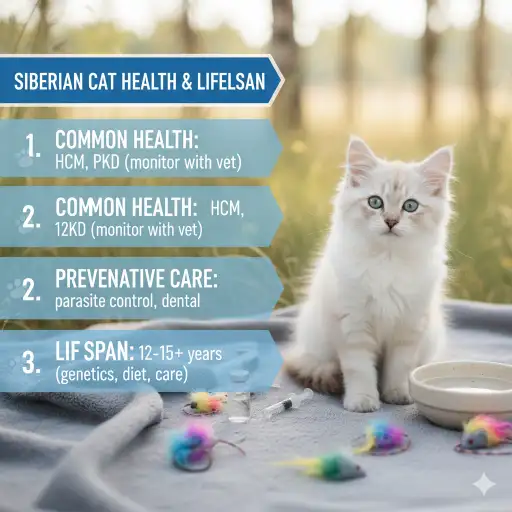
Siberian cats are known for their strong bodies, thick coats, and playful nature. Many owners hear that Siberians are a “healthy breed,” but every cat can face health problems at some point in life. This guide explains what you can realistically expect when it comes to Siberian health and lifespan. It is written to help owners understand the big picture, not to diagnose or treat any condition.
This article focuses on education. It explains common health patterns seen in Siberians, how long they usually live, and what factors can affect their quality of life. It does not replace a veterinarian. If you ever feel unsure about your cat’s health, your vet is the best source of advice for your specific situation.
Siberians are often described as hardy and resilient. They developed in cold climates, and their natural build reflects strength and endurance. Still, being strong does not mean being immune to illness. Like all cats, they can develop dental disease, weight problems, kidney issues, or age-related changes over time.
The good news is that many health problems can be managed or detected early with routine care. A calm, informed approach helps owners make better decisions. When you understand what is normal, what is common, and what is urgent, you feel more confident caring for your Siberian for many happy years.
Average Siberian Cat Lifespan: What to Expect
Most indoor Siberian cats live between 12 and 15 years. Some live longer, especially with excellent care, good genetics, and regular vet visits. It is not unusual to hear of Siberians reaching 16 years or even beyond, though every cat is different.
Indoor cats usually live longer than outdoor cats. Cats that roam freely outside face higher risks such as accidents, infections, parasites, and fights with other animals. Keeping a Siberian indoors or in a secure outdoor space can greatly improve safety and lifespan.
When compared to the general domestic cat population, Siberians fall within a similar lifespan range. They are not known for being unusually short-lived. In fact, many breeders and owners report that they tend to age steadily and remain active well into their senior years.
Lifespan depends on many things, not just breed. Genetics, diet, body weight, stress levels, dental health, and early disease detection all play a role. A well-cared-for Siberian often enjoys many years of playful, affectionate companionship.
Here is a simple lifespan comparison:
| Lifestyle Type | Average Lifespan Range |
|---|---|
| Indoor Siberian | 12–15+ years |
| Indoor/Outdoor Mixed | 10–14 years |
| Mostly Outdoor | Often shorter |
| General Domestic Cat | 12–16 years |
Factors That Influence a Siberian’s Lifespan
Genetics is one of the first factors to consider. Responsible breeders screen their breeding cats for inherited conditions and focus on strong lines. While no breeder can promise a perfectly healthy cat, thoughtful breeding lowers the risk of certain genetic problems.
Nutrition also plays a large role. Feeding a balanced, high-quality diet that fits your cat’s age and activity level supports healthy organs and muscles. Overfeeding, even with good food, can lead to obesity. Extra weight puts stress on the heart, joints, and metabolism.
Activity and mental stimulation are often overlooked. Siberians are active and intelligent cats. Regular play helps keep their muscles strong and their weight stable. A bored cat may overeat or become less active, which can lead to long-term health changes.
Routine veterinary care is another key factor. Annual checkups for adults and more frequent visits for seniors allow small problems to be noticed early. Dental checks, weight tracking, and basic bloodwork can reveal changes before your cat shows clear signs at home.
Stress and environment matter too. Sudden changes, loud noise, or conflict with other pets can affect appetite and behavior. While stress alone does not directly cause most diseases, it can weaken overall well-being and make recovery harder.
Common Health Concerns in Siberian Cats
Siberians are often described as a sturdy breed, but they can still experience certain health concerns. One condition that is sometimes discussed in this breed is hypertrophic cardiomyopathy, often called HCM. This is a heart condition seen in many cat breeds, not just Siberians. Some cats may show no signs early on, which is why routine exams are important. Changes in breathing, low energy, or fainting should always be checked by a veterinarian.
Weight-related and metabolic issues are also common in domestic cats. Siberians have a strong build and thick fur, which can sometimes hide weight gain. Obesity increases the risk of diabetes and joint stress. Watching body shape and feeling for ribs gently under the coat can help owners track healthy weight.
Dental disease is one of the most common health problems in all cats. Plaque and tartar can build up over time, leading to gum inflammation and tooth pain. Bad breath, drooling, or difficulty eating can be signs of dental trouble. Regular dental checks and home care support long-term comfort.
Kidney and urinary tract problems can appear as cats age. Increased thirst, changes in urination, or accidents outside the litter box are important signs to notice. Early testing through routine blood and urine checks often helps detect kidney changes before they become advanced.
Parasites and preventable illnesses are more common in cats that go outdoors. Fleas, ticks, intestinal parasites, and viral infections can shorten lifespan if left untreated. Preventive care and vaccinations help reduce these risks.
Here is a simple overview:
| Health Concern | Common Age Range | Early Signs Owners May Notice | Preventive Focus |
|---|---|---|---|
| Heart Conditions (HCM) | Adult+ | Low energy, breathing changes | Routine exams, screening |
| Obesity & Diabetes | Adult+ | Weight gain, increased thirst | Portion control, active play |
| Dental Disease | Any age | Bad breath, gum redness | Dental care, vet cleanings |
| Kidney Disease | Senior | More drinking, weight loss | Regular bloodwork, hydration |
| Urinary Issues | Adult+ | Straining, litter box changes | Clean litter box, vet checks |
| Parasites | Any age | Itching, digestive upset | Preventive treatments |
Preventive Care and Early Detection
Preventive care is one of the strongest tools for helping a Siberian live a long life. Regular wellness visits allow your veterinarian to track weight, listen to the heart, check teeth, and look for subtle changes. Many problems are easier to manage when found early.
Kittens and young adults often visit the vet once a year after their initial vaccine series. As cats reach middle age and senior years, visits may become more frequent. Senior cats often benefit from exams every six months because age-related changes can happen faster.
Vaccinations and parasite prevention protect against common infectious diseases. Even indoor cats may need certain vaccines based on lifestyle and local risks. Your vet can guide you on what is appropriate for your situation.
Monitoring weight at home is simple but powerful. Using the same scale every few months and noting gradual changes helps catch trends early. Sudden weight loss or gain should not be ignored.
Routine bloodwork, especially in middle-aged and senior cats, can reveal kidney or thyroid changes before visible signs appear. Early detection often means more options and better long-term outcomes.
Warning Signs Owners Should Never Ignore
Cats are skilled at hiding discomfort. Because of this, small changes in behavior may be the first sign that something is wrong. A Siberian who suddenly hides more, stops greeting you, or avoids play may need attention.
Changes in appetite are important. Eating much less, refusing food, or suddenly eating far more than usual can signal a health shift. Drinking much more water than normal is also worth noting.
Breathing changes should always be taken seriously. Open-mouth breathing, rapid breathing at rest, or visible effort when breathing are signs that require prompt veterinary care.
Frequent vomiting, ongoing diarrhea, or straining in the litter box should not be brushed off as minor. While occasional stomach upset can happen, repeated signs deserve evaluation.
Rapid weight loss, muscle wasting, or a dull coat can reflect deeper problems. When in doubt, it is safer to call your veterinarian and describe what you are seeing.
Health Changes as Siberians Age
As Siberians enter their senior years, usually around 10 to 12 years of age, gradual changes are common. You may notice they sleep more or prefer warmer resting spots. This is often part of normal aging.
Muscle mass can slowly decrease, even if weight stays the same. Gentle play and easy access to favorite areas help maintain mobility. Some cats develop joint stiffness, making jumping less comfortable.
Dental wear becomes more noticeable with age. Regular checks are important to maintain comfort and appetite. Kidney function may also change gradually, which is why senior bloodwork is often recommended.
Appetite and metabolism can shift. Some senior cats lose weight, while others gain if activity decreases. Tracking small changes helps you and your vet adjust care over time.
Cognitive changes can occur in older cats. Confusion, changes in sleep cycles, or unusual vocalizing at night may be seen. These changes should always be discussed with a veterinarian to rule out medical causes.
Supporting Quality of Life
Quality of life is about comfort, safety, and emotional well-being. Keeping your Siberian at a healthy weight supports the heart, joints, and overall energy level. Simple daily play keeps muscles active and minds engaged.
As cats age, small home adjustments can make a big difference. Soft bedding, easy-to-reach litter boxes, and low-entry boxes help senior cats move comfortably. Keeping food and water in accessible places reduces strain.
Regular grooming is especially important for Siberians because of their thick coats. Older cats may groom less thoroughly. Gentle brushing prevents mats and allows you to check for skin changes.
Routine and predictability reduce stress. Cats feel secure when feeding times, play sessions, and sleeping areas stay consistent. Stability supports long-term health.
When to Consult a Veterinarian
Routine checkups are essential, even when your cat appears healthy. These visits create a health record over time, making it easier to spot subtle changes.
You should seek veterinary advice promptly if you notice breathing difficulty, inability to urinate, severe lethargy, or sudden collapse. These signs require urgent care.
For less urgent changes, such as mild appetite shifts or gradual weight change, scheduling a regular appointment is often appropriate. Early discussion prevents guesswork and reduces anxiety.
Building a long-term relationship with a trusted veterinarian gives you a partner in your Siberian’s health journey. Online information can educate, but it cannot examine your cat or replace professional evaluation.
Frequently Asked Questions About Siberian Health and Lifespan
| Question | Short Answer |
|---|---|
| How long do Siberian cats live indoors? | Most live 12–15 years or longer with good care. |
| Are Siberians generally healthy? | They are often considered hardy but can still develop common feline illnesses. |
| Do Siberians have heart problems? | Some may be at risk for heart conditions like HCM, as seen in many breeds. |
| At what age is a Siberian a senior? | Around 10–12 years old. |
| How often should they see a vet? | At least yearly for adults, more often for seniors. |
| Can Siberians become overweight? | Yes, especially if overfed or inactive. |
| Is dental care really necessary? | Yes, dental disease is common in all cats. |
| Does indoor living help them live longer? | In most cases, yes. |
Final Health and Lifespan Summary for Owners
Siberian cats are strong, loving companions that often enjoy long, active lives. While they have a reputation for being hardy, they are not free from health risks. Understanding common issues, tracking small changes, and focusing on prevention can make a meaningful difference.
Indoor living, balanced nutrition, regular exercise, dental care, and routine veterinary visits form the foundation of long-term health. Early detection of problems often leads to better outcomes and more options.
A calm and informed approach helps you respond wisely instead of reacting out of fear. Your veterinarian remains your best partner in protecting your Siberian’s health.
For more general feline health guidance from veterinary professionals, you can visit the American Veterinary Medical Association at https://www.avma.org.

Ata Ur Rehman is the founder of Pet Age in Human Years Calculator, an educational platform that provides age conversion charts and lifespan guides for dogs, cats, birds, and other companion animals. His work focuses on helping pet owners understand how animal ages translate into human years using commonly accepted age conversion formulas and published lifespan averages.
The website compiles breed and species lifespan data from kennel clubs, breed organizations, and general animal lifespan studies to present simple and easy-to-understand guides for pet owners worldwide.
This website was created to centralize animal age conversion charts into one easy reference platform for pet owners.