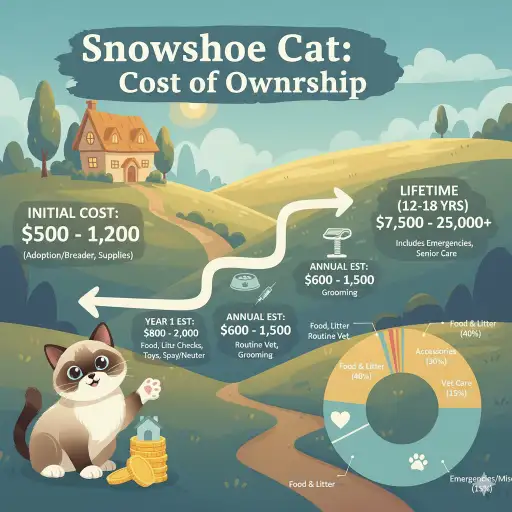
Owning a Snowshoe cat can be a joyful experience, but it comes with financial responsibilities that every potential owner should understand. Unlike some pets, cats require ongoing care, regular vet visits, proper nutrition, and a safe home environment. Being aware of the costs from the start ensures you can provide for your Snowshoe cat throughout its life without financial strain.
Cost of ownership is more than just the adoption fee or the first bag of cat food. It includes ongoing monthly expenses, periodic vet care, emergency situations, and costs that come with aging. Snowshoe cats, known for their unique coat pattern and friendly personality, are generally healthy, but they may have specific needs that influence the total cost of ownership. By understanding all aspects of care, you can make a responsible decision before bringing a Snowshoe into your home.
Many first-time cat owners underestimate the lifetime costs. While some blogs focus on superficial costs like toys or litter, a comprehensive view includes medical care, preventive medications, grooming, and unplanned emergencies. Snowshoe cats are particularly social and active, so their enrichment and health needs are crucial to consider when budgeting. Planning ahead will help you avoid unexpected financial stress and ensure your cat has a happy and healthy life.
This guide is structured to help you see the realistic costs of owning a Snowshoe cat. Each section provides tables with low, average, and high ranges to make it easier to plan your budget. We’ll cover one-time costs, monthly and annual costs, unexpected emergencies, and lifetime expenses so you can fully understand the commitment before making a decision.
One-Time & First-Year Costs
The first year of owning a Snowshoe cat can be the most expensive, mostly because of the initial setup and medical needs. The adoption or purchase price is the first cost to consider. Snowshoe cats from breeders are usually more expensive than shelter adoptions, and prices vary based on lineage, age, and location. Beyond the purchase, you will need essential supplies like litter boxes, scratching posts, carriers, feeding bowls, and beds.
Initial veterinary care is another critical cost. This includes vaccinations, spay or neuter surgery, microchipping, and a full health check. Preventive care in the first year helps avoid costly medical problems later. Grooming tools such as brushes, nail clippers, and basic hygiene supplies are also part of the initial expenses. Planning for the first-year medical and supply costs will give you a clearer picture of your financial commitment.
Toys and enrichment should not be overlooked. Snowshoe cats are intelligent and active, requiring interactive toys, climbing structures, and scratching surfaces. These items may seem optional, but they are essential for mental and physical health. Investing in quality enrichment from the start can prevent destructive behaviors and ensure a happier cat.
The table below summarizes low, average, and high ranges for one-time and first-year costs:
| Expense | Low ($) | Average ($) | High ($) |
|---|---|---|---|
| Adoption/Purchase | 50 | 500 | 1,200 |
| Veterinary (first-year) | 150 | 400 | 800 |
| Initial supplies | 100 | 300 | 600 |
| Grooming & enrichment | 50 | 150 | 300 |
| First-year food & litter | 200 | 400 | 700 |
| Total First-Year Cost | 550 | 1,750 | 3,600 |
Ongoing Monthly & Annual Costs
After the first year, owning a Snowshoe cat involves predictable monthly and annual expenses. Food is a major recurring cost. A healthy Snowshoe cat generally eats a mix of wet and dry food, with quality brands costing more but providing better nutrition. Litter is another consistent monthly cost, along with liners, disposal, and odor control.
Preventive medications, including flea, tick, and deworming treatments, should also be factored in. Monthly grooming tools, occasional replacement toys, and scratching posts are part of ongoing care. Snowshoe cats are social animals, so enrichment activities or subscription boxes for toys can improve quality of life. These are optional but recommended for mental stimulation.
Annual veterinary care includes wellness exams, vaccinations, dental checks, and lab work. Routine health checks help catch potential issues early, saving money in the long run. Boarding or pet sitting is another consideration for travel, which may vary depending on your lifestyle.
The table below compares typical monthly and annual expenses:
| Expense | Monthly ($) | Annual ($) |
|---|---|---|
| Food | 30 | 360 |
| Litter | 10 | 120 |
| Preventive meds | 10 | 120 |
| Grooming & toys | 5 | 60 |
| Veterinary (routine) | – | 200 |
| Boarding / pet sitting | – | 150 |
| Total Monthly / Annual | 55 | 1,010 |
Unexpected, Emergency & Lifecycle Costs
Even with careful planning, unexpected costs are inevitable. Accidents, sudden illnesses, or chronic conditions can lead to emergency vet visits. Snowshoe cats are generally healthy, but no pet is immune to medical surprises. Having a financial buffer for emergencies is crucial.
Common emergencies include injuries, infections, or sudden illnesses that require veterinary intervention. Older cats may develop conditions such as kidney disease, hyperthyroidism, or arthritis, which increase healthcare costs. Preventive measures like regular vet checkups and vaccinations can reduce risk but cannot eliminate emergencies entirely.
Behavioral issues or environmental adjustments may also add costs. Some Snowshoe cats may need additional enrichment or modifications to their living space if they display high energy or anxiety. Even routine issues, like a scratched-up sofa, could lead owners to invest in extra furniture protection.
The table below shows a realistic range of unexpected costs:
| Unexpected Expense | Low ($) | Average ($) | High ($) |
|---|---|---|---|
| Emergency vet visits | 100 | 400 | 1,000 |
| Health issues (chronic/aging) | 200 | 600 | 2,000 |
| Behavioral/environmental adjustments | 50 | 200 | 500 |
| Total Unplanned Costs | 350 | 1,200 | 3,500 |
Realistic Lifetime Cost Estimates & Budget Planning Tools
Calculating the lifetime cost of a Snowshoe cat requires combining all one-time, monthly, annual, and unexpected costs. With an average lifespan of 12–16 years, you can use scenario-based estimates to understand the total commitment. These scenarios help prospective owners plan a responsible budget.
For a budget-conscious owner who opts for affordable food and supplies while maintaining regular preventive care, lifetime costs may be on the lower end. Average spenders typically invest in higher-quality food, toys, enrichment, and regular vet care. Owners who choose premium care, frequent boarding, and high-end supplies can expect lifetime costs to be significantly higher.
Lifestyle factors also affect total costs. Indoor cats generally incur fewer medical expenses but need more enrichment. Multi-cat households benefit from shared resources but increase food, litter, and medical costs. Planning for aging cats is also critical, as senior care tends to be more expensive due to age-related illnesses and more frequent veterinary attention.
The table below outlines lifetime cost scenarios:
| Cost Category | Budget-Conscious ($) | Average ($) | Premium ($) |
|---|---|---|---|
| One-time / first year | 550 | 1,750 | 3,600 |
| Ongoing monthly & annual | 11,000 | 15,000 | 25,000 |
| Unexpected / emergency | 4,000 | 6,000 | 10,000 |
| Total Lifetime Cost | 15,550 | 22,750 | 38,600 |
A simple checklist can help you plan responsibly:
- Can I cover routine monthly expenses without financial strain?
- Do I have a buffer for emergencies?
- Am I prepared for additional costs as my cat ages?
- Can I provide enrichment, proper nutrition, and preventive care?
Being honest with yourself about these questions ensures your Snowshoe cat will have a happy and healthy life while avoiding financial stress.
For more detailed cost planning and cat ownership tips, you can visit PetMD.

Ata Ur Rehman is the founder of Pet Age in Human Years Calculator, an educational platform that provides age conversion charts and lifespan guides for dogs, cats, birds, and other companion animals. His work focuses on helping pet owners understand how animal ages translate into human years using commonly accepted age conversion formulas and published lifespan averages.
The website compiles breed and species lifespan data from kennel clubs, breed organizations, and general animal lifespan studies to present simple and easy-to-understand guides for pet owners worldwide.
This website was created to centralize animal age conversion charts into one easy reference platform for pet owners.