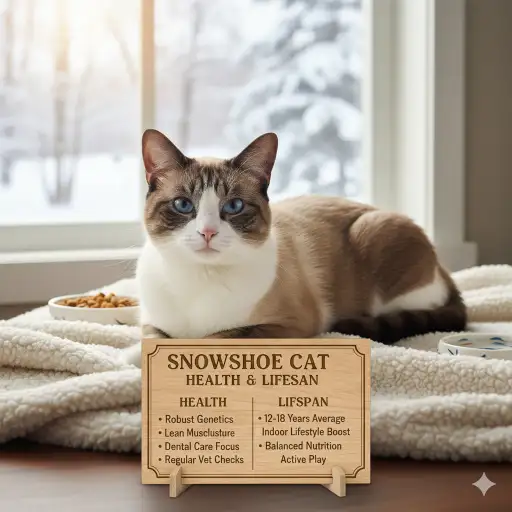
Snowshoe cats are a lovely breed known for their striking coat and gentle personality. If you are here, you likely want to learn how long Snowshoe cats live and what health issues they may face. This guide is meant to help you understand their health in simple, clear terms. It is written for everyday cat owners and family members who want to care for their Snowshoe in the best way. This is for education only and not a replacement for a veterinarian’s advice.
A cat’s lifespan means how long it lives, on average. For Snowshoe cats, the typical lifespan ranges from about 12 to 16 years when they live inside a loving home. These numbers can change based on diet, care, and whether a cat lives mostly indoors or goes outside. Indoor cats usually live longer than outdoor cats because they face fewer risks like car accidents, fights, and infections. Snowshoes are active and social cats, and with good care, they can grow into happy seniors.
Health is a big part of lifespan. Just like people, cats can have small health issues that don’t affect their life much, and bigger ones that do. In this guide, you will learn what common health issues Snowshoes may face, how to prevent problems, what warning signs to watch for, and how to support your cat as it gets older. You will also find tables that help you compare lifespan expectations and notice signs easily.
Taking time to learn about your cat’s health can help you notice changes early, which often leads to better outcomes. Many serious conditions can be easier to manage when caught early because your veterinarian can offer preventive care, tests, or lifestyle adjustments. Understanding Snowshoe health gives you the confidence to provide the best care possible.
Snowshoe Lifespan Comparison
| Living Situation | Average Lifespan | Notes |
|---|---|---|
| Indoor only | 13–16 years | Least risk from outdoor hazards |
| Indoor with supervised outdoor time | 12–15 years | Slightly more risk but enriched life |
| Outdoor only | 10–12 years | Higher risk of accidents and infections |
| General domestic cats | 12–15 years | Varies with care and environment |
Common Health Issues Seen in Snowshoe Cats
Snowshoe cats, like all breeds, can face certain health challenges. This does not mean every Snowshoe will have these problems. What it means is that these issues are seen more often in this breed or in cats of similar type. Learning about them helps you watch for changes in your cat and talk with your vet about prevention.
One of the most common concerns in Snowshoes is dental health. Cats can develop tartar, gum inflammation, and tooth problems as they age. Poor dental health may make eating painful and can affect other parts of the body. Simple daily brushing, dental treats, and regular vet checkups can help keep teeth and gums healthier.
Weight issues are another concern. Snowshoe cats love to play, but they also can be food driven. If a cat eats more calories than it uses, it can gain weight or become obese. Obesity can lead to problems like diabetes, joint stress, and less energy. Feeding a balanced diet with proper portions and encouraging active play can help maintain a healthy weight.
Urinary tract issues are also seen in Snowshoes. This includes crystals or stones in the urine or inflammation of the bladder. These conditions can make it hard or painful for cats to urinate and can become serious without care. Adequate fresh water, proper diet, and prompt vet attention for any litter box changes help keep the urinary system healthy.
Kidney disease is a concern that can show up as cats age. Though not unique to Snowshoes, kidney changes are common in many breeds as they get older. Early detection through routine bloodwork and urine tests helps your vet identify kidney function issues sooner, which can improve management.
Common Health Issues Snapshot
| Condition | What to Watch For | Focus for Prevention |
|---|---|---|
| Dental disease | Bad breath, drooling, trouble eating | Daily brushing, dental treats, vet cleanings |
| Obesity | Weight gain, less play, fat pads | Balanced diet, active playtime |
| Urinary tract issues | Straining in litter box, frequent urination | Fresh water, vet check if changes occur |
| Kidney changes | Increased thirst, weight loss, lethargy | Routine lab tests, early discussion with vet |
Understanding these common issues gives you a head start in caring for your Snowshoe. None of these conditions are guaranteed, but being aware helps you act earlier if you notice changes in behavior or body condition.
Preventive Care & Healthy Living for Snowshoe Cats
Preventive care is all about doing things every day and every year that help your cat stay well. Regular veterinary checkups are a major part of prevention. When a vet examines your Snowshoe at least once a year, they can catch small changes before they become big problems. For older cats, visits every six months can be even more helpful.
Nutrition is one of the strongest foundations of your cat’s health. Snowshoes do well on high‑quality cat food that is balanced for their life stage. Kittens, adults, and senior cats all need slightly different nutrition. Talk with your veterinarian about the best food and portion size for your cat’s age, activity level, and body condition. Avoid feeding too many treats or table scraps, which can add extra calories without nutrition.
Keeping your cat active is also important. Snowshoes are playful and intelligent cats who enjoy interactive toys, puzzle feeders, and engaging playtime. Regular activity helps burn calories, keeps joints healthy, and strengthens the bond between you and your cat. Simple play with a wand toy or a ball can go a long way.
Grooming and hygiene also count as preventive care. Brushing your Snowshoe’s coat regularly helps reduce hairballs and keeps the skin healthy. While cats usually clean themselves well, brushing helps you notice skin changes, lumps, or parasites like fleas early. If you see anything unusual, bring it up at the next vet visit.
Finally, a calm and enriched home environment supports overall health. Snowshoes are social and enjoy gentle interaction. Providing scratching posts, safe climbing spaces, windows to watch the outside world, and regular routines helps reduce stress. Stress can weaken the immune system over time, so enrichment matters.
Behavior & Body Changes Owners Should Never Ignore
Cats are masters at hiding pain or discomfort. Because of this, knowing what kinds of changes are not normal for your cat helps you act sooner rather than later. If your cat’s behavior or body looks different, pay close attention.
One of the biggest areas to watch is eating and drinking. A sudden loss of appetite, refusal to eat, sudden increase in hunger, or big changes in water intake can be signs that something is off. These may be small changes at first but can be the first hint of a health condition.
Another big change is how your cat uses the litter box. Straining, going more or less often, or accidents outside the box can all signal health problems in the urinary or digestive systems. Don’t wait for this to get worse. If you notice anything, record the changes and let your vet know.
Activity changes are also important. If your cat seems more tired, less playful, less willing to jump, or moves differently, this could reflect pain or discomfort. Older cats often slow down, but a sudden or clear change should not be ignored. Watch how your cat moves and interacts.
Changes in grooming habits can also be meaningful. Overgrooming one area, or not grooming at all, can both be signs of discomfort. Skin patches, lumps, changes in coat shine, or bald spots are worth discussing with your vet, even if they seem small.
Warning Signs Quick Reference
| What You Notice | What It Might Mean | What to Do |
|---|---|---|
| Not eating well | Pain, dental issues, illness | Track, record, and speak with vet |
| Drinking much more | Kidney changes, diabetes | Record amount and call vet |
| Straining to urinate | Urinary tract problems | Seek prompt veterinary care |
| Less play/energy | Pain, aging, illness | Note behavior and check with vet |
| Coat changes | Skin issues or discomfort | Ask your vet at next visit |
Supporting Aging & Long‑Term Quality of Life
As your Snowshoe gets older, their needs may change. “Senior” is usually considered around age 10 and up, but every cat ages differently. Some cats remain active and bright into their teens, while others slow down earlier. Helping your cat stay comfortable and engaged is key.
One of the biggest changes in aging cats is mobility. Older joints may become stiff or sore. You can support comfort by offering soft beds, ramps or steps to reach favorite places, and gentle play that does not stress joints. Keep litter boxes accessible, with low entry sides if mobility becomes limited.
Aging cats may also change how they interact. Some may want more cuddles, while others may become quieter. Paying attention to what your cat prefers helps keep them emotionally healthy. Mental stimulation remains important, so continue offering puzzles, gentle play, and attention.
Diet changes may also help aging cats. Some need fewer calories if they are less active, while others benefit from diets that support joint or kidney health. Your veterinarian can help you choose the right food for your Snowshoe’s age and health needs.
Regular checkups become even more important as cats age. Visits every six months allow your vet to monitor changes in weight, bloodwork, teeth, and organ function. Early detection of age‑related conditions can make management easier and improve your cat’s comfort.
Supporting quality of life is all about caring for your cat’s body and mind. A warm lap, quiet corner, and attentive routine all contribute to a happy senior cat.
For more detailed resources on cat health and preventive care, you may find helpful information at the American Association of Feline Practitioners: https://catvets.com

Ata Ur Rehman is the founder of Pet Age in Human Years Calculator, an educational platform that provides age conversion charts and lifespan guides for dogs, cats, birds, and other companion animals. His work focuses on helping pet owners understand how animal ages translate into human years using commonly accepted age conversion formulas and published lifespan averages.
The website compiles breed and species lifespan data from kennel clubs, breed organizations, and general animal lifespan studies to present simple and easy-to-understand guides for pet owners worldwide.
This website was created to centralize animal age conversion charts into one easy reference platform for pet owners.