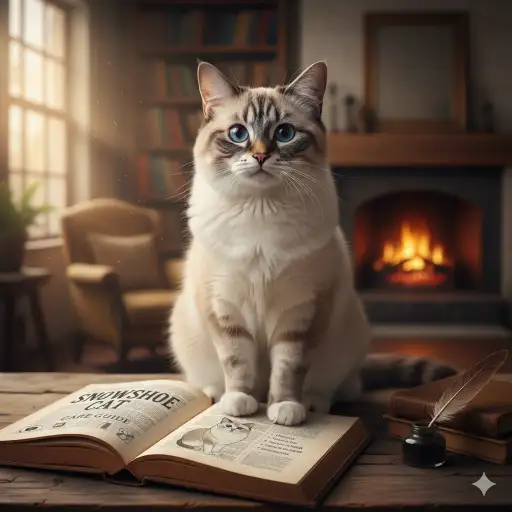
The Snowshoe cat is a medium‑sized, playful, and friendly breed that many people fall in love with at first glance. Snowshoes are known for their bright blue eyes, unique white “gloves” on their paws, and striking point markings that look like a Siamese cat but with more white. These cats have an elegant body and a soft, short coat that makes them a joy to pet and cuddle. If you are looking for a cat that is both beautiful and welcoming, the Snowshoe may be the right fit for you.
Snowshoe cats are social and tend to form strong bonds with their families. They like attention and do not like being left alone for long periods. You will often find them following you around the house, sitting on your lap, or talking softly with a series of chirps and meows. They are not as loud as some Siamese cats, but they do enjoy communicating with their owners.
One of the things that makes Snowshoe cats stand out is their playful personality. They enjoy games, toys, and puzzle feeders that challenge their mind and body. Many owners say Snowshoes act almost like dogs, happily fetching toys or learning simple tricks. Because of their energy, Snowshoes do best in homes where they have plenty of playtime and interaction each day.
At the same time, Snowshoes also have a calm side and can be gentle around children and other pets when introduced properly. Their balance of energetic play and quiet affection makes them a good choice for families, singles, or seniors looking for an engaging companion.
History, Origin & Development
The Snowshoe breed is relatively new compared to many other cat breeds. It first appeared in the 1960s in the United States when a breeder crossed a Siamese cat with an American Shorthair. The goal was to create a cat that had the beautiful point colors of a Siamese and the sturdy build of an American Shorthair. The early Snowshoemakers noticed kittens with white feet that looked like little snowshoes, and this unique feature quickly inspired the breed’s name.
Snowshoe cats were recognized by The International Cat Association (TICA) in the 1970s and later gained recognition from other cat registries as breeders worked to refine their look and personality. Early breeding was challenging because the white markings were hard to control genetically, and not all kittens had the desired pattern. However, breeders continued their work, and today’s Snowshoe standards are more consistent.
In the early days, Snowshoe cats were rare and mostly known to a small circle of cat enthusiasts. Over time, more people began to appreciate their friendly nature and handsome look. While still not as common as some other breeds like the Maine Coon or Persian, Snowshoes have gained a strong fan base around the world.
Understanding the growth and history of Snowshoes can help owners appreciate them more. These cats are not just a mix of breeds — they have been developed with careful attention to personality, health, and appearance. Knowing where they come from makes their traits make more sense, especially their love for people and playful nature.
Personality, Behavior & Compatibility
Snowshoe cats have a very friendly and outgoing personality. They are known for being affectionate without being overly demanding. This means they will come to you when they want attention but are usually content when you are nearby. Many owners describe their Snowshoe as having a “gentle charm” that makes them eager to be part of family activities.
These cats enjoy interacting with people of all ages, including children. Snowshoes are usually tolerant of gentle play and like to be included in household routines. That said, owners should teach young children to handle them with care, as even the gentlest cats can become stressed if pulled or squeezed too hard.
Snowshoes typically get along well with other cats and can live happily in a multi‑cat home if introductions are done slowly and respectfully. When meeting other animals, such as dogs, it helps if the dog is calm and cat‑friendly. Snowshoes are curious and can be friends with dogs that respect their space. For the best results, allow slow, supervised meetings so both pets feel safe.
One thing to keep in mind about Snowshoes is their need for social interaction. They do not like to be ignored for long hours. If left alone all day without play or human contact, they might become bored or develop unwanted behaviors like scratching furniture or excessive vocalizing. Toys, climbing trees, and interactive play sessions help keep them happy and calm.
Snowshoe cats are also known for being fairly intelligent. They learn routines quickly and can even be trained to do simple commands like “sit,” “come,” or “fetch.” Some owners teach them to walk on a leash, which can help satisfy their curiosity for the outdoors while keeping them safe.
Health, Lifespan & Care Needs
Snowshoe cats are generally healthy, but like all breeds, they can be prone to certain health issues. Regular veterinary checkups can help catch problems early and keep your cat living a long and happy life. The typical lifespan for a Snowshoe cat is around 12 to 16 years, though some may live longer with good care.
One common health concern in Snowshoe cats is dental disease. Regular brushing and dental checkups help prevent plaque buildup that can lead to sore gums or tooth loss. It is also important to watch their weight, as Snowshoes can gain weight if they do not get enough exercise. Obesity can lead to other health problems, such as diabetes or joint pain.
Another health issue to be aware of is related to the heart. Some cats, including Snowshoes, may develop heart conditions like hypertrophic cardiomyopathy (HCM). A veterinarian can check for heart problems with routine exams and imaging tools. Early detection often leads to better management.
Snowshoes also have grooming needs that are easy to handle. Their short coat does not mat easily, but they do shed, especially during seasonal changes. Weekly brushing helps remove loose fur and keeps their coat shiny. Because Snowshoes are social and enjoy interaction, brushing can also be a bonding activity.
Exercise is not just healthy—it is essential for Snowshoes. These cats have moderate energy levels and enjoy daily play sessions. Puzzle toys, feather wands, and climbing trees all help them burn off energy and stay mentally sharp. Providing a variety of toys and changing them occasionally keeps playtime exciting for your cat.
Snowshoe Cat Facts at a Glance
| Characteristic | Details |
|---|---|
| Average Weight | 8–12 lbs (males often larger than females) |
| Lifespan | 12–16 years (sometimes longer) |
| Coat Type | Short, soft, easy to groom |
| Common Colors | Seal point, blue point, chocolate point, lilac point |
| Eye Color | Bright blue |
| Activity Level | Moderate |
| Shedding Level | Low to moderate |
FAQs + Practical Advice
How big do Snowshoe cats get?
Snowshoes are medium‑sized cats. Most adults weigh between 8 and 12 pounds. Males tend to be a bit larger than females.
Are Snowshoe cats good with kids?
Yes. Snowshoes usually do well with children, especially when kids know how to be gentle and respectful. They enjoy being part of family activities.
Do Snowshoe cats like being indoors?
Snowshoes adapt well to indoor life. They enjoy playing inside, especially with toys and climbing areas. If you want them to explore outdoors, always use a leash or a secure cat enclosure.
What health issues are common in Snowshoe cats?
Dental disease and heart conditions like hypertrophic cardiomyopathy are things to watch for. Regular vet visits help catch problems early.
How often should you groom a Snowshoe cat?
Their short coat means low to moderate grooming needs. Weekly brushing is usually enough to keep their fur healthy and reduce shedding.
Can Snowshoe cats be trained?
Yes. Snowshoes are smart and enjoy learning. You can teach them simple commands, tricks, or how to walk on a leash with patience and positive reinforcement.
What is the cost to own a Snowshoe cat?
Prices for Snowshoe kittens vary, but they are often more expensive than common domestic cats because they are a rarer breed. In addition to the cost of the kitten, factor in food, annual vet care, toys, and typical household supplies.
Snowshoe personalities are one of the main reasons owners fall in love with them. Their mix of playfulness, loyalty, and curiosity makes them wonderful companions for many households. If you can give them daily interaction, playtime, and a loving environment, you will have a devoted friend for years.
If you want even more useful tips and tools for cat care, check resources like the American Association of Feline Practitioners at https://catfriendly.com

Ata Ur Rehman is the founder of Pet Age in Human Years Calculator, an educational platform that provides age conversion charts and lifespan guides for dogs, cats, birds, and other companion animals. His work focuses on helping pet owners understand how animal ages translate into human years using commonly accepted age conversion formulas and published lifespan averages.
The website compiles breed and species lifespan data from kennel clubs, breed organizations, and general animal lifespan studies to present simple and easy-to-understand guides for pet owners worldwide.
This website was created to centralize animal age conversion charts into one easy reference platform for pet owners.