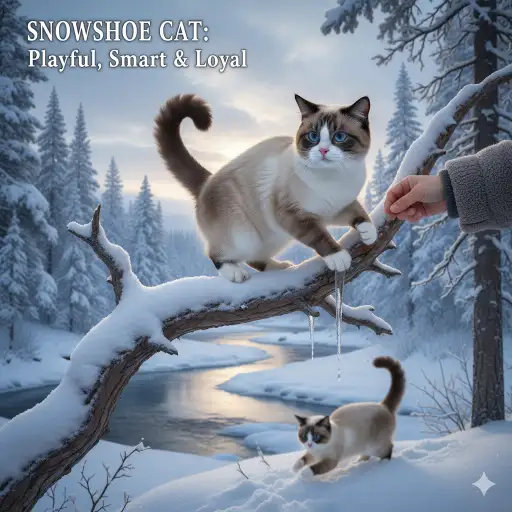
Snowshoe cats are one of the most charming and gentle breeds you can meet. They are known for their soft personalities and their unique combination of playfulness and affection. Unlike some cats that are very independent, Snowshoes often enjoy being close to their humans, following them around the house, and even joining in quiet family activities. Each Snowshoe has its own individual personality, but most of them show a strong attachment to their family without being overly demanding.
Snowshoes are intelligent and curious. They like to explore their surroundings, investigate new objects, and sometimes even figure out puzzles or simple tricks. This curiosity makes them highly interactive and engaging pets, as they often want to be involved in whatever you are doing. Despite their intelligence, Snowshoes are generally gentle and careful, which makes them suitable for families with children or other pets.
Affection is a key part of a Snowshoe’s personality. Some will curl up in your lap for a long nap, while others may prefer to stay nearby, observing quietly or gently brushing against you for attention. They communicate their affection through soft vocalizations, gentle head bumps, and by following their favorite people from room to room. Understanding their way of showing love helps owners appreciate their unique personalities.
Even though Snowshoes are very social, they also value their own space. They enjoy climbing, perching in high spots, and sometimes hiding in quiet areas. This mix of social engagement and independent behavior makes them balanced companions who can adapt well to different household environments. Knowing this balance is important for creating a home where a Snowshoe can feel secure, loved, and free to be itself.
Understanding Snowshoe Behavior Signals
Snowshoe cats communicate constantly, even when they seem quiet. They use their body, tail, ears, eyes, and voice to show how they feel. Paying attention to these signals helps owners understand what the cat wants or needs. For example, a Snowshoe might flick its tail lightly when curious, or swish it more aggressively when annoyed. Their ears and eyes also provide important clues: forward-facing ears often indicate interest or happiness, while flattened ears can signal discomfort or fear.
Vocalizations are another key part of Snowshoe communication. They are known for their soft, melodic meows and trills. A trill or chirp is often a greeting or a way to get attention, while a short meow might indicate hunger or a desire to interact. Unlike some breeds that are very loud, Snowshoes are generally moderate vocalizers. Their voice is pleasant and can vary depending on their mood and the situation.
Snowshoes also show their feelings through subtle movements. Kneading with their paws, rubbing their cheeks on objects, and gentle head bumps are signs of comfort and trust. On the other hand, sudden hiding, crouching, or tail tucking indicates stress or discomfort. Recognizing these behaviors helps owners respond appropriately and provide reassurance when needed.
Here is a simple table of common Snowshoe behavior signals and what they typically mean:
| Behavior | Meaning | Owner Tip |
|---|---|---|
| Tail held high | Confident, happy | Pet gently or offer attention |
| Tail flicking | Curious or playful | Observe context before touching |
| Tail swishing | Irritated or alert | Give space, avoid forcing interaction |
| Ears forward | Interested, relaxed | Engage in gentle play or talk |
| Ears sideways/back | Nervous or annoyed | Stop interaction and leave alone |
| Kneading | Comfort, bonding | Allow and enjoy closeness |
| Head bump | Affection, marking | Respond with gentle petting |
| Soft trill | Greeting, attention | Speak back or engage in play |
| Hiding | Stress, need for space | Do not disturb; provide quiet area |
These behaviors are normal and part of how Snowshoes interact with their environment. Paying attention to patterns and context allows owners to build a stronger bond with their cat.
Social Behavior: With Humans, Pets & Environment
Snowshoes are social animals and often enjoy human company. They can be lap cats, but even those that do not sit on laps typically stay nearby. They are gentle with children and usually enjoy playful interactions, making them great family pets. While some cats prefer strict routines, Snowshoes are adaptable. They often adjust to visitors, new household items, or minor changes without stress.
When it comes to other pets, Snowshoes are generally friendly. They usually get along well with other cats and can coexist peacefully with dogs, especially when introductions are done gradually. Their curiosity and gentle nature allow them to observe new animals without immediately reacting aggressively. However, they do appreciate having personal spaces where they can retreat if they feel overwhelmed.
The environment also plays a role in their social behavior. Snowshoes enjoy vertical spaces like cat trees or shelves where they can perch and observe the household. They like cozy spots for napping but also benefit from interactive areas for play and mental stimulation. Understanding their preferences ensures a happy and well-adjusted cat.
Here is a table showing Snowshoe social tendencies:
| Social Interaction | Typical Behavior | Owner Tip |
|---|---|---|
| Humans | Follow, gentle nuzzles, moderate lap sitting | Spend quality time daily |
| Children | Curious, playful, tolerant | Supervise young children with gentle play |
| Other Cats | Curious, mostly friendly | Introduce gradually, provide separate spaces |
| Dogs | Cautious but usually tolerant | Use slow introductions, monitor early interactions |
| New Environment | Explore, sometimes shy | Provide hiding spots and familiar scents |
Recognizing how Snowshoes behave socially helps prevent misunderstandings and strengthens relationships between pets and humans.
Natural Instincts: Play, Hunting & Communication
Snowshoes are playful cats with strong predatory instincts. They enjoy stalking, pouncing, and chasing toys, which satisfy their natural hunting behaviors. Play is not only fun but also helps them stay physically and mentally healthy. Some Snowshoes even enjoy games that mimic hunting, such as chasing feathers or laser pointers. It is important for owners to provide regular interactive play sessions to keep them stimulated.
Solo play is also common. Snowshoes may chase small toys or practice pouncing even when alone. These behaviors are normal and should not be mistaken for misbehavior. They may also use play to communicate. For instance, bringing a toy to a human is often a friendly gesture, showing a desire to engage or share their activity.
Communication during play can include chirps, soft meows, and gentle pawing. Unlike aggressive behavior, these actions are playful and part of natural instincts. Observing the cat’s body posture helps differentiate between fun and irritation. Play aggression typically involves soft bites and controlled swats, while signs of irritation include hissing, flattened ears, or sudden retreat.
Here is a table summarizing Snowshoe play and hunting behaviors:
| Behavior | Purpose | Owner Tip |
|---|---|---|
| Stalking | Practice hunting instincts | Use interactive toys for safe play |
| Pouncing | Physical exercise and mental stimulation | Encourage with soft toys or small balls |
| Chasing | Energy release | Rotate toys to maintain interest |
| Pawing toys | Fine motor skills | Allow solo play in safe spaces |
| Bringing toy to human | Social engagement | Engage in gentle chase games |
| Soft meows/chirps | Communication | Respond verbally or play along |
Understanding these natural instincts ensures that playtime is safe, enjoyable, and enriching for Snowshoes.
Common Misunderstood Behaviors & Owner Insights
Some Snowshoe behaviors can confuse new owners. For example, they may hide suddenly, sprint across the room, or vocalize unexpectedly. These actions are usually normal and reflect their playful nature, curiosity, or desire for attention. They are not signs of misbehavior or aggression when observed in context.
Scratching is another common behavior often misunderstood. Snowshoes scratch to mark territory, stretch muscles, and keep their claws healthy. Providing scratching posts or pads prevents damage to furniture while allowing cats to fulfill this natural need. Perching on shelves or high spots is also normal, as it allows them to observe and feel safe.
Affection styles vary. Some Snowshoes are lap cats, others prefer following you around without sitting on you. Both behaviors are normal expressions of attachment. They often communicate love through gentle head bumps, soft purrs, and following behavior. Misreading these cues can cause owners to think their cat is distant, when in fact they are simply expressing affection differently.
Finally, Snowshoes are highly adaptable but appreciate consistency. Maintaining daily routines, providing mental stimulation, and respecting personal space contributes to their overall well-being. Observing subtle signals and responding thoughtfully strengthens trust and deepens the bond between cat and owner. For more in-depth behavior guides, you can check resources from the American Cat Fanciers Association.

Ata Ur Rehman is the founder of Pet Age in Human Years Calculator, an educational platform that provides age conversion charts and lifespan guides for dogs, cats, birds, and other companion animals. His work focuses on helping pet owners understand how animal ages translate into human years using commonly accepted age conversion formulas and published lifespan averages.
The website compiles breed and species lifespan data from kennel clubs, breed organizations, and general animal lifespan studies to present simple and easy-to-understand guides for pet owners worldwide.
This website was created to centralize animal age conversion charts into one easy reference platform for pet owners.