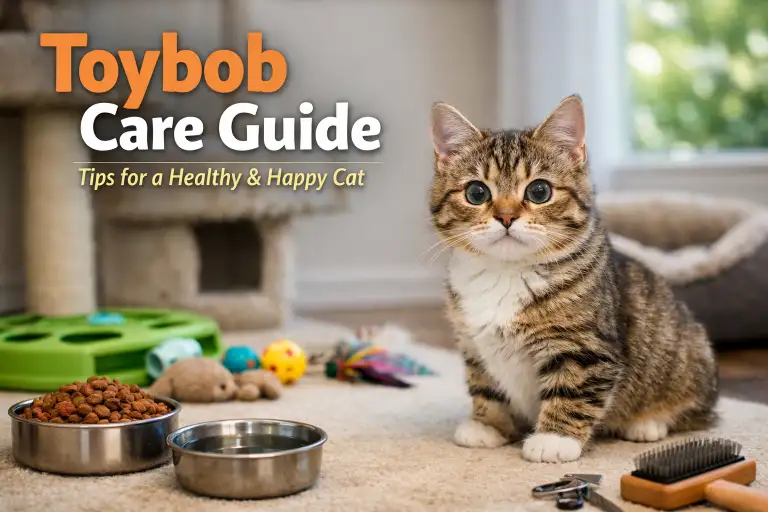
The Toybob is a small, playful, and affectionate cat breed known for its compact muscular frame, curious personality, and gentle demeanor. While they may look delicate at first glance, Toybobs are active, intelligent, and thrive in households where their physical and mental needs are met. Understanding the breed’s unique traits is essential for providing the care, environment, and attention that keep them healthy and happy.
Proper Toybob care ensures your cat grows into a well-adjusted adult, avoids common health problems, and forms a strong bond with you. This guide is designed for first-time Toybob owners, multi-cat households, and anyone seeking a step-by-step approach to daily, weekly, and occasional care routines.
The guide also addresses life-stage differences, health warning signs, grooming tips, play and enrichment ideas, and common owner mistakes—helping you provide complete, expert-backed care for your Toybob.
Toybob Quick Facts
| Trait | Details |
|---|---|
| Size | Small, muscular |
| Weight | 3–4 kg (average adult) |
| Coat | Short to medium, soft |
| Lifespan | 12–15 years |
| Temperament | Playful, affectionate, curious |
These quick facts give a snapshot of what makes the Toybob unique and highlight the areas that require attention, from daily grooming to social interaction and environmental enrichment. By keeping these traits in mind, you can tailor your care routines to your cat’s individual needs and personality.
Daily & Weekly Care Routine for Toybobs
Taking care of a Toybob every day helps them stay healthy, happy, and active. This section explains what you should do daily and weekly, so you always know what your cat needs.
Daily Care
Toybobs need attention every day. Feeding, clean water, litter, and play are all important. Checking your cat quickly for any changes in behavior or health can prevent problems early.
Daily Care Checklist
| Task | How Often | Tips / Notes |
|---|---|---|
| Feeding | 2–3 times/day | Follow age and weight guidelines |
| Fresh water | Every day | Change water at least once a day |
| Litter cleaning | Every day | Scoop clumps daily, full change weekly |
| Play & enrichment | 20–30 min/day | Use toys, climbing posts, and games |
| Quick health check | Every day | Look at eyes, ears, coat, and movement |
Weekly or Occasional Care
Some care tasks do not need to be done every day but should be part of your weekly routine. Brushing, nail trimming, ear cleaning, and dental care keep your Toybob clean and healthy.
Weekly / Occasional Care
| Task | How Often | Tips / Notes |
|---|---|---|
| Brushing | 1–3 times/week | Short coat may not need much brushing, but check for tangles |
| Nail trimming | Every 1–2 weeks | Be careful not to cut the quick |
| Ear cleaning | Once a week | Only clean if dirt is visible |
| Dental care | 2–3 times/week | Brush teeth or give dental chews |
| Bathing | Occasionally | Only if your cat is dirty; Toybobs groom themselves |
Following these routines will make your Toybob healthy, reduce stress, and prevent health issues. It also helps you notice small problems before they become serious.
Toybob Health, Warning Signs & Veterinary Care
Toybobs are generally healthy cats, but like all cats, they can have some health problems. Knowing what to watch for and when to see a vet can help your cat live a long, happy life.
Common Health Warning Signs
Watch your Toybob every day. Small changes in behavior, eating, or grooming can show that something is wrong.
Common Health Warning Signs
| Sign | What It Might Mean | What to Do |
|---|---|---|
| Sudden tiredness | Illness or infection | Call your vet |
| Loss of appetite | Teeth, stomach, or stress problems | Observe and contact vet if it continues |
| Over-grooming or bald spots | Skin issue, stress, or parasites | Check environment and ask vet |
| Vomiting or diarrhea | Stomach upset or infection | Watch closely; vet if it continues |
| Coughing or sneezing | Respiratory infection | Take to vet if persistent |
Life-Stage Care
Toybobs have different needs as they grow. Here’s a quick guide for kittens, adults, and senior cats.
Life-Stage Care
| Life Stage | Care Focus |
|---|---|
| Kitten | Socialization, vaccinations, feeding, play |
| Adult | Regular health checks, exercise, grooming |
| Senior | Dental health, gentle exercise, weight monitoring |
Keeping track of these health signs and following life-stage care helps prevent serious problems and ensures your Toybob stays healthy through every stage of life.
Environment, Play & Enrichment for Happy Toybobs
Toybobs are playful and curious cats. They need the right environment and activities to stay happy and healthy. A safe home, fun toys, and mental challenges help prevent boredom and stress.
Setting Up the Home
Provide spaces where your Toybob can climb, hide, and rest. Scratching posts, shelves, and cozy hiding spots give them comfort and security. Make sure litter boxes are clean and placed in quiet areas.
Toys and Interactive Play
Interactive play helps your Toybob stay active and prevents destructive behavior. Rotate toys, use wand toys, and play together for at least 20–30 minutes daily.
Multi-Cat Homes
If you have more than one cat, provide separate feeding areas, litter boxes, and personal spaces. Toybobs are social but may need quiet zones if they feel stressed.
Environment & Enrichment Checklist
| Environment / Enrichment | Recommended Setup / Frequency |
|---|---|
| Vertical climbing space | Daily access |
| Interactive toys | 15–30 min/day |
| Scratching posts | Accessible in multiple areas |
| Hiding spots | Permanent access |
| Social play / bonding | Daily |
Providing the right environment and regular play keeps your Toybob physically fit, mentally sharp, and emotionally content.
Common Mistakes & Expert Tips for Toybob Owners
Even the best cat owners can make mistakes that affect a Toybob’s health and happiness. Learning what to avoid and following simple tips can make caring for your Toybob easier and more effective.
Common Mistakes
Many owners accidentally:
- Overfeed or give too many treats
- Skip grooming tasks like brushing or nail trimming
- Ignore mental and physical enrichment
- Punish hiding or shy behavior
- Skip regular vet checkups
Expert Tips
- Feed balanced meals and follow age-appropriate guidelines
- Groom your Toybob weekly, even if the coat is short
- Provide climbing spaces, toys, and daily interactive play
- Observe your cat’s behavior daily and respond gently to stress
- Schedule regular vet visits and vaccinations
Do’s & Don’ts for Toybob Care
| Do’s | Don’ts |
|---|---|
| Feed balanced meals | Overfeed high-calorie treats |
| Groom weekly | Ignore nail or ear maintenance |
| Provide vertical space & toys | Force play if stressed |
| Observe behavior daily | Punish hiding or aloof behavior |
| Schedule regular vet checkups | Skip preventive care |
Following these tips and avoiding common mistakes helps your Toybob stay healthy, happy, and well-adjusted in your home.
For more expert advice on cat health and behavior, you can visit the American Association of Feline Practitioners (AAFP) website for reliable resources and guidelines: https://catvets.com

Ata Ur Rehman is the founder of Pet Age in Human Years Calculator, an educational platform that provides age conversion charts and lifespan guides for dogs, cats, birds, and other companion animals. His work focuses on helping pet owners understand how animal ages translate into human years using commonly accepted age conversion formulas and published lifespan averages.
The website compiles breed and species lifespan data from kennel clubs, breed organizations, and general animal lifespan studies to present simple and easy-to-understand guides for pet owners worldwide.
This website was created to centralize animal age conversion charts into one easy reference platform for pet owners.