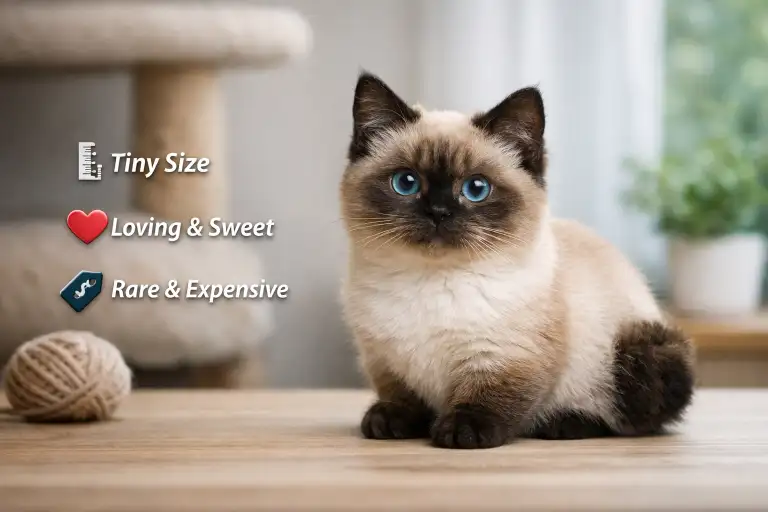
The Toybob cat is one of the smallest naturally occurring cat breeds in the world, developed in Russia from domestic cats carrying a spontaneous bobtail mutation and a consistently small body size. Despite its tiny stature and kitten-like appearance, the Toybob is not a designer breed and not a dwarf cat. Its size is the result of careful, ethical selection from naturally small, healthy cats—not skeletal shortening or dwarfism genes.
The breed originated in the late 1980s in Russia, where breeders noticed a line of cats that remained unusually small into adulthood while maintaining normal proportions, strength, and mobility. These cats also shared a naturally short, bobbed tail—similar in concept to other bobtail breeds, but paired with a stable miniature size. Over time, breeders focused on preserving three defining traits: very small adult size, balanced body structure, and a calm, people-oriented temperament.
One of the most important things to understand about the Toybob is what it isn’t. It is often confused with dwarf breeds like the Munchkin, but the Toybob does not carry genes associated with shortened limbs or spinal abnormalities. Adult Toybobs have normal leg length, normal joint movement, and solid musculature. Veterinarians familiar with the breed often describe them as “small but sturdy,” not fragile or medically compromised.
International recognition has been slow, largely because Toybobs remain extremely rare outside their country of origin. Limited breeding populations, strict export controls, and an emphasis on genetic health over rapid expansion mean that Toybobs are still uncommon in North America and Western Europe. This rarity contributes to both their high price and the widespread misinformation surrounding them.
In practical terms, the Toybob appeals to people looking for a truly small indoor companion with a gentle, affectionate nature and lower physical demands than high-energy breeds. However, their rarity means prospective owners must be patient, cautious about breeders, and realistic about availability. The Toybob is not a novelty cat—it’s a carefully preserved natural breed whose appeal lies in temperament and balance, not just size.
Toybob Cat Size, Appearance & Physical Traits
The Toybob cat is best known for being very small but well-balanced. Even as adults, Toybobs often look like kittens. However, they are strong, active, and healthy, not delicate or weak.
This breed is small on purpose, but its body parts stay in good proportion. That is what separates the Toybob from dwarf cats.
How big do Toybob cats get?
Toybobs are usually much smaller than an average house cat. Most adults are close in size to a 4–6-month-old kitten.
Here is a clear size and body overview:
| Feature | Toybob Cat |
|---|---|
| Adult weight (male) | 4–6 lb (1.8–2.7 kg) |
| Adult weight (female) | 3–5 lb (1.4–2.3 kg) |
| Height | Very short, compact |
| Body type | Small, muscular, well-proportioned |
| Bone structure | Normal and strong |
| Growth pattern | Stays kitten-sized for life |
Even though they are tiny, Toybobs can jump, run, and play just like larger cats—just on a smaller scale.
Body shape and build
The Toybob has a compact and sturdy body. The chest is round, the back is level, and the legs are normal in length. This helps them move easily and safely.
They are often described as:
- Small but solid
- Balanced, not skinny
- Strong for their size
This makes them safer to handle than fragile miniature animals, though gentle handling is still important.
Coat type and colors
Toybobs have a short, soft coat that lies close to the body. It feels plush but does not tangle easily.
Common coat features:
- Short length
- Smooth texture
- Low shedding
- Easy to care for
Toybobs can come in many colors and patterns, including:
- Solid
- Tabby
- Bi-color
- Pointed patterns
No single color defines the breed.
The bobbed tail
| Tail trait | Description |
|---|---|
| Length | Very short to a few inches |
| Shape | Curved, kinked, or pom-pom style |
| Flexibility | Normal movement |
| Function | Fully functional, no balance issues |
One of the most special traits of the Toybob is its naturally short tail. Each cat’s tail is different.
The tail is natural and does not cause pain or movement problems.
Face and expression
Toybobs have a sweet, soft expression. Their heads are round with large eyes that give them a gentle, curious look. Many owners say they look “baby-faced” even as adults.
Toybob Cat Personality, Temperament & Behavior
The Toybob cat is known for a calm, gentle, and friendly personality. Even though it looks like a kitten, its behavior is mature and relaxed. This breed enjoys being close to people but does not demand attention all the time.
Toybobs are a good choice for homes that want a quiet and loving cat.
Overall personality
Toybobs are often described as:
- Sweet and calm
- Curious but not wild
- People-focused
- Easy to live with
They enjoy daily routines and feel safe in stable homes. Loud or busy homes are usually fine if the cat is treated kindly.
Affection and bonding
Toybobs like human company. Many enjoy sitting next to their owners or curling up on a lap, especially in the evening.
They usually:
- Bond closely with one or two people
- Follow owners from room to room
- Enjoy gentle petting
- Do not cling or cry for attention
This balance makes them good for people who want affection without neediness.
Independence and alone time
Toybobs handle alone time better than many small breeds. They can stay calm when left alone for a few hours, especially if they have toys or a window to watch.
They are not known for:
- Destructive behavior
- Anxiety when owners leave
- Loud crying
Vocal behavior
Toybobs are quiet cats. They do not talk much and usually only make soft sounds when they need something.
Owners often notice:
- Soft meows
- Gentle chirps
- Little to no loud calling
This makes them great for apartments and shared housing.
Behavior with children and other pets
Toybobs are patient and social when treated with care.
| Situation | Toybob Behavior |
|---|---|
| With young children | Gentle, needs supervision |
| With older children | Very friendly |
| With other cats | Usually calm and accepting |
| With dogs | Can adapt to calm dogs |
| Multi-pet homes | Works well with slow introductions |
Because they are small, children should be taught gentle handling.
Indoor living behavior
Toybobs do very well as indoor-only cats. Their small size and calm nature make them safer inside the home.
They enjoy:
- Window watching
- Soft toys
- Short play sessions
- Warm sleeping spots
Toybob Cat Care, Health, Lifespan & Daily Needs
Toybob cats are easy to care for and fit well into calm homes. Their small size does not mean special or difficult care. Most Toybobs live normal, healthy lives when kept indoors and given basic daily attention.
Daily care needs
Toybobs do not need a lot of space or long play sessions. Short, gentle play times are enough.
They enjoy:
- Light play once or twice a day
- Puzzle toys or soft balls
- Watching birds from a window
- Quiet rest time
Because they are small, rough play is not a good idea.
Grooming and shedding
Toybobs have a short coat that is easy to maintain.
| Grooming task | How often |
|---|---|
| Brushing | Once a week |
| Bathing | Only if dirty |
| Nail trimming | Every 2–3 weeks |
| Ear cleaning | Monthly |
| Teeth care | Weekly brushing if possible |
They shed very little compared to many other breeds.
Health and genetic safety
Toybobs are not dwarf cats. They do not have short legs or bone problems linked to dwarfism.
Most Toybobs:
- Have normal joints and bones
- Move easily and jump well
- Do not suffer from known breed-related diseases
Because the breed is rare, ethical breeders focus strongly on health and balance.
Lifespan
Toybobs often live long and healthy lives.
| Health factor | Toybob Cat |
|---|---|
| Average lifespan | 12–16 years |
| Genetic risk level | Low (based on current data) |
| Dwarfism-related issues | None |
| Indoor safety | Very high |
| Vet care needs | Standard yearly checkups |
Regular vet visits, good food, and a safe indoor home help them live longer.
Training and habits
Toybobs are clean and smart cats. Most learn routines quickly.
They are usually:
- Easy to litter train
- Calm during vet visits
- Comfortable with gentle training
- Responsive to treats and praise
Toybob Cat Price, Pros & Cons, and Is This Breed Right for You?
Toybob cats are rare and highly valued. Their small size, gentle temperament, and natural origin make them expensive and hard to find. Owning a Toybob requires planning and understanding what makes this breed special.
Price and cost of ownership
| Cost factor | Typical range / notes |
|---|---|
| Kitten price | $2,500 – $5,000 (rare outside Russia) |
| Import / shipping | $500 – $1,500 (if purchased internationally) |
| Vet care (annual) | $150 – $500 depending on health checks |
| Food & supplies | $30 – $70 per month |
| Grooming | Minimal, mostly at home |
The high price is due to limited breeders, ethical breeding practices, and the care taken to maintain a healthy small population.
Pros and cons
| Pros | Cons |
|---|---|
| Very small and cute | Expensive and rare |
| Sweet, gentle temperament | Limited availability worldwide |
| Easy to care for | Needs gentle handling due to small size |
| Low shedding | Not suited for very active or rough children |
| Quiet and calm | Rarely found in shelters |
Who should choose a Toybob
Toybobs are best for:
- People who want a small, affectionate indoor cat
- Families with gentle children
- Adults or seniors who want a quiet companion
- Homes with other calm pets
They may not be ideal for:
- Households with very young or rough children
- Owners seeking an outdoor or highly active cat
- People who want a cat that is easy to find locally
Toybob compared to similar small breeds
| Breed | Size | Temperament | Notes |
|---|---|---|---|
| Toybob | Very small | Calm, affectionate | Natural miniature breed |
| Munchkin | Small | Playful, energetic | Not natural; dwarf gene present |
| Singapura | Small | Curious, active | Slightly larger than Toybob |
| American Bobtail | Medium-small | Friendly, playful | Larger, longer tail |
The Toybob is unique in being both tiny and naturally proportioned, unlike some other miniature breeds.
For more official information on the Toybob cat breed, you can visit the The International Cat Association (TICA) breed page here

Ata Ur Rehman is the founder of Pet Age in Human Years Calculator, an educational platform that provides age conversion charts and lifespan guides for dogs, cats, birds, and other companion animals. His work focuses on helping pet owners understand how animal ages translate into human years using commonly accepted age conversion formulas and published lifespan averages.
The website compiles breed and species lifespan data from kennel clubs, breed organizations, and general animal lifespan studies to present simple and easy-to-understand guides for pet owners worldwide.
This website was created to centralize animal age conversion charts into one easy reference platform for pet owners.