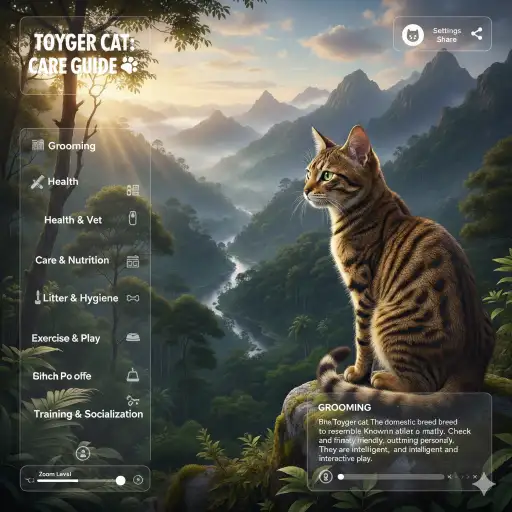
The Toyger is a rare and striking cat breed developed to look like a miniature tiger. It was created in the United States in the 1980s and later recognized by The International Cat Association (TICA). Even though it looks wild, the Toyger is fully domestic in behavior. It is social, intelligent, and deeply attached to its people. This mix of exotic looks and friendly personality often surprises first-time owners.
Toygers are not lazy cats. They are active, curious, and alert. Many owners describe them as “busy” cats because they want to explore, climb, investigate, and interact. If you expect a cat that sleeps all day and entertains itself quietly, a Toyger may feel demanding. They enjoy routines, daily play, and mental challenges. Without enough stimulation, they can become bored and start scratching furniture, knocking objects over, or seeking constant attention.
Because they are smart, Toygers learn quickly. Some can learn tricks, walk on a leash, or respond to simple commands. This intelligence is wonderful, but it also means they need mental work. Puzzle feeders, climbing trees, and interactive play are not optional extras. They are part of healthy Toyger care. A bored Toyger is not a “bad” cat. It is usually a cat that needs more engagement.
Before bringing one home, it is important to think about your daily schedule. Toygers do best in homes where someone spends time with them every day. They can live in apartments, but only if there is enough vertical space and playtime. Families with children often do well with Toygers because they enjoy interaction. However, very busy households where the cat is left alone for long hours may struggle unless enrichment is carefully planned.
Here is a quick lifestyle match guide to help you decide if a Toyger fits your home:
| Lifestyle Factor | Good Fit | Challenging Fit |
|---|---|---|
| Daily Interaction | You enjoy playing with your cat every day | You prefer a very independent cat |
| Work Schedule | Someone is home often or flexible schedule | Cat left alone 10+ hours daily |
| Living Space | Apartment with cat trees and shelves | Small space with no vertical climbing |
| Budget | Comfortable with enrichment and vet care costs | Limited budget for toys and routine vet visits |
| Activity Level | You enjoy active pets | You want a calm lap cat only |
If you want a cat that looks bold and wild but behaves like a friendly companion, the Toyger can be a wonderful choice. The key is understanding that their care needs are slightly higher than average because of their intelligence and energy. When those needs are met, they are affectionate, confident, and very rewarding pets.
Daily & Weekly Toyger Care Routine
Caring for a Toyger becomes easy when you follow a simple routine. These cats do best with structure. A predictable schedule helps them feel secure and reduces behavior problems. Most Toygers need at least two active play sessions every day. Each session should last around 15 to 20 minutes. Wand toys, feather teasers, and chase games work very well.
Feeding should also follow a schedule. Instead of leaving food out all day, many owners choose two or three measured meals. This helps prevent overeating and keeps the cat engaged. After meals, some Toygers enjoy grooming themselves and then resting. Checking the litter box once or twice daily is important. Toygers are clean cats and may avoid a dirty box.
Weekly care includes brushing, nail checks, and cleaning food bowls thoroughly. Even though Toygers have short coats, brushing once or twice a week removes loose hair and keeps the coat shiny. Nail trimming is usually needed every two to three weeks. Getting your cat used to gentle handling early in life makes grooming much easier later.
As your Toyger grows older, the routine may change slightly. Kittens need shorter but more frequent play sessions because they have bursts of energy. Adults need structured exercise to prevent weight gain. Senior Toygers may slow down but still enjoy gentle interactive play. Adjust the routine based on age and health.
Here is a simple care frequency chart for easy reference:
| Task | Daily | Weekly | Monthly |
|---|---|---|---|
| Feeding (measured meals) | ✔ | ||
| Interactive Play | ✔ | ||
| Litter Box Scooping | ✔ | ||
| Brushing | ✔ | ||
| Nail Check | ✔ | ||
| Weighing at Home | ✔ | ||
| Deep Litter Box Cleaning | ✔ |
Following a clear routine prevents many common problems. When Toygers know when to expect food and play, they are calmer and less likely to demand attention at night.
Feeding, Grooming & Physical Health Management
Toygers are active cats, so they need balanced nutrition. Choose high-quality cat food with real animal protein as the first ingredient. Because Toygers can gain weight if overfed, portion control is very important. Their strong build can hide extra fat, so owners sometimes miss early weight gain. Use measuring cups or a kitchen scale to avoid guessing.
Wet food can help with hydration, especially for indoor cats. Some owners use a mix of wet and dry food. Fresh water should always be available. A water fountain can encourage drinking, as many Toygers enjoy moving water. Avoid giving too many treats. Treats should not make up more than 10 percent of daily calories.
Grooming a Toyger is simple compared to long-haired breeds. Their short, dense coat does not mat easily. Brushing once or twice a week removes loose hair and spreads natural oils. During shedding seasons, you may need to brush more often. Regular brushing also allows you to check the skin for lumps, bumps, or irritation.
Dental care is often forgotten but very important. Brushing your cat’s teeth a few times a week helps prevent gum disease. If brushing is not possible, dental treats or vet-recommended dental diets can help. Annual veterinary checkups are essential. Vaccinations, parasite prevention, and weight monitoring keep your Toyger healthy.
Here is a grooming and health schedule overview:
| Care Area | Frequency | Why It Matters |
|---|---|---|
| Brushing | 1–2 times weekly | Reduces shedding and checks skin health |
| Nail Trimming | Every 2–3 weeks | Prevents overgrowth and injury |
| Ear Check | Weekly | Detects infection early |
| Dental Care | 2–3 times weekly | Prevents gum disease |
| Vet Exam | Once yearly | Early detection of health issues |
Toygers are generally healthy cats, but regular preventive care makes a big difference. Early signs like weight changes, dull coat, or low energy should not be ignored.
Enrichment, Training & Behavior Management
Mental stimulation is one of the most important parts of Toyger care. These cats are curious and alert. Without enough activity, they may scratch furniture, chew objects, or wake owners at night. The solution is not punishment. The solution is better enrichment.
Interactive play is the best way to burn energy. Wand toys that move like prey are very effective. End each play session by letting your Toyger “catch” the toy. This satisfies natural hunting instincts. Climbing trees, shelves, and window perches give them vertical territory. Many Toygers enjoy watching birds or outdoor activity from a safe window.
Training is another powerful tool. Toygers can learn to sit, high-five, or come when called. Clicker training works very well because they are food motivated and intelligent. Training builds confidence and reduces boredom. Even five minutes a day can make a difference.
In multi-cat homes, make sure each cat has its own resources. This means separate litter boxes, feeding areas, and resting spots. Toygers are social but still need personal space. When living in apartments, daily play becomes even more important because outdoor stimulation is limited.
Here is a behavior problem guide for quick help:
| Behavior | Likely Cause | What To Do |
|---|---|---|
| Scratching furniture | Not enough scratching posts | Add vertical and horizontal scratchers |
| Night zoomies | Too little evening play | Add 15-minute play before bedtime |
| Constant meowing | Boredom or attention seeking | Increase enrichment and structured play |
| Knocking objects down | Curiosity and lack of stimulation | Provide puzzle toys and climbing areas |
Enrichment is not a luxury for Toygers. It is a basic need. When their minds are busy, they are happier and easier to manage.
Common Mistakes, Warning Signs & When to See a Vet
One common mistake is assuming that a Toyger will behave like a calm lap cat. While they enjoy affection, they also need activity. Skipping daily play often leads to behavior problems. Another mistake is overfeeding. Because Toygers have a muscular look, weight gain can go unnoticed until it becomes serious.
Ignoring small behavior changes is also risky. A Toyger that suddenly hides, stops playing, or eats less may be showing early signs of illness. Cats are good at hiding pain. Changes in litter box habits, such as urinating outside the box, can signal stress or medical problems.
Some signs require quick veterinary attention. Vomiting occasionally may not be serious, but repeated vomiting, diarrhea, or refusal to eat should not be ignored. Limping, difficulty breathing, or sudden aggression also need professional evaluation. Early treatment often prevents bigger problems.
Here is a quick red flag guide:
| Symptom | Possible Concern | Urgency Level |
|---|---|---|
| Sudden weight loss | Illness or dental pain | High |
| Frequent vomiting | Digestive issue | Medium to High |
| Hiding and low energy | Pain or infection | High |
| Changes in urination | Urinary problem | High |
| Persistent coughing | Respiratory issue | Medium |
If you are unsure, it is always safer to call your veterinarian. Regular annual exams help detect problems early and keep your Toyger healthy for many years.
Toygers are bold, beautiful, and intelligent companions. With daily play, proper nutrition, routine grooming, and mental stimulation, they thrive in loving homes. Their tiger-like appearance may be wild, but their hearts are loyal and deeply connected to their families. When owners understand their needs and provide structure, Toygers become confident, affectionate, and joyful pets.
For more general cat health guidance, you can visit the American Veterinary Medical Association website: https://www.avma.org

Ata Ur Rehman is the founder of Pet Age in Human Years Calculator, an educational platform that provides age conversion charts and lifespan guides for dogs, cats, birds, and other companion animals. His work focuses on helping pet owners understand how animal ages translate into human years using commonly accepted age conversion formulas and published lifespan averages.
The website compiles breed and species lifespan data from kennel clubs, breed organizations, and general animal lifespan studies to present simple and easy-to-understand guides for pet owners worldwide.
This website was created to centralize animal age conversion charts into one easy reference platform for pet owners.