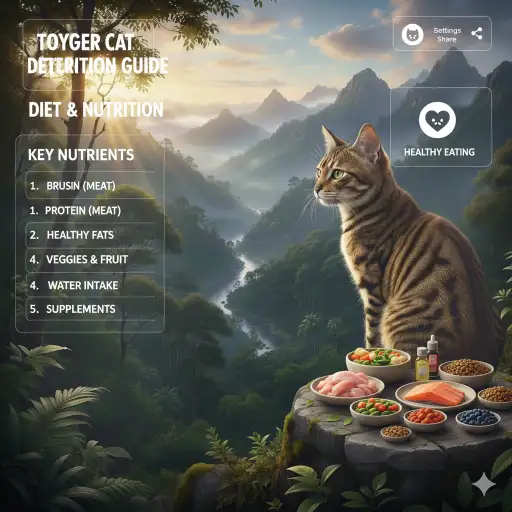
Toygers are strong, athletic cats with a sleek body and bold striped coat. Even though they look like tiny tigers, their nutrition needs are the same as other domestic cats. Toygers are obligate carnivores. This means they must eat animal-based protein to stay healthy. Their bodies are designed to use nutrients from meat, not plants. A proper Toyger diet supports lean muscles, steady energy, a shiny coat, and a healthy weight.
Protein is the most important part of a Toyger’s diet. It helps build and repair muscles, supports the immune system, and keeps organs working well. High-quality animal protein such as chicken, turkey, fish, or beef should be the main ingredient in their food. It is not just about how much protein is in the food, but where it comes from. Animal protein contains essential amino acids like taurine that cats cannot make on their own.
Fat is also important. Fat gives Toygers energy and helps them absorb vitamins. It also keeps their skin healthy and their coat soft and glossy. While fat is necessary, too much can lead to weight gain because fat is calorie-dense. Balance is key. A well-formulated commercial diet will include the right amount of fat for maintenance.
Carbohydrates are not a required nutrient for cats, but they can be used as a source of energy. Many commercial dry foods contain some carbohydrates to help form kibble. This does not automatically make the food bad. What matters is that the food is complete and balanced. Look for a statement on the label that says the food meets standards set by the Association of American Feed Control Officials (AAFCO). This statement means the food provides all essential nutrients in the correct amounts for a specific life stage.
Toygers do not need a special breed-only diet. There is no evidence that they require unique ingredients compared to other healthy domestic cats. Instead of focusing on breed marketing, focus on quality ingredients, complete nutrition, and portion control. Whether you choose wet, dry, or mixed feeding, the food should be labeled as complete and balanced for your Toyger’s life stage.
Essential Nutrients for Toygers
| Nutrient | Why It Matters | Main Source | Risk if Low |
|---|---|---|---|
| Protein | Builds muscle and supports organs | Chicken, fish, turkey | Muscle loss, weakness |
| Taurine | Heart and eye health | Animal tissues | Heart disease, vision problems |
| Fat | Energy and skin health | Animal fat, fish oil | Dry coat, low energy |
| Vitamins | Support immunity and growth | Balanced commercial food | Poor growth, illness |
| Minerals | Bone and nerve function | Meat, balanced formulas | Weak bones, imbalance |
How Much to Feed a Toyger (Portion Size & Feeding Schedule)
Many Toyger owners ask, “How much should I feed my cat?” The answer depends on weight, age, and activity level. Toygers are active and playful, but many live indoors. Indoor cats often burn fewer calories than outdoor cats. Overfeeding is one of the most common problems in pet cats today.
Instead of guessing, start by checking the feeding guide on your cat food package. These guides are estimates, not strict rules. Every cat is different. A more accurate way to manage feeding is to monitor body condition. You should be able to feel your Toyger’s ribs under a thin layer of fat. If you cannot feel them easily, your cat may be overweight. If ribs are very visible, your cat may need more food.
Meal feeding is usually better than free-feeding. Free-feeding means leaving dry food out all day. This can lead to overeating. Scheduled meals help control portions and allow you to notice changes in appetite quickly. Most adult Toygers do well with two measured meals per day. Kittens need three to four small meals daily because they are growing fast.
Spayed and neutered cats often need fewer calories. After surgery, metabolism can slow down, and appetite may increase. This makes portion control even more important. If your Toyger gains weight easily, choose a food with moderate calories and measure meals carefully.
Estimated Daily Feeding Guide (General Example)
| Toyger Weight | Activity Level | Estimated Calories Per Day | Meals Per Day |
|---|---|---|---|
| 6–8 lbs | Indoor low activity | 180–220 kcal | 2 |
| 8–10 lbs | Moderate activity | 200–250 kcal | 2 |
| 10–12 lbs | Active | 230–280 kcal | 2 |
| Kitten | Growing | Higher per pound | 3–4 |
These numbers are general examples. Always adjust based on your cat’s body condition and veterinary advice.
Wet Food vs Dry Food for Toygers: Which Is Better?
There is no single perfect answer to wet versus dry food. Both can be healthy if they are complete and balanced. The main difference is moisture content. Wet food contains around 70–80% water. Dry food usually contains about 8–10% water. Because cats naturally have a low thirst drive, wet food can help increase overall hydration.
Dry food is convenient and often more affordable. It is easy to store and measure. However, dry food is more calorie-dense. A small cup of kibble can contain many calories. This makes portion control very important. Some people believe dry food cleans teeth, but it does not replace proper dental care.
Mixed feeding combines wet and dry food. Many Toyger owners find this method practical. Wet food supports hydration, while dry food adds convenience. If you switch foods, do so slowly over 7–10 days. Sudden changes can upset your cat’s stomach.
Wet vs Dry vs Mixed Feeding
| Feature | Wet Food | Dry Food | Mixed Feeding |
|---|---|---|---|
| Moisture | High | Low | Moderate |
| Calorie Density | Lower per gram | Higher per gram | Balanced |
| Cost | Often higher | Often lower | Moderate |
| Portion Control | Easier to see volume | Needs careful measuring | Flexible |
| Best For | Hydration support | Convenience | Balanced routine |
Toyger Feeding by Life Stage
Toyger kittens need more calories and protein than adults. They are growing quickly and building muscle and bone. Choose a food labeled for growth or “all life stages.” Feed small meals several times per day. Monitor weight and energy. Healthy kittens are playful and gain weight steadily.
Adult Toygers need maintenance nutrition. This means enough protein to keep muscles strong without excess calories that cause weight gain. Adult cats often become less active after the first year. Adjust portions as needed. Regular weight checks at home can help catch small changes early.
Senior Toygers, usually around 10 years and older, may have different needs. Some seniors lose weight due to reduced appetite. Others gain weight because they move less. Senior diets may have moderate calories and easily digestible protein. Watch for changes in thirst, appetite, or bathroom habits, and consult a veterinarian if changes appear sudden.
Life Stage Feeding Overview
| Life Stage | Feeding Frequency | Focus | Watch For |
|---|---|---|---|
| Kitten | 3–4 times daily | Growth and high protein | Steady weight gain |
| Adult | 2 times daily | Weight control | Body condition |
| Senior | 2 times daily | Easy digestion | Appetite changes |
Treats, Hydration & Common Feeding Mistakes
Treats can be part of a healthy Toyger diet, but they should not exceed about 10% of daily calories. Too many treats can cause weight gain and reduce appetite for balanced meals. Choose simple, meat-based treats when possible. Avoid feeding table scraps, especially fatty or seasoned foods.
Some human foods are unsafe for cats. Onions, garlic, chocolate, grapes, and foods with xylitol are dangerous. Even small amounts can cause serious health problems. When in doubt, do not share your plate. It is safer to stick with cat-specific treats.
Hydration is very important. Because cats evolved from desert animals, they may not drink enough water on their own. Wet food helps increase water intake. You can also provide fresh water daily and consider using a pet water fountain to encourage drinking.
Common feeding mistakes include overestimating portion sizes, switching foods too quickly, and choosing food based only on marketing words like “natural” or “premium.” Focus instead on balanced nutrition and your cat’s body condition. If your Toyger suddenly stops eating, vomits often, or gains or loses weight quickly, contact a veterinarian.
Feeding Do’s and Don’ts
| Do | Why | Don’t | Why Not |
|---|---|---|---|
| Measure meals | Prevents overeating | Free-feed unlimited kibble | Leads to weight gain |
| Check body condition | Adjust portions early | Ignore small weight changes | Problems worsen |
| Choose balanced food | Ensures nutrients | Feed only treats | Causes imbalance |
| Provide fresh water | Supports kidney health | Rely only on dry food | May reduce hydration |
A well-fed Toyger is active, alert, and maintains a healthy body shape. Focus on balanced meals, measured portions, and steady routines. Avoid diet trends and extreme feeding styles. Simple, consistent care usually works best. For more general feline nutrition guidance, you can visit the American Veterinary Medical Association resource page at https://www.avma.org/resources-tools/pet-owners/petcare/cat-nutrition.

Ata Ur Rehman is the founder of Pet Age in Human Years Calculator, an educational platform that provides age conversion charts and lifespan guides for dogs, cats, birds, and other companion animals. His work focuses on helping pet owners understand how animal ages translate into human years using commonly accepted age conversion formulas and published lifespan averages.
The website compiles breed and species lifespan data from kennel clubs, breed organizations, and general animal lifespan studies to present simple and easy-to-understand guides for pet owners worldwide.
This website was created to centralize animal age conversion charts into one easy reference platform for pet owners.