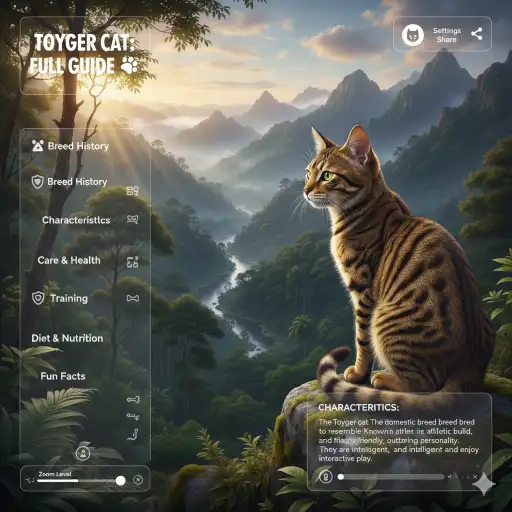
The Toyger is one of the most eye-catching domestic cats in the world. At first glance, many people think they are looking at a baby tiger. But the Toyger is 100% domestic. It was carefully bred to look wild while having a friendly, family-safe personality. If you want a cat that turns heads and starts conversations, this breed does exactly that.
The Toyger was developed in the United States in the 1980s by breeder Judy Sugden. Her goal was simple but bold: create a “toy tiger.” She used Bengal cats and striped domestic shorthairs to build the pattern and body shape she wanted. Over time, breeders worked to improve the vertical striping, muscular build, and rounded ears. The breed was later accepted for championship status by The International Cat Association (TICA), which helped it gain global attention. The Toyger is still rare, and breeders continue refining its look.
This cat is medium to large in size. Males usually weigh between 10–15 pounds, while females are often slightly smaller at 7–12 pounds. They have long, muscular bodies with strong bones. Unlike some slim breeds, the Toyger feels solid when you pick it up. Their walk is confident and smooth, almost like a big cat stalking in slow motion.
The coat is short, thick, and very soft. The pattern is always a brown mackerel tabby with bold, vertical stripes. Good Toygers have dark markings that stand out clearly against a bright orange background. Many also have a “glitter” effect in the fur, which makes the coat shine under light. Their ears are small and rounded, and their face has special circular markings that add to the tiger illusion.
Here is a quick snapshot of the breed:
| Trait | Toyger Cat |
|---|---|
| Origin | United States |
| Size | Medium to Large |
| Weight | 7–15 lbs |
| Lifespan | 12–15 years |
| Coat | Short, plush, striped |
| Energy Level | Moderate to High |
| Grooming Needs | Low |
| Rarity | Rare |
Toygers grow steadily and usually reach full size around 2 to 3 years of age. They mature a little slower than common house cats, especially in muscle development. This gives them that powerful, balanced look breeders aim for.
Toyger Personality & Temperament: What Living With One Is Really Like
The Toyger may look wild, but its personality is warm and social. This is not a shy or distant cat. Most Toygers enjoy being near their people. They often follow their owners from room to room, curious about everything. They like attention but are not usually clingy. You get a nice balance of affection and independence.
Toygers are smart. They learn routines fast and can understand simple training like coming when called or using puzzle toys. Some even learn to walk on a leash. Because of their Bengal roots, they enjoy interactive play. They like chasing toys, climbing cat trees, and exploring new spaces. A bored Toyger may start opening cabinets or knocking things off shelves just to see what happens.
In a home with children, Toygers usually do well. They are playful and strong enough to handle gentle, respectful play. However, children should always be taught how to handle cats kindly. In homes with other cats or friendly dogs, Toygers often adjust well if introduced slowly. They are confident and not easily scared.
Many people ask, “Do Toygers act like wild cats?” The answer is no. They are fully domestic. They do not have wild instincts beyond normal cat behavior. They are not aggressive by nature. Like any breed, poor socialization can cause behavior problems, but a well-raised Toyger is friendly and outgoing.
Here is a quick look at their personality traits:
| Trait | Level |
|---|---|
| Affection | High |
| Independence | Moderate |
| Energy | Moderate to High |
| Intelligence | High |
| Vocalization | Moderate |
| Child Friendly | Yes |
| Dog Friendly | Usually |
| Apartment Friendly | Yes, with play time |
Toygers can live in apartments if they get enough daily activity. They are not couch potatoes. If left alone for long hours without toys or climbing spaces, they may become bored. Mental games, scratching posts, and window views help a lot.
Toyger Care Guide: Grooming, Exercise & Daily Needs
Taking care of a Toyger is not very hard, but they do need attention. Their short coat is easy to manage. A simple brushing once a week removes loose hair and keeps the coat shiny. They do shed, but not heavily compared to long-haired breeds. Bathing is rarely needed unless they get dirty.
Exercise is very important. Toygers enjoy active play at least 20–30 minutes per day. This can include wand toys, laser pointers, or small balls. They like games that let them chase and “hunt.” Climbing trees and tall cat towers are great for them because they enjoy high places. Without play, they may use your furniture as a climbing tool.
They also need mental stimulation. Puzzle feeders, treat toys, and short training sessions keep their brains busy. Teaching simple tricks can be fun and strengthens your bond. Because they are smart, they may try to test limits. Positive reinforcement works best. Harsh punishment can make them confused or stressed.
Basic care like nail trimming, ear checks, and dental cleaning should be done regularly. Their ears are small, so check them weekly for dirt. Brushing their teeth a few times per week helps prevent dental disease.
Here is a quick care summary:
| Care Need | Requirement |
|---|---|
| Brushing | Once per week |
| Shedding | Low to Moderate |
| Daily Exercise | 20–30 minutes |
| Mental Stimulation | High |
| Training Level | Easy to Moderate |
| Bathing | Rarely needed |
Toygers handle indoor life very well. In fact, they should stay indoors for safety. Their rare status and high price make them targets for theft if allowed to roam outside.
Toyger Health, Lifespan & Cost to Own
Toygers are generally healthy, especially when purchased from responsible breeders. Their average lifespan is about 12–15 years. Some may live longer with good care, healthy food, and regular vet visits.
Like many purebred cats, they may be at risk for certain genetic conditions. One condition sometimes seen in related breeds is hypertrophic cardiomyopathy (HCM), a heart disease. Responsible breeders screen their cats for heart problems before breeding. Always ask for health testing records when buying a kitten.
Regular vet visits, vaccinations, parasite control, and dental care are important. Because Toygers are rare, it is best to find a vet familiar with purebred cats. Early health checks can prevent big problems later.
Toygers are expensive compared to common house cats. A pet-quality kitten usually costs between $1,500 and $3,000. Show-quality cats can cost even more. Because they are rare, you may need to join a waiting list.
Here is a cost overview:
| Expense Type | Estimated Cost |
|---|---|
| Kitten Price | $1,500–$3,000+ |
| Annual Food | $300–$600 |
| Routine Vet Care | $200–$500 yearly |
| Insurance | $20–$50 per month |
| Lifetime Cost | $15,000+ |
Insurance can help reduce surprise vet bills. Since Toygers are rare and valuable, some owners choose insurance for peace of mind.
Toyger Pros, Cons & Comparison: Is This the Right Cat for You?
The Toyger is a stunning and social cat, but it is not for everyone. They need attention, play time, and a proper budget. If you want a calm, lazy lap cat that sleeps all day, this may not be the best choice. But if you enjoy active pets and love a bold look, the Toyger can be a great match.
Pros and cons at a glance:
| Pros | Cons |
|---|---|
| Unique tiger appearance | High purchase cost |
| Friendly and social | Needs daily play |
| Smart and trainable | Rare and hard to find |
| Good with families | Can get bored easily |
| Low grooming needs | Not hypoallergenic |
Many people compare the Toyger to the Bengal. Bengals are usually more energetic and vocal. Toygers are slightly calmer and more balanced for family life. If you love the wild look but want a more relaxed personality, the Toyger may be better for you.
The ideal owner is someone who enjoys interaction and can provide toys, climbing space, and daily engagement. They do well with families, couples, and even apartment dwellers who are home often. They may not suit people who travel a lot or want a very quiet pet.
In short, the Toyger is a beautiful mix of wild looks and domestic heart. With proper care, they become loyal, playful companions that bring energy and personality into the home.
If you want to learn more about breed standards and official recognition, you can visit The International Cat Association website: https://tica.org

Ata Ur Rehman is the founder of Pet Age in Human Years Calculator, an educational platform that provides age conversion charts and lifespan guides for dogs, cats, birds, and other companion animals. His work focuses on helping pet owners understand how animal ages translate into human years using commonly accepted age conversion formulas and published lifespan averages.
The website compiles breed and species lifespan data from kennel clubs, breed organizations, and general animal lifespan studies to present simple and easy-to-understand guides for pet owners worldwide.
This website was created to centralize animal age conversion charts into one easy reference platform for pet owners.