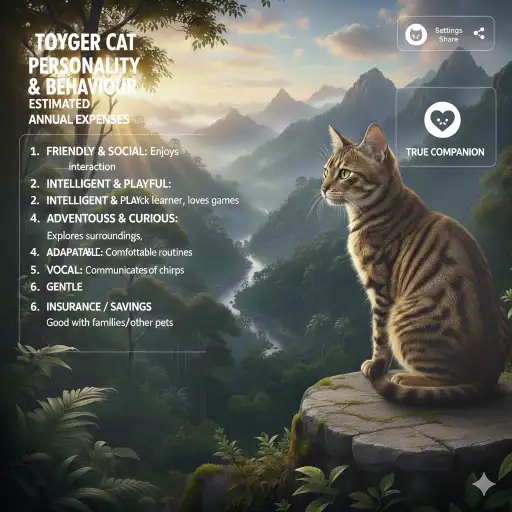
The Toyger is a domestic cat breed created to look like a small tiger, but its personality is fully domestic. Many people see the bold stripes and muscular body and assume the behavior must be wild. In real life, Toygers are known for being confident, social, and highly curious. They are not miniature jungle cats in temperament. They are companion animals that enjoy human interaction and active home life.
Toyger personality is often described as intelligent and alert. These cats like to observe everything around them. They watch doors, windows, and even small movements in the room. If you bring home a new object, a Toyger is usually the first to inspect it. This curiosity is not mischief. It is a sign of mental engagement. They like to understand their environment.
Energy level is another big trait. Toygers are active and playful, especially when young. They often enjoy chasing toys, climbing cat trees, and exploring high shelves. However, high energy does not mean aggressive. It simply means they need regular play and stimulation. When their energy is directed toward toys and climbing spaces, they are balanced and happy.
Affection style can vary. Some Toygers enjoy sitting close to their owners rather than directly on their laps. Others may become true lap cats. Many fall somewhere in the middle. They like to follow their favorite person from room to room, quietly observing. This following behavior is often a sign of attachment, not clinginess. Male and female Toygers can both be affectionate, though individual personality matters more than gender.
Here is a quick snapshot of common Toyger traits:
| Trait | What It Looks Like at Home | What It Actually Means | Owner Experience |
|---|---|---|---|
| High Intelligence | Opens cabinets, studies toys, watches people closely | Needs mental stimulation | Best for engaged owners |
| High Energy | Runs, climbs, plays often | Healthy activity drive | Needs daily play time |
| Social Nature | Follows owner, greets guests | Forms bonds easily | Good for interactive homes |
| Confidence | Explores new rooms quickly | Secure temperament | Adapts well to change |
| Curiosity | Inspects every new object | Strong learning instinct | Benefits from enrichment |
Are Toygers Friendly? Social Behavior with People, Kids & Other Pets
Toygers are generally friendly and people-oriented. They enjoy being part of daily life. Many owners say their Toyger meets them at the door or watches them prepare meals. This is not random behavior. It shows that the cat sees the owner as part of its social group. Toygers often prefer to stay near their people rather than hiding in another room.
Do Toygers like to cuddle? Some do, but not all in the same way. A Toyger may choose to sit beside you instead of on your lap. This is called proximity affection. The cat wants closeness but also personal space. Other Toygers may climb directly onto your chest and purr loudly. Both styles are normal and healthy.
With children, Toygers usually do well when interactions are gentle. Their playful nature matches well with kids who enjoy active games using wand toys. However, like all cats, they need respect for their space. Teaching children to understand tail flicks and ear positions helps prevent stress.
With other cats and dogs, Toygers often adapt well, especially if introduced slowly. Their confident nature can make them comfortable around calm dogs. In multi-cat homes, they usually enjoy interactive play but may still value their own resting spots. This is not dominance. It is normal feline territory awareness.
Here is a simple guide to Toyger social behavior:
| Situation | Typical Toyger Response | What Owners Should Expect |
|---|---|---|
| Meeting New People | Curious, may approach | Often friendly and confident |
| Living with Children | Playful and tolerant | Needs respectful handling |
| Living with Other Cats | Interactive but independent | May claim favorite resting spots |
| Living with Dogs | Adjusts if dog is calm | Slow introduction works best |
| Being Ignored for Long Hours | Seeks stimulation elsewhere | Needs toys and interaction |
Toyger Play Style, Hunting Instincts & Daily Behavior Patterns
Toygers have a strong play drive. Their play often looks like hunting. You may see stalking, crouching, and sudden pouncing. This is normal predatory play behavior. It does not mean the cat is aggressive. It shows healthy instincts at work.
These cats enjoy interactive toys that move or mimic prey. Feather wands, rolling balls, and puzzle toys often hold their attention. Many Toygers prefer active play with a person rather than solo play all the time. This builds bonding and helps burn energy.
Toygers are also crepuscular. This means they are most active during early morning and evening. Owners may notice “zoomies” during these times. Sudden running or jumping is usually an energy release. It is not bad behavior. It is part of a natural rhythm.
Climbing and scratching are also strong instincts. Toygers often enjoy vertical space like cat trees or shelves. Scratching keeps their claws healthy and helps mark territory through scent glands in their paws. When proper scratching posts are available, this behavior becomes constructive instead of destructive.
Here is a daily behavior breakdown:
| Time of Day | Typical Behavior | What It Means | Common Owner Reaction |
|---|---|---|---|
| Early Morning | Active, playful | Natural wake cycle | “Why is my cat awake?” |
| Afternoon | Resting, grooming | Energy recharge | Calm and quiet |
| Evening | Zoomies, chasing toys | Peak activity time | High energy play |
| Night | Light movement, patrol | Natural alertness | May wake light sleepers |
Toyger Body Language & Communication Signals Explained
Toygers communicate mostly through body language. A straight upright tail often means greeting or confidence. A gently swaying tail during play shows excitement. A fast, sharp flick may signal irritation. Watching the speed and context of tail movement helps owners understand mood.
Ears also send clear messages. Forward ears show interest. Slightly turned ears may mean uncertainty. Flattened ears often signal fear or stress. Eye contact is important too. Slow blinking toward you usually means trust. If you blink back slowly, many Toygers respond positively.
Toygers can be moderately vocal. Some use chirps and trills when greeting their owners. Others may meow when they want attention or play. Vocal tone matters more than volume. A soft trill is friendly. A low growl is defensive.
Here is a comfort vs stress signal guide:
| Body Signal | Comfort Meaning | Stress Meaning | Context Clue |
|---|---|---|---|
| Tail Upright | Happy greeting | Rarely stress | Approaching owner |
| Tail Flicking | Play excitement | Irritation if fast | Look at ears too |
| Slow Blink | Trust and calm | Not linked to stress | Relaxed posture |
| Flattened Ears | Rare in comfort | Fear or discomfort | Body tense |
| Purring | Relaxed or content | Sometimes self-soothing | Check body posture |
Commonly Misunderstood Toyger Behaviors & Life Stage Changes
One common myth is that Toygers are aggressive because they look like tigers. In reality, their bold coat does not reflect wild behavior. Most Toygers are playful, not aggressive. Play biting can happen during intense games, especially in kittens. This is part of learning bite control, not true hostility.
High energy is also often misunderstood. A Toyger running across the house is not acting out. It is expressing natural energy. When given enough play and climbing space, this energy becomes balanced and healthy.
Territorial behavior is another area of confusion. A Toyger choosing a favorite sleeping spot or scratching post is normal. Cats use scent to feel secure. This does not mean they are trying to dominate others.
Behavior can change with age. Kittens are extremely active and curious. Adolescents may test limits and show bursts of independence. Adult Toygers often become more balanced and predictable. Senior Toygers may slow down and become calmer or more affectionate.
Here is a life stage overview:
| Life Stage | Typical Traits | Energy Level | Owner Experience |
|---|---|---|---|
| Kitten | Curious, playful, learning | Very high | Needs supervision |
| Adolescent | Testing limits, social | High | Needs structure |
| Adult | Balanced, confident | Moderate | Stable personality |
| Senior | Calm, routine-focused | Lower | Often more attached |
Understanding these patterns helps owners feel confident instead of worried. Sudden major behavior shifts, such as complete withdrawal or loss of interest in normal activities, may deserve professional guidance, but most daily behaviors are natural and healthy.
Living with a Toyger means living with a smart, active, and socially aware cat. They thrive in homes where people interact with them and provide space to climb and explore. Their tiger-like appearance is dramatic, but their heart is that of a companion animal.
For more information about breed standards and background, you can visit The International Cat Association website at https://tica.org.

Ata Ur Rehman is the founder of Pet Age in Human Years Calculator, an educational platform that provides age conversion charts and lifespan guides for dogs, cats, birds, and other companion animals. His work focuses on helping pet owners understand how animal ages translate into human years using commonly accepted age conversion formulas and published lifespan averages.
The website compiles breed and species lifespan data from kennel clubs, breed organizations, and general animal lifespan studies to present simple and easy-to-understand guides for pet owners worldwide.
This website was created to centralize animal age conversion charts into one easy reference platform for pet owners.