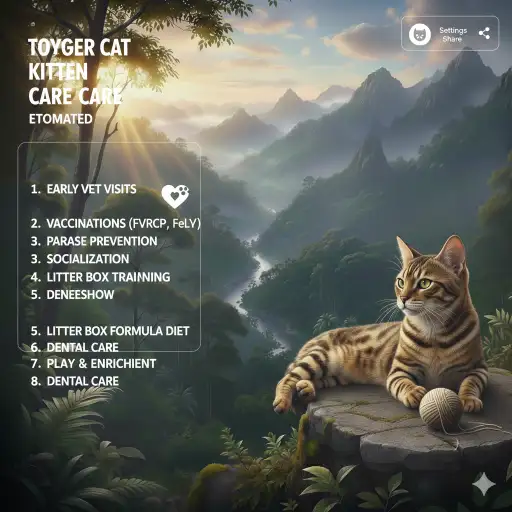
Bringing home a Toyger kitten is exciting. Toygers are known for their bold stripes and wild look, inspired by the tiger. The breed was developed by Judy Sugden in the 1980s with the goal of creating a domestic cat that looked like a miniature tiger but had a sweet, friendly nature. Because of this background, many new owners expect their kitten to act wild. In truth, most Toyger kittens are affectionate, playful, and very people-focused.
The first week at home is all about adjustment. Even the most confident Toyger kitten may feel unsure at first. They have just left their mother, littermates, and familiar smells. It is normal if your kitten hides, eats less for a day, or meows more at night. Stay calm. Give them a small, quiet space with food, water, a litter box, and a soft bed. Sit nearby and speak gently. Let them come to you. Trust builds quickly when you move slowly.
Toyger kittens are usually curious and smart. Many learn routines fast. They often enjoy climbing, watching from high places, and following their humans around the house. Because they are active and alert, you should prepare your home before they arrive. Hide loose wires, remove small objects they could swallow, and block off unsafe areas. A safe start prevents bad habits later.
Here is a simple checklist to help you prepare for the first week:
| First-Week Setup Checklist | Why It Matters |
|---|---|
| Small quiet room or corner | Helps kitten feel safe and not overwhelmed |
| Litter box placed away from food | Encourages good bathroom habits |
| Shallow food and water bowls | Easy access for small kittens |
| Soft bed or blanket | Comfort and warmth |
| Scratching post | Protects furniture and builds healthy habits |
| Interactive toys (wand toy, soft ball) | Supports bonding and healthy play |
| Remove toxic plants and loose cords | Prevents accidents |
In the first few days, keep your kitten’s world small. Do not give them full access to the house right away. Once they are eating well, using the litter box, and coming to you with confidence, you can slowly let them explore more space.
Feeding, Growth & Development Stages
Feeding is one of the biggest concerns for new owners. Toyger kittens grow quickly, and they need balanced kitten food made for growth. Look for food labeled “complete and balanced for kittens.” At this age, they need more protein and calories than adult cats.
Young Toyger kittens usually eat three to four small meals a day. As they grow, you can slowly move to three meals, and later two meals around six months old. Always provide fresh water. Some kittens prefer wet food because it is soft and smells strong. Others enjoy dry food. Many owners use a mix of both. The most important thing is consistency and good quality kitten food.
Here is a simple feeding guide:
| Age of Kitten | Meals Per Day | General Notes |
|---|---|---|
| 8–12 weeks | 4 small meals | Very active growth stage |
| 3–4 months | 3–4 meals | Appetite increases |
| 5–6 months | 3 meals | Growth steady but slowing |
| 6+ months | 2–3 meals | Transition toward adult routine |
Avoid sudden food changes. If you need to switch brands, mix the new food with the old food slowly over 5–7 days. Sudden changes can upset a kitten’s stomach.
Toyger kittens grow fast, especially in the first six months. Their legs get longer, their muscles become stronger, and their striped coat becomes more defined. Some Toygers look lean and athletic as teenagers. This is normal. They are active cats with strong bodies.
Development also includes behavior. Between 8–12 weeks, your kitten is learning social skills. At 3–4 months, they may test boundaries, jump higher, and explore more. By 5–6 months, they often show strong hunting instincts during play. Understanding these stages helps you respond with patience instead of worry.
Here is a development overview:
| Age | What’s Normal |
|---|---|
| 8–12 weeks | Learning litter habits, bonding closely with humans |
| 3–4 months | High energy, climbing, playful biting |
| 5–6 months | Strong jumping skills, more independence |
| 6+ months | Gradual calming, steady growth |
If your kitten is playful, eating well, and gaining weight steadily, those are good signs. If you ever notice major appetite loss, extreme tiredness, or sudden behavior changes, contact your veterinarian for guidance.
Litter Training, Behavior & Daily Routine
Most Toyger kittens learn litter habits quickly, especially if they were raised properly before adoption. Show your kitten the litter box as soon as they arrive home. Gently place them in the box after meals and naps. Do not force them to stay. Just let them explore. Keep the box clean. Scoop daily. Cats prefer a clean space.
If accidents happen, stay calm. Do not yell. Clean the area well to remove smell. Usually, accidents happen if the box is too far away, too dirty, or in a noisy spot. Keep the box in a quiet and easy-to-reach place.
Toyger kittens are active and playful. They may bite during play. This is normal kitten behavior. They are practicing hunting skills. Instead of using your hands, use wand toys or soft toys. If your kitten bites your hand, stop moving and gently redirect to a toy. Over time, they learn that hands are not toys.
Sleep is another common worry. Kittens sleep a lot, often 16–20 hours a day. But when they wake up, they may have “zoomies.” This is normal. Short bursts of running and jumping help them burn energy. A simple daily routine can help:
| Time of Day | Activity |
|---|---|
| Morning | Meal + short play session |
| Midday | Rest and quiet time |
| Evening | Meal + longer interactive play |
| Night | Calm time before bed |
Structured play in the evening often reduces nighttime energy. Toygers enjoy climbing and watching from high places. Cat trees or shelves can help meet this need.
Here is a quick guide to normal vs concerning behavior:
| Normal Behavior | Contact Vet If You Notice |
|---|---|
| Play biting | Sudden aggression with no trigger |
| Zoomies | Extreme weakness or no movement |
| Eating small meals often | Refusing food for more than a day |
| Sleeping many hours | Trouble breathing or constant crying |
Most behavior problems improve with routine, patience, and positive interaction.
Grooming, Socialization & Indoor Care
Toyger kittens have short, dense coats that are easy to care for. Weekly brushing is usually enough. Brushing removes loose hair and helps you check for skin issues. Start grooming early so your kitten learns that it is normal and safe. Keep sessions short and positive.
Nail trimming is also important. Kitten nails grow quickly and can be sharp. Trim just the tip every few weeks. If you are unsure how, your veterinarian or a professional groomer can show you the safe method. Regular trimming protects your skin and your furniture.
Socialization means helping your kitten feel comfortable with people, sounds, and normal life. Gently introduce your kitten to different rooms, friendly visitors, and household noises. Let them approach new experiences at their own speed. Never force them. Toygers are often social cats who enjoy company, but confidence builds slowly.
Indoor life is safest for Toygers. Because of their striking tiger-like look, they can attract attention outside. Keeping them indoors protects them from traffic, predators, and illness. If you have balconies or windows, make sure they are secure. Provide vertical spaces like cat trees to satisfy their climbing needs.
Daily interaction matters. Toygers often bond strongly with their families. Spend time playing, talking softly, and sitting near them. Strong bonds in kittenhood create calm, confident adult cats.
Health Basics, First Vet Visits & Common Owner Mistakes
Your Toyger kitten should see a veterinarian soon after coming home. The first visit usually includes a general check, weight check, and discussion about vaccines and parasite prevention. This is also your chance to ask questions. Regular checkups help your kitten grow into a healthy adult cat.
Keep track of eating, litter habits, and energy level. Small changes are normal, but big changes should not be ignored. Early care makes a big difference. A simple notebook or phone note can help you track growth and routines.
Many new owners make small mistakes, and that is okay. Some common ones include giving too much freedom too soon, using hands as toys, or not providing enough play time. Toygers are smart and active. They need mental and physical stimulation. Without it, they may scratch furniture or become bored.
Another common mistake is worrying too much. Not every sneeze or nap is a problem. Kittens are learning about the world. They stumble, misjudge jumps, and explore everything. Stay observant, but stay calm. Your steady behavior helps your kitten feel safe.
If you ever feel unsure, reach out to a trusted veterinarian or a reliable cat health source. For more general kitten health information, you can visit the American Veterinary Medical Association website at https://www.avma.org/resources-tools/pet-owners/petcare/cat-care

Ata Ur Rehman is the founder of Pet Age in Human Years Calculator, an educational platform that provides age conversion charts and lifespan guides for dogs, cats, birds, and other companion animals. His work focuses on helping pet owners understand how animal ages translate into human years using commonly accepted age conversion formulas and published lifespan averages.
The website compiles breed and species lifespan data from kennel clubs, breed organizations, and general animal lifespan studies to present simple and easy-to-understand guides for pet owners worldwide.
This website was created to centralize animal age conversion charts into one easy reference platform for pet owners.