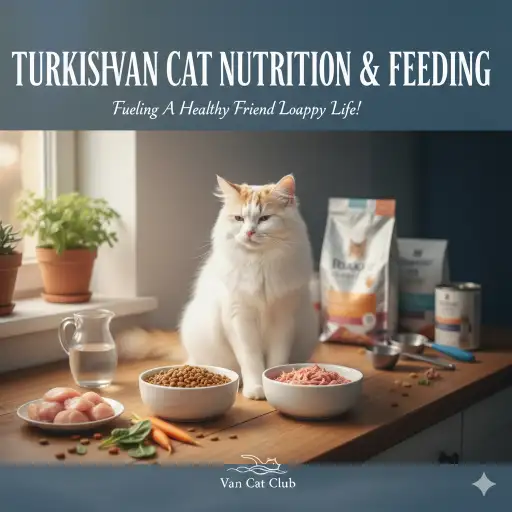
The Turkish Van is not a lazy lap cat. This breed is known for its strong body, love of movement, and playful energy. Because of this active nature, diet plays a very important role in keeping the cat healthy. A Turkish Van needs food that supports lean muscle, steady energy, and a healthy coat. Feeding the right balance of nutrients helps prevent weight gain, muscle loss, and long-term health problems.
Like all cats, the Turkish Van is an obligate carnivore. This means its body is built to eat and use nutrients from animal sources. Cats cannot thrive on plant-based diets. They need animal protein for essential amino acids, especially taurine. Taurine supports heart function, vision, and overall body systems. Without enough taurine, serious health issues can develop over time.
Protein quality matters more than just the percentage printed on the label. A food that says “38% protein” does not automatically mean it is better. What matters most is that the protein comes from real animal sources like chicken, turkey, beef, or fish. Animal protein helps maintain the Turkish Van’s muscular frame. Because this breed tends to stay active even indoors, steady protein intake supports daily activity and recovery.
Fat is another important nutrient. Fat gives cats energy. It also supports healthy skin and that soft, semi-long coat the Turkish Van is known for. However, fat is calorie-dense. Just a small increase in fat can add many extra calories. This is why portion control is very important, especially for indoor Turkish Vans or those that are spayed or neutered. After neutering, many cats experience a slower metabolism and increased appetite.
Carbohydrates are often misunderstood. Cats do not need high levels of carbs, but small amounts in balanced commercial diets are normal and safe. Carbohydrates help form kibble shape and provide some energy. The key is balance. The food should still be rich in animal protein and clearly marked as complete and balanced according to standards set by organizations like the Association of American Feed Control Officials (AAFCO).
Indoor and outdoor lifestyle also affects calorie needs. A Turkish Van that climbs, runs, and explores daily may burn more calories than one that spends most of its time indoors. Owners should watch body shape, not just follow feeding charts blindly. You should be able to feel the ribs without pressing too hard, and the waist should be slightly visible from above.
Key Nutrients for a Turkish Van
| Nutrient | Why It Matters | What to Look For |
|---|---|---|
| Animal Protein | Builds and maintains muscle | Named meat sources |
| Fat | Main energy source | Moderate fat levels |
| Taurine | Heart and eye health | Listed in ingredients |
| Vitamins & Minerals | Overall body support | Complete & balanced statement |
| Water (Moisture) | Kidney and urinary support | Wet food or water intake |
Best Food Options for a Turkish Van (Wet, Dry, or Mixed?)
Choosing the best food for a Turkish Van often depends on lifestyle, budget, and the cat’s preference. Both wet and dry foods can be complete and balanced. The key is understanding the differences.
Wet food contains high moisture, usually around 70–80%. This helps support hydration. Cats naturally have a low thirst drive, so moisture in food is helpful for urinary health. Wet food is also lower in calorie density per gram. This can make portion control easier for some owners.
Dry food is convenient and usually more affordable. It has less moisture but is more calorie-dense. That means a small cup can contain many calories. Free-feeding dry food can quickly lead to weight gain, especially in indoor Turkish Vans. Owners should measure portions carefully.
Mixed feeding combines wet and dry food. Many owners find this method practical. It offers hydration from wet food and convenience from dry food. However, calories must be calculated from both sources to prevent overfeeding.
Learning to read a label is important. Look for a clear AAFCO statement that says the food is complete and balanced for the cat’s life stage. Check calorie content, usually listed as kcal per cup or per can. Higher calorie foods require smaller portions.
Wet vs Dry vs Mixed Feeding
| Feeding Type | Benefits | Watch Out For |
|---|---|---|
| Wet Food | High moisture, supports hydration | Can cost more |
| Dry Food | Convenient, longer shelf life | High calorie density |
| Mixed Feeding | Balanced approach | Risk of double counting calories |
How Much Should You Feed a Turkish Van?
There is no single number that works for every cat. The amount a Turkish Van needs depends on body weight, age, activity level, and whether the cat is spayed or neutered. Active cats may need more calories, while indoor cats may need fewer.
Most adult cats need about 20–30 calories per pound of body weight per day, but this is only a general estimate. Owners should use food labels as a starting point and then adjust based on body condition. Regular weight checks are helpful.
Meal feeding is usually better than free feeding. Offering two to three measured meals per day allows you to control portions and notice appetite changes. Free feeding dry food can lead to slow weight gain over time, which is common in active breeds that adapt to indoor living.
Body condition scoring is a simple way to monitor health. You should feel the ribs without heavy pressure. The waist should be visible from above. If the belly hangs low or the waist disappears, portion sizes may need adjustment.
Estimated Daily Calorie Needs (General Guide)
| Weight | Low Activity | Moderate Activity |
|---|---|---|
| 8 lbs | 160–180 kcal | 180–200 kcal |
| 10 lbs | 200–220 kcal | 220–250 kcal |
| 12 lbs | 240–270 kcal | 270–300 kcal |
Portion Example Based on Calorie Density
| Food Type | Calories Per Unit | Example Daily Amount (200 kcal need) |
|---|---|---|
| Dry Food | 400 kcal per cup | 1/2 cup |
| Wet Food | 100 kcal per 3 oz can | 2 cans |
Feeding a Turkish Van by Life Stage
Kittens grow fast and need more calories per pound than adults. They need food labeled for growth or all life stages. Small, frequent meals support steady energy. Protein and fat levels are usually higher in kitten formulas.
Adult Turkish Vans need balanced nutrition that supports muscle without causing weight gain. Two measured meals per day often work well. Activity level should guide portion size adjustments.
Senior cats may become less active and may need slightly fewer calories. However, protein should not be reduced without veterinary advice. Older cats still need quality protein to prevent muscle loss. Monitoring appetite and weight changes is very important.
Treats should not exceed 10% of total daily calories. Many owners forget to count treats, which can lead to hidden weight gain. Human foods like onions, garlic, chocolate, and cooked bones are unsafe for cats.
Feeding Differences by Life Stage
| Life Stage | Feeding Focus | Meal Frequency |
|---|---|---|
| Kitten | Growth, high energy | 3–4 meals |
| Adult | Muscle maintenance | 2 meals |
| Senior | Weight monitoring | 2 small meals |
Common Feeding Mistakes & When to Seek Veterinary Advice
One common mistake is overfeeding an active breed once it becomes indoor-only. Turkish Vans may still act energetic but burn fewer calories inside. Weight gain can happen slowly and go unnoticed.
Another mistake is ignoring calorie changes after spaying or neutering. Many cats need fewer calories after surgery. If appetite increases, measured meals become even more important.
Sudden food changes can upset digestion. Always transition gradually over 7–10 days by mixing old and new food. This helps prevent vomiting or diarrhea.
Hydration is often overlooked. Even if your cat eats dry food, always provide fresh water. Some cats drink more from fountains. Wet food can help increase moisture intake.
Consult a veterinarian if you notice sudden weight loss, loss of appetite, vomiting that continues, diarrhea lasting more than a day, or major behavior changes. Nutrition is powerful, but it cannot replace medical care when illness is present.
In summary, the best diet for a Turkish Van focuses on high-quality animal protein, controlled portions, and steady hydration. Wet, dry, or mixed feeding can all work when calories are managed carefully. Monitor body shape, adjust for activity level, and avoid overfeeding treats. Consistency and observation are more important than trends.
For more detailed feline nutrition standards, you can review guidelines from the Association of American Feed Control Officials at https://www.aafco.org.

Ata Ur Rehman is the founder of Pet Age in Human Years Calculator, an educational platform that provides age conversion charts and lifespan guides for dogs, cats, birds, and other companion animals. His work focuses on helping pet owners understand how animal ages translate into human years using commonly accepted age conversion formulas and published lifespan averages.
The website compiles breed and species lifespan data from kennel clubs, breed organizations, and general animal lifespan studies to present simple and easy-to-understand guides for pet owners worldwide.
This website was created to centralize animal age conversion charts into one easy reference platform for pet owners.