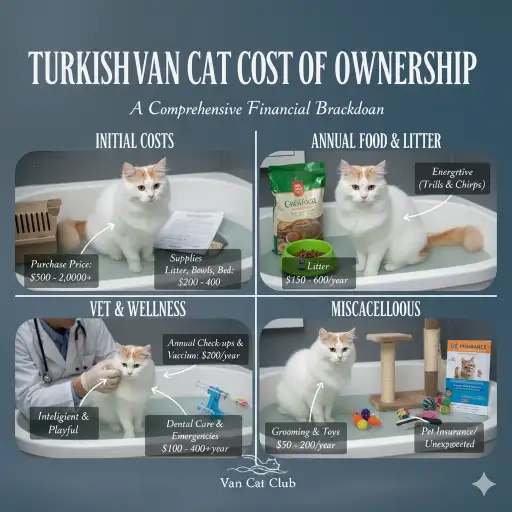
Owning a Turkish Van is not just about loving a beautiful cat. It is about planning for 15 years or more of care. Many people ask, “Is a Turkish Van expensive to own?” The honest answer is: it depends on how you care for your cat and how well you prepare for long-term costs. This breed is rare, active, and large compared to many common house cats. Those traits can affect food costs, supply wear, and even vet bills over time.
A Turkish Van often lives between 12 and 17 years. That means the money you spend is not just a short-term expense. It becomes a long commitment. When people only think about the purchase price, they miss the bigger picture. Food, litter, yearly vet visits, dental cleanings, and emergencies usually cost far more over a lifetime than the initial adoption or breeder fee.
To make this guide clear, all numbers are general ranges. Costs change depending on country, city, clinic pricing, and how you choose to care for your cat. The estimates below assume an indoor Turkish Van living in a moderate-care home. A very budget setup or a premium lifestyle will change the totals.
Here is a quick snapshot to help you understand the full picture before we go deeper:
- First year total: Higher than any other year because of setup and medical basics
- Average monthly cost after year one: Steady but not small
- Lifetime cost (15 years): A serious financial commitment
Owning a Turkish Van is not about being rich. It is about being prepared. If steady monthly pet expenses would cause stress, it is better to wait. Planning ahead helps both you and your cat live peacefully.
First-Year Turkish Van Cost Breakdown (One-Time + Setup Expenses)
The first year is usually the most expensive. This is when you pay for adoption or breeder fees, medical setup, and supplies.
A Turkish Van from a breeder is often more expensive than adopting a mixed-breed cat. Rare breeds usually come with higher prices because of selective breeding and health screening. Adoption from a shelter may cost much less, but pure Turkish Vans are uncommon in shelters.
After bringing your cat home, the first vet visit is very important. Even if your breeder or shelter provided vaccines, your vet will likely do a full exam. Spaying or neutering, if not already done, is another cost. Microchipping is also common for safety.
Then come supplies. Because Turkish Vans are active and strong, cheap scratchers and weak cat trees may not last long. You may need sturdy climbing furniture. Large litter boxes are often better for bigger cats. Food and water bowls, carriers, toys, and grooming tools also add up.
Below is a realistic estimate of first-year costs:
| Category | Low Estimate | Average Estimate | Higher-End Estimate |
|---|---|---|---|
| Adoption / Breeder Fee | $100 | $800 | $2,000+ |
| Initial Vet Care | $150 | $300 | $600 |
| Spay / Neuter (if needed) | $100 | $250 | $500 |
| Supplies & Setup | $200 | $500 | $1,000 |
| First-Year Preventive Care | $200 | $400 | $800 |
| Estimated First-Year Total | $750 | $2,250 | $4,900+ |
These numbers show why the first year feels expensive. Even in a moderate setup, you may spend over $2,000. Many new owners underestimate this.
Ongoing Monthly and Annual Turkish Van Expenses
After the first year, costs become more stable. But they do not disappear. You will now pay for food, litter, and routine medical care every month.
Food is one of the biggest ongoing expenses. Turkish Vans are athletic and medium-to-large cats. They often eat more than smaller breeds. A low-cost dry diet is cheaper upfront, but many owners choose mixed or wet diets, which cost more. Better food may also reduce health issues later, but it still raises your monthly spending.
Litter is another steady cost. Most homes use one box per cat, sometimes two. Clumping litter needs regular replacement. Higher-quality litter controls odor better but costs more.
Vet care does not happen every month, but you should divide annual costs into monthly savings. This includes yearly exams, vaccines, and possible lab tests. Dental cleanings every few years can also add a large bill.
Toys, scratchers, and climbing posts wear out faster with active cats like the Turkish Van. Replacing damaged items is normal.
Here is a simple breakdown:
| Expense Type | Estimated Monthly Range | Estimated Annual Range |
|---|---|---|
| Food | $25 – $70 | $300 – $840 |
| Litter | $15 – $40 | $180 – $480 |
| Routine Vet (averaged) | $15 – $35 | $180 – $420 |
| Preventive Medications | $10 – $25 | $120 – $300 |
| Supplies & Replacement | $10 – $30 | $120 – $360 |
| Estimated Total | $75 – $200 | $900 – $2,400 |
In a moderate home, many owners spend around $100 to $150 per month. Some months will be cheaper. Others may be higher if supplies need replacing.
Unexpected, Emergency, and Long-Term Costs
No one wants to think about emergencies, but they are part of responsible pet ownership. A sudden injury, swallowed object, or infection can lead to emergency vet visits. These visits are often much more expensive than regular appointments.
Diagnostic tests such as X-rays, blood work, or ultrasounds add to the cost. Surgery can raise the bill quickly. Even indoor cats can get sick or injured.
Some Turkish Vans may develop chronic issues like dental disease or joint problems later in life. Long-term medication and monitoring increase costs over time.
There are also hidden costs people forget. A bored or under-stimulated Turkish Van may scratch furniture or damage curtains. Replacing household items is an indirect cost of ownership.
Here are some common unexpected expenses:
| Scenario | Typical Cost Range | Likelihood Level |
|---|---|---|
| Emergency Vet Visit | $300 – $1,000 | Moderate |
| Surgery | $800 – $3,000+ | Variable |
| Dental Cleaning | $300 – $900 | Common Over Lifetime |
| Chronic Medication (Yearly) | $200 – $800 | Variable |
| Behavioral Damage Repairs | $100 – $500 | Moderate |
Not every cat will face all these costs. But planning for at least one large emergency during a 15-year life is realistic.
Lifetime Cost of Owning a Turkish Van (15+ Year Projection)
When you add everything together, the numbers become clearer. The first year is expensive. The middle years are steady. Senior years often become more costly due to increased medical care.
Let us assume a 15-year lifespan with moderate care. The first year may cost around $2,000 or more. Years 2 through 10 may average around $1,200 to $1,800 per year. Senior years may rise to $1,500 to $2,500 per year due to extra testing and treatments.
Here is a simplified projection:
| Ownership Style | Estimated Lifetime Cost Range | Key Assumptions |
|---|---|---|
| Budget-Conscious | $15,000 – $20,000 | Basic supplies, minimal extras |
| Moderate Care | $20,000 – $30,000 | Quality food, routine care, 1–2 emergencies |
| Premium Lifestyle | $30,000 – $45,000+ | High-end diet, frequent testing, major medical events |
These totals may seem high, but they reflect 15 years of care. When divided monthly over a lifetime, the cost feels more manageable. Still, it is not small.
Before bringing home a Turkish Van, ask yourself simple questions:
- Can I afford $100–$200 per month without stress?
- Could I handle a $1,000 emergency bill?
- Am I ready for 15 years of financial responsibility?
If the answer is yes, then you are likely prepared. If not, it may be wise to wait.
Owning a Turkish Van can be joyful and rewarding. They are playful, intelligent, and strong companions. But responsible ownership means planning with clear eyes and honest numbers.
For more general guidance on budgeting for pets, you can review educational resources from the American Veterinary Medical Association at:
https://www.avma.org/resources-tools/pet-owners/petcare

Ata Ur Rehman is the founder of Pet Age in Human Years Calculator, an educational platform that provides age conversion charts and lifespan guides for dogs, cats, birds, and other companion animals. His work focuses on helping pet owners understand how animal ages translate into human years using commonly accepted age conversion formulas and published lifespan averages.
The website compiles breed and species lifespan data from kennel clubs, breed organizations, and general animal lifespan studies to present simple and easy-to-understand guides for pet owners worldwide.
This website was created to centralize animal age conversion charts into one easy reference platform for pet owners.