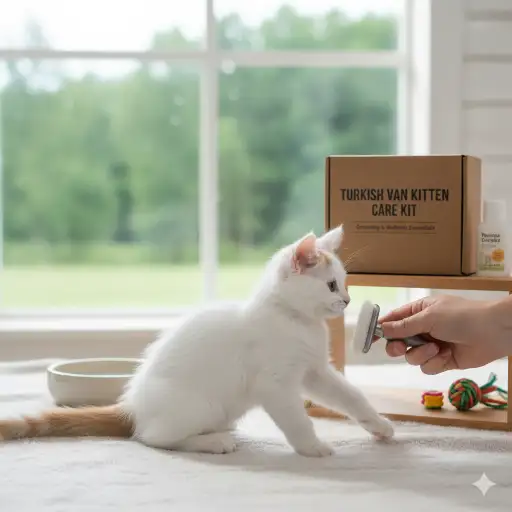
Bringing home a Turkish Van kitten is exciting, but it can also feel overwhelming if you do not know what to expect. This is not a quiet, sleepy breed that stays in one spot all day. Turkish Van kittens are active, curious, and very smart. They love to explore high places, inspect running water, and follow you around the house. Many owners are surprised by how bold and confident these kittens can be even at a young age.
One of the most talked-about traits of the Turkish Van is their unusual interest in water. While not every kitten will jump into a bathtub, many enjoy pawing at water bowls, watching faucets drip, or dipping toys into water. This behavior is normal for the breed and not something to panic about. It simply means you will need to manage water sources safely in your home.
Energy levels are high, especially between three and six months of age. During this time, your kitten may run across the house at full speed, climb furniture, and test their jumping skills. This is not “bad behavior.” It is normal kitten development. Turkish Van kittens are athletic by nature, and they need daily play to burn that energy in healthy ways.
Emotionally, many Turkish Vans are loving but not always lap cats. They may sit near you instead of on you. They often bond closely with one or two people in the home. If your kitten does not want to be held for long, that does not mean they dislike you. It simply reflects their independent streak. With time, patience, and gentle handling, trust grows strong.
Below is a simple timeline to help you understand what is normal at each age:
| Age Range | What to Expect | What’s Normal | Your Focus |
|---|---|---|---|
| 8–12 weeks | New home adjustment | Crying at night, hiding at first | Create routine and safe space |
| 3–6 months | High energy, climbing | Play biting, zoomies | Daily structured play |
| 6–12 months | Confident and bold | Testing limits | Stay consistent and patient |
If your kitten is eating, playing, and using the litter box, most behaviors are part of healthy growth. If you ever feel unsure, a vet can give reassurance. In the next part, we will look at how to prepare your home so your energetic kitten stays safe and happy.
Preparing Your Home for a Turkish Van Kitten
Before your kitten fully explores the house, it helps to prepare your space. Turkish Van kittens love to climb. They do not just stay on the floor. They will jump onto counters, shelves, and the top of furniture. If something is loose or breakable, move it to a safer spot. Think of your home from a kitten’s eye level and from above.
Water safety is very important for this breed. Always keep toilet lids closed. Do not leave buckets or tubs filled with water unattended. If you have an aquarium, make sure it has a secure lid. Curiosity can lead to risky situations. These small changes make a big difference.
Set up a quiet starter area for the first few days. This can be a bedroom or a calm corner with food, water, a litter box, and a soft bed. A smaller space helps your kitten feel safe instead of overwhelmed. As they grow more confident, you can slowly open access to the rest of the home.
Vertical space is a must. A tall, stable cat tree gives your kitten a safe place to climb and watch the room. This helps prevent climbing curtains or shelves. Scratching posts are also important. Place them near sleeping areas and common rooms. This teaches your kitten where scratching is allowed.
Here is a simple home setup checklist:
| Category | What You Need | Why It Matters |
|---|---|---|
| Vertical space | Tall cat tree | Burns energy safely |
| Water safety | Closed toilets, covered tanks | Prevents accidents |
| Scratching areas | Multiple posts | Protects furniture |
| Starter space | Quiet room setup | Reduces stress |
| Safe storage | Secure wires and breakables | Avoids injury |
Apartment living can work well for a Turkish Van kitten as long as there is enough enrichment. Indoor life is usually safest. Windows and balconies should always have secure screens. In the next part, we will talk about feeding and litter training, which are daily basics every new owner needs to feel confident about.
Feeding, Nutrition & Litter Training Basics
Growing kittens need proper nutrition. Turkish Van kittens are active and burn a lot of energy. Most young kittens eat three to four small meals a day. As they grow, this can slowly move to two or three meals daily. Choose high-quality kitten food that supports growth. Fresh water should always be available, even if your kitten likes to splash in it.
Do not be alarmed if appetite changes slightly during growth spurts. Many kittens eat more during fast growth stages. However, sudden loss of appetite or extreme overeating should be discussed with a vet. Keep feeding times consistent. Routine helps kittens feel secure.
Here is a simple feeding guide:
| Age | Meals Per Day | Notes |
|---|---|---|
| 8–12 weeks | 3–4 meals | Small portions, steady growth |
| 3–6 months | 3 meals | High energy phase |
| 6–12 months | 2–3 meals | Gradual adjustment |
Litter training is usually simple. Place the litter box in a quiet, easy-to-reach area. After meals or naps, gently place your kitten in the box. Most kittens learn quickly by instinct. Keep the box clean. Many kittens avoid dirty litter.
If accidents happen, stay calm. Do not punish. Clean the area well to remove scent. Stress, sudden changes, or a dirty box are common causes of accidents. Consistency solves most problems.
Some owners worry when kittens dig a lot or play in the litter. This is normal exploration behavior. As long as your kitten is using the box regularly, there is usually no cause for concern.
Daily Routine, Play, Training & Socialization
Turkish Van kittens thrive on structure. Without daily play, their energy may turn into climbing curtains or chasing ankles. Interactive toys like feather wands or small balls help release energy safely. Aim for at least two focused play sessions each day.
Play biting is common in kittens. They learn bite control from littermates. If your kitten bites during play, stop the game calmly. Redirect to a toy. Over time, they learn that hands are not toys. Yelling or hitting can create fear, so always stay gentle.
Socialization matters during early months. Invite calm visitors. Let your kitten explore at their own pace. When introducing other pets, move slowly. Keep first meetings short and supervised. Positive experiences build confidence.
Here is an example of a simple daily routine:
| Time | Activity | Purpose |
|---|---|---|
| Morning | Active play session | Burns early energy |
| Midday | Rest and quiet time | Supports growth |
| Evening | Interactive play | Prevents night zoomies |
| Night | Calm wind-down | Encourages sleep |
Many Turkish Vans enjoy puzzle toys that challenge their minds. Mental activity is just as important as physical play. When your kitten feels stimulated and secure, behavior problems are less likely.
Grooming, Health Basics & Common Beginner Mistakes
Turkish Van kittens have a soft, semi-long coat. It is not as heavy as some long-haired breeds, but regular brushing still helps. Brushing once or twice a week removes loose fur and reduces shedding. Start grooming early so your kitten gets used to being handled.
Nail trimming can begin when your kitten is calm and sleepy. Trim just the sharp tip. If you feel unsure, a vet or groomer can show you how. Regular nail care protects furniture and prevents painful snags.
Your first vet visit should happen soon after bringing your kitten home. The vet will check overall health and answer questions. Keep a record of visits and any advice given. Watching for changes in appetite, energy, or litter habits helps you notice when something feels different.
Here is a quick guide to normal versus concerning signs:
| Normal Behavior | Possibly Concerning |
|---|---|
| Zoomies at night | Extreme tiredness all day |
| Curious climbing | Sudden hiding constantly |
| Play biting | Ongoing aggressive attacks |
| Healthy appetite | Refusing food |
New owners often make small mistakes. One common mistake is underestimating how much activity this breed needs. Another is thinking independence means the kitten is not bonding. Turkish Vans show love in their own way. They may sit nearby instead of cuddling for long periods.
Another mistake is inconsistency. Changing feeding times or play schedules too often can create stress. Simple routines build security. You do not need to be perfect. You only need to be steady and patient.
Raising a Turkish Van kitten is active and sometimes busy, but it is also deeply rewarding. With daily play, safe surroundings, and gentle guidance, your kitten will grow into a confident and loving companion.
For more breed information and standards, you can visit the Cat Fanciers’ Association website: https://cfa.org/turkish-van/

Ata Ur Rehman is the founder of Pet Age in Human Years Calculator, an educational platform that provides age conversion charts and lifespan guides for dogs, cats, birds, and other companion animals. His work focuses on helping pet owners understand how animal ages translate into human years using commonly accepted age conversion formulas and published lifespan averages.
The website compiles breed and species lifespan data from kennel clubs, breed organizations, and general animal lifespan studies to present simple and easy-to-understand guides for pet owners worldwide.
This website was created to centralize animal age conversion charts into one easy reference platform for pet owners.