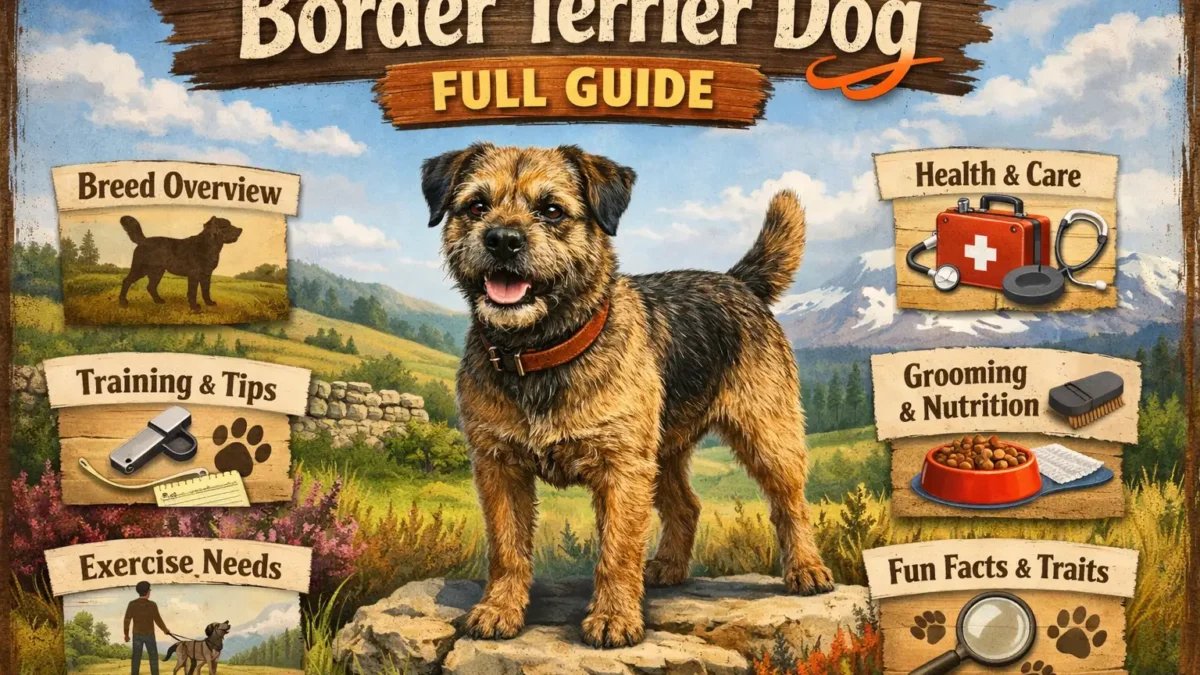
Border Terrier Dog Breed: Complete Guide to Temperament, Size, Care & Costs
The Border Terrier dog breed is often misunderstood. Small in size but big in personality, this hardy terrier was never meant to be a decorative lap dog. Bred along the rugged Anglo-Scottish border to work all day alongside farmers and huntsmen, the Border Terrier combines true working-dog stamina with a surprisingly easygoing, people-focused nature at home.
Most people searching for a Border Terrier want clear answers to practical questions: Are they good family dogs? How energetic are they really? Do they bark a lot? Are they hard to train? This guide is built to answer those questions honestly—without romanticizing the breed or glossing over real challenges like prey drive, recall reliability, and daily exercise needs.
What sets the Border Terrier apart from many other small terriers is balance. While they retain strong instincts and independence, they are typically less sharp, less snappy, and more adaptable than breeds like the Jack Russell. In the right home, they’re affectionate, comical, resilient companions. In the wrong one, they can become frustrated, noisy, and destructive.
This article is designed for readers who are seriously considering the breed—families, first-time owners, active individuals, and anyone weighing whether a Border Terrier truly fits their lifestyle.
Border Terrier at a Glance
| Trait | Overview |
|---|---|
| Breed Group | Terrier |
| Size | Small |
| Weight | 11–15.5 lbs (approx.) |
| Energy Level | High |
| Shedding | Low (but coat maintenance required) |
| Lifespan | 12–15 years |
| Temperament | Affectionate, determined, alert |
| Trainability | Moderate |
| Good for Families | Yes, with proper exercise |
| Best For | Active households, outdoor-oriented owners |
If you’re looking for a low-energy, always-off-leash-reliable dog, this breed may not be for you. But if you want a tough, cheerful, people-loving terrier that can hike all morning and relax with the family at night, the Border Terrier deserves serious consideration.
Border Terrier History, Origin & Breed Purpose
The Border Terrier comes from the rough land between England and Scotland, known as the border country. This area has cold weather, hills, farms, and rocky ground. Dogs here had to be tough, fast, and smart to survive and work.
Border Terriers were bred to help farmers and huntsmen. Their main job was fox bolting. This means they would chase foxes out of narrow dens so larger hunting dogs could follow. Because of this job, Border Terriers needed a small body, strong legs, and a brave mind. They also had to run for long hours without getting tired.
Unlike many other terriers, Border Terriers worked closely with people and other dogs. This shaped their personality. Over time, breeders favored dogs that were not only strong workers but also calm and friendly at home. This is why Border Terriers are often easier to live with than some sharper terrier breeds.
Today, most Border Terriers are family pets, but their working roots still show. They are alert, curious, and always ready to move. They enjoy jobs, games, and outdoor time. When these needs are met, they settle well into family life.
Border Terrier History Snapshot
| Time Period | What Was Happening |
|---|---|
| 1700s–1800s | Used for fox bolting and farm pest control |
| Border Region | Bred in England–Scotland border areas |
| Early 1900s | Breed type became more consistent |
| Modern Day | Companion dog with working instincts |
| Kennel Recognition | Recognized by major kennel clubs |
Understanding this history helps explain why Border Terriers behave the way they do today. Their energy, prey drive, and confidence are not accidents—they are part of the breed’s design.
Border Terrier Appearance, Size & Physical Traits
The Border Terrier is a small but strong dog. At first look, the breed may seem simple, but every part of its body was shaped for work. These dogs were built to move fast, fit into tight spaces, and keep going for hours without getting tired.
They have a narrow chest and long legs for their size. This helped them run with horses and larger dogs during hunts. Their body is longer than it is tall, giving them good balance and speed.
One of the most famous features of this breed is the “otter head.” This means the head is short, wide, and flat on top, with a strong muzzle. Their eyes are dark and alert, and their ears are small and fold forward. This gives them a kind but focused expression.
The coat is another important trait. Border Terriers have a rough, wiry outer coat and a soft undercoat. This protects them from cold, rain, and rough bushes. The coat is made to be useful, not fancy.
Border Terrier Physical Characteristics
| Feature | Details |
|---|---|
| Height | About 10–11 inches |
| Weight | 11–15.5 pounds |
| Body Type | Athletic and narrow |
| Coat Type | Wiry double coat |
| Common Colors | Red, wheaten, grizzle & tan, blue & tan |
| Head Shape | Otter-like head |
| Tail | Short, thick at the base |
A healthy Border Terrier should look fit and ready to move, not thin and not heavy. When walking, their movement should be smooth and easy, showing good energy and strength.
Because of their build and coat, Border Terriers can handle different weather conditions better than many small dogs. This makes them good companions for people who enjoy outdoor activities.
Border Terrier Temperament, Behavior & Lifestyle Fit
The Border Terrier is known for having a friendly but strong personality. They are loving with their family, but they still think like a working dog. This means they enjoy being close to people, yet they like to make their own choices.
At home, Border Terriers are often cheerful and playful. They enjoy spending time with their owners and like to be part of daily life. Many owners say their Border Terrier follows them from room to room, just to stay close.
With strangers, this breed is usually polite but alert. They may bark to let you know someone is there, but they are not guard dogs. Once they feel safe, most Border Terriers warm up quickly.
Border Terriers are often good with children, especially when raised together. They enjoy play but do best with kids who know how to treat dogs gently. Rough handling can make any dog uncomfortable.
When it comes to other pets, things are mixed. Border Terriers usually get along well with other dogs, but they have a strong prey drive. This means small animals like hamsters, rabbits, or sometimes cats can trigger their chase instinct.
Border Terrier Temperament Overview
| Trait | What It Means in Daily Life |
|---|---|
| Intelligence | Learns fast but thinks independently |
| Energy Level | Active and playful |
| Affection | Loyal and people-focused |
| Barking | Moderate |
| Prey Drive | Strong |
| Confidence | Brave and curious |
Lifestyle fit matters a lot with this breed. Border Terriers do best in homes where they get daily walks, playtime, and attention. They can live in apartments, but only if their exercise needs are met. Without enough activity, they may bark, dig, or chew.
Lifestyle Suitability
| Home Type | How Well It Fits |
|---|---|
| Families with kids | Good |
| First-time owners | Fair |
| Apartment living | Possible with daily exercise |
| Seniors | Depends on activity level |
| Multi-pet homes | Caution with small pets |
| Active owners | Excellent |
Border Terriers are happiest with people who enjoy being active and spending time outdoors. They are not the best choice for owners who want a very calm or lazy dog.
Border Terrier Care, Training, Health & Ownership Costs
Caring for a Border Terrier is not hard, but it does require time and daily effort. This breed is active, smart, and curious. When their needs are met, they are happy and calm. When they are bored, problems can start.
Border Terriers need daily exercise. A short walk is not enough. They enjoy longer walks, playtime, and games that make them think. Many also enjoy digging, sniffing, and chasing toys. Mental games are just as important as physical exercise.
Training a Border Terrier can be fun but also challenging. They are smart, but they like to decide things for themselves. This means they may listen one day and ignore you the next. Calm, patient training works best. Harsh methods usually fail and can damage trust.
Grooming needs are moderate. Border Terriers do not shed much, but their coat needs care. Many owners choose hand stripping a few times a year to keep the coat healthy. Regular brushing, nail trimming, ear cleaning, and teeth care are also important.
Most Border Terriers are healthy dogs, but like all breeds, they can have some health problems. Knowing what to watch for helps owners catch issues early and plan vet care.
Daily Care Requirements
| Care Area | What to Expect |
|---|---|
| Exercise | 60–90 minutes per day |
| Mental Stimulation | Very important |
| Training | Ongoing, patience needed |
| Grooming | Moderate |
| Shedding | Low |
Common Health Issues
| Health Issue | Notes |
|---|---|
| Epilepsy | Seen in some lines |
| Hip Dysplasia | Less common, but possible |
| Heart Problems | Screening recommended |
| Allergies | Can occur |
Estimated Ownership Costs
| Expense Type | Estimated Cost |
|---|---|
| Puppy Price | Medium to high |
| Food (per year) | Moderate |
| Grooming (per year) | Low to moderate |
| Vet Care (per year) | Moderate |
| Insurance | Optional |
Border Terriers usually live 12 to 15 years. With good care, exercise, and regular vet visits, many stay active well into old age.
Before choosing this breed, it is important to think about time, energy, and long-term costs. Border Terriers give a lot of love, but they also expect commitment in return.For official breed standards and detailed historical background, you can also refer to the The Kennel Club Border Terrier breed profile:
https://www.thekennelclub.org.uk/search/breeds-a-to-z/breeds/terrier/border-terrier/
Border Terrier Cost of Ownership Guide: What to Expect in 2025
[…] Border Terrier Dog Breed: Complete Guide to Temperament, Size, Care & Costs Border Terrier Training Guide: Practical Tips That Actually Work Border Terrier Age Calculator: Dog Years to Human Years Chart Border Terrier Grooming Basics: Coat Care, Tools, and Maintenance The Ultimate Guide to Border Terrier Nutrition & Feeding […]