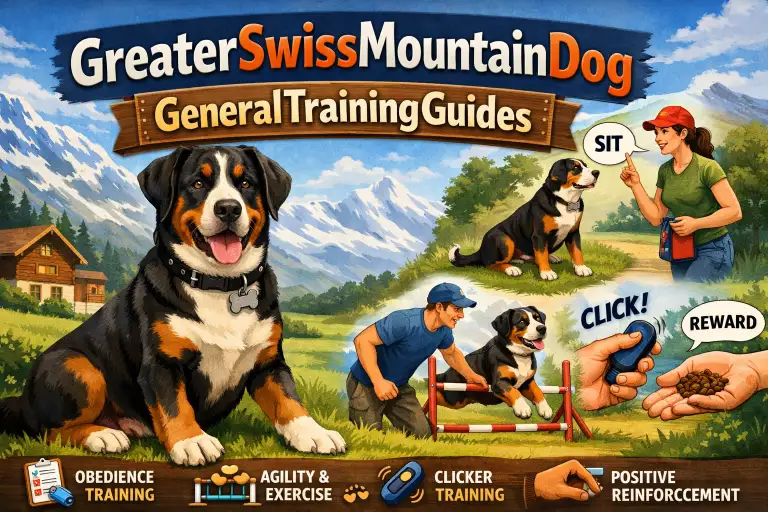
Training a Greater Swiss Mountain Dog (GSMD) is an essential step to ensure your dog grows into a well-behaved, confident, and safe family companion. Known for their large size, impressive strength, and friendly personality, Swissies are intelligent and eager to work, but they also have a stubborn streak that requires consistent, positive guidance from an early age.
This guide is designed to provide clear, step-by-step instructions for owners at any experience level, helping you understand your dog’s behavior, establish good habits, and address common challenges effectively. Whether you are welcoming a playful puppy or a mature adult Swissy, these training strategies will support obedience, socialization, and confidence.
To make the guide easy to follow, here’s a quick “At a Glance” table summarizing key GSMD traits and what they mean for training:
| Trait | Implication for Training | Quick Tip |
|---|---|---|
| Large size & strength | Needs leash control early | Start leash training as a puppy |
| Stubborn personality | May resist commands | Use short, fun sessions with high-value rewards |
| Alert & protective | Can bark at strangers | Begin early socialization |
| Family-friendly | Good with children if socialized | Supervise initial interactions |
By keeping your training consistent, rewarding desired behaviors, and understanding the unique traits of the Greater Swiss Mountain Dog, you can build a strong bond with your dog while shaping a safe and well-mannered companion.
Understanding Your Greater Swiss Mountain Dog
To train a Greater Swiss Mountain Dog successfully, it’s important to understand their personality and how they learn. Swissies are smart, strong, and alert dogs. They love to be part of the family but can be stubborn at times. Knowing what to expect at different life stages will make training easier and more effective.
Puppies are curious and excited about everything. They need gentle guidance and short training sessions. Adolescents may test boundaries and show independence, so consistency is very important. Adult Swissies are confident and may have stubborn moments, but they respond well to clear rules and rewards.
Here is a quick table to help you understand your dog’s needs at different ages:
| Life Stage | Key Behaviors | Training Focus | Session Tips |
|---|---|---|---|
| Puppy (8–16 weeks) | Curious, social, easily distracted | Basic commands, crate training | 5–10 min sessions, multiple times a day |
| Adolescent (4–12 months) | Testing boundaries, independent | Recall, leash manners, consistency | 10–15 min sessions, structured rewards |
| Adult (1+ year) | Confident, stubborn streak | Advanced commands, behavior fine-tuning | 15–20 min sessions, increase distractions gradually |
Understanding your dog’s stage of life helps you set realistic expectations. Puppies learn quickly but get bored easily. Adolescents may ignore commands if they are not motivated. Adults can learn anything but need patience and consistent reinforcement.
Step-by-Step Training Method
Training a Greater Swiss Mountain Dog works best when you follow clear steps. Swissies are smart, but they can be stubborn, so using rewards and short, fun sessions is very important. Consistency, patience, and positive reinforcement are the keys to success.
Start with basic commands, then move to leash training, socialization, and finally more advanced skills. Keep training sessions short but frequent, and always reward good behavior.
Here is a table showing common training goals, how to do them, how often, and what to expect:
| Training Goal | Method | Frequency | Expected Progress |
|---|---|---|---|
| Sit / Stay | Use treats and praise to guide your dog | 3–5 short sessions per day | 1–2 weeks |
| Leash Walking | Stop and reward when dog pulls, use loose leash | Daily walks | 3–4 weeks |
| Recall (Come) | Call your dog from short distances with rewards | 5–10 calls per day | 2–3 weeks |
| Socialization | Introduce to new people, dogs, and places | Several times per week | Ongoing |
| Crate Training | Gradually increase crate time, use treats | 10–15 minute increments | 1–2 weeks |
For puppies, focus on basic commands and crate training. For adolescents, reinforce recall and leash manners. Adults can learn advanced commands and benefit from mental exercises or fun tricks.
Rewards can be treats, toys, or praise, depending on what motivates your Swissy most. Always end training sessions on a positive note so your dog looks forward to the next session.
Common Problems and How to Fix Them
Even well-trained Greater Swiss Mountain Dogs can face challenges. Some common problems include pulling on the leash, ignoring commands, barking too much, fear, guarding, and chewing. The good news is most of these problems can be solved with consistent training and patience.
Here is a table showing common problems, why they happen, and simple solutions:
| Problem | Likely Cause | Fix / Strategy | Timing & Frequency |
|---|---|---|---|
| Leash pulling | Excitement or lack of control | Stop and reward technique; use loose leash | Every walk, consistently |
| Selective hearing | Boredom or distraction | Short sessions with high-value rewards | Multiple short sessions/day |
| Excessive barking | Alertness or anxiety | Controlled exposure, reward calm behavior | Daily socialization |
| Fear or anxiety | Lack of exposure or past negative experiences | Gradual desensitization and positive reinforcement | Repeated gentle exposure |
| Guarding or territorial behavior | Protective instinct | Set clear boundaries, supervise interactions | Consistent training |
| Chewing / jumping | Teething, boredom, or excitement | Provide toys, redirect attention | As needed |
Understanding why your Swissy acts this way makes it easier to correct the behavior. Always stay patient and reward the good actions. Small, frequent training sessions work better than long, exhausting ones.
When to Seek Professional Help
While most training challenges can be handled at home, some behaviors need professional attention. Knowing when to call a trainer or behaviorist can keep you and your dog safe and prevent problems from getting worse.
Here is a quick table to help you understand when professional help is needed:
| Behavior Concern | Signs | Professional Action | Urgency |
|---|---|---|---|
| Aggression | Growling, snapping, biting | Consult a certified behaviorist and your vet | Immediate |
| Extreme anxiety | Trembling, hiding, self-harm | Behaviorist-guided desensitization | High |
| Compulsive behavior | Excessive licking, pacing | Vet and trainer evaluation | Moderate |
| Persistent recall failure | Ignores commands despite training | Advanced trainer or structured class | Medium |
Even if your dog is only showing mild signs of stress or stubbornness, a professional can help you create a personalized training plan. This is especially important for large breeds like Greater Swiss Mountain Dogs, where strength and size can make even small behavior issues more challenging.
With proper guidance, you can address these behaviors safely and effectively, ensuring your Swissy grows into a well-behaved and confident companion.
For more information on Greater Swiss Mountain Dog breed traits and history, you can visit the Greater Swiss Mountain Dog Club of America.

Ata Ur Rehman is the founder of Pet Age in Human Years Calculator, an educational platform that provides age conversion charts and lifespan guides for dogs, cats, birds, and other companion animals. His work focuses on helping pet owners understand how animal ages translate into human years using commonly accepted age conversion formulas and published lifespan averages.
The website compiles breed and species lifespan data from kennel clubs, breed organizations, and general animal lifespan studies to present simple and easy-to-understand guides for pet owners worldwide.
This website was created to centralize animal age conversion charts into one easy reference platform for pet owners.