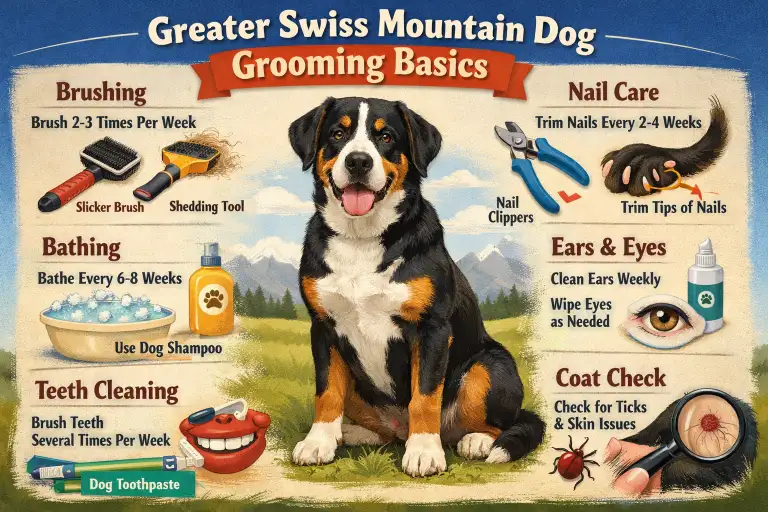
Grooming is more than just keeping your Greater Swiss Mountain Dog looking handsome — it’s essential for their health, comfort, and overall well-being. These large, double-coated dogs are known for their thick undercoat and coarse outer coat, which protects them in cold weather but also requires regular attention to prevent mats, tangles, and skin issues. A proper grooming routine helps you manage shedding, maintain skin health, and detect potential problems early, from hot spots and allergies to ear infections.
Regular grooming also has a behavioral benefit. Dogs that are brushed and bathed consistently tend to be more comfortable, less stressed, and more cooperative during vet visits or professional grooming sessions. Starting a grooming routine early, especially in puppies, helps them get accustomed to handling and different tools, making the process much easier throughout their life.
For owners, grooming is an opportunity to bond with your Swissy. Whether it’s a quick brush to remove loose undercoat, a thorough bath on a muddy day, or checking nails and ears, these moments create trust and reinforce positive handling experiences. Additionally, maintaining proper hygiene prevents common issues that could require costly vet visits, such as infections from matted fur or overgrown nails.
Understanding the Greater Swiss Mountain Dog Coat
The Greater Swiss Mountain Dog has a double coat. This means they have a soft undercoat that keeps them warm and a coarse outer coat that protects them from dirt and water. Understanding this coat is key to knowing how often to groom and what tools to use.
Their coat changes with the seasons. In spring and fall, they shed a lot. This is called “blowing the coat,” and it can leave hair all over your home if you don’t brush regularly. In summer and winter, the shedding is lighter, but regular brushing is still important to prevent mats and tangles.
The coat also affects matting, odor, and comfort. Areas like behind the ears, under the arms, and around the tail can get tangled easily if not brushed. Regular grooming keeps the coat smooth, reduces odor, and keeps your dog comfortable.
Here is a simple guide for grooming frequency based on season and coat condition:
| Season/Coat Condition | Brushing Frequency | Bathing Frequency | Extra Tips |
|---|---|---|---|
| Heavy shedding (Spring/Fall) | Daily | Monthly | Use undercoat rake and deshedding tool |
| Normal coat (Summer/Winter) | 2–3 times per week | Monthly or as needed | Light brushing, check for mats |
| Wet or muddy coat | After walks | As needed | Towel dry immediately to prevent damp smell |
By following this schedule, you can keep your Swissy’s coat healthy and reduce hair around the house. Regular brushing also allows you to check for any skin problems early, like rashes, bumps, or irritation.
Essential Grooming Routine at Home
Grooming your Greater Swiss Mountain Dog at home is easy once you know the right steps and tools. A consistent routine keeps your dog comfortable, clean, and healthy, and prevents mats and shedding from getting out of control.
The main tools you need include a slicker brush, undercoat rake, pin brush, dematting comb, nail clippers, and ear-cleaning solution. Using the right tool for the right job makes grooming faster and safer.
Brushing is the most important part of home grooming. During heavy shedding seasons, brush your dog every day. For normal coat periods, 2–3 times a week is enough. Focus on areas where mats are most likely, like behind ears, under arms, chest, and tail. Always be gentle to avoid hurting your dog.
Bathing should be done monthly or as needed, using a dog-specific shampoo that is gentle and pH balanced. After bathing, towel dry first, then use a low-heat blow dryer to remove moisture from the thick undercoat. This prevents skin problems like rashes and fungal infections.
Deshedding tools like undercoat rakes work best during spring and fall, when the undercoat comes out. Regular use of these tools reduces hair around your house and keeps your dog cooler and more comfortable.
Here is a simple table of essential tools and their uses:
| Tool | Purpose | How to Use |
|---|---|---|
| Slicker brush | Remove surface tangles | Brush gently over body and legs |
| Undercoat rake | Remove loose undercoat | Focus on chest, hind legs, and tail |
| Pin brush | Smooth outer coat | Brush back, shoulders, and neck |
| Dematting comb | Break up mats | Use carefully on mats behind ears and under arms |
| Nail clippers | Trim nails | Cut small amounts, avoid the quick |
| Ear cleaning solution | Clean ears | Use cotton ball, never Q-tip |
By following this routine, you can keep your Swissy looking neat and feeling comfortable at home. It also makes professional grooming visits easier, as your dog will already be used to handling.
Extra Care: Nails, Ears, Teeth, and Skin
Taking care of your Greater Swiss Mountain Dog’s nails, ears, teeth, and skin is an important part of grooming. These steps help prevent pain, infections, and other health problems. Doing them regularly keeps your dog healthy and happy.
Nail care: Trim your dog’s nails every 4–6 weeks. Overgrown nails can hurt your dog’s paws and change the way they walk. Always cut small amounts and avoid the quick, which is the pink part inside the nail that can bleed if cut.
Ear cleaning: Check your dog’s ears once a week for redness, odor, or wax buildup. Use a dog-safe ear cleaning solution and a cotton ball. Never push anything deep into the ear canal. Keeping ears clean prevents infections.
Dental care: Brush your dog’s teeth 2–3 times a week using dog toothpaste. Dental chews and toys can also help reduce tartar. Healthy teeth prevent bad breath and oral disease.
Skin and coat checks: Look for mats, redness, bumps, or hot spots every week. Early detection helps prevent bigger problems. If you see unusual rashes or sores, contact your veterinarian.
Here’s a quick hygiene checklist table for easy reference:
| Care Type | How Often | What to Check |
|---|---|---|
| Nails | Every 4–6 weeks | Overgrown, clicking on floor |
| Ears | Weekly | Redness, odor, wax buildup |
| Teeth | 2–3 times/week | Tartar, bad breath |
| Skin | Weekly | Mats, redness, bumps, hot spots |
By following these simple steps, you can prevent common problems and make grooming easier and safer for your Swissy.
Special Considerations and Expert Tips
Grooming a Greater Swiss Mountain Dog can change depending on age, season, and whether you groom at home or use a professional. Understanding these special situations helps you keep your dog healthy and comfortable all year.
Puppies need gentle grooming to get used to brushes, combs, and nail trims. Keep sessions short and positive so they enjoy being handled.
Adult dogs need regular brushing, bathing, and nail care. Focus on areas where mats often form, like behind the ears, under arms, and around the tail.
Senior dogs may have sensitive skin or arthritis. Use soft brushes, avoid high-pressure combing, and be patient with nail trims and baths.
Seasonal grooming is important because Swissys shed heavily in spring and fall. Daily brushing during these seasons removes loose hair and keeps the coat healthy. In summer and winter, brushing 2–3 times per week is usually enough.
Sometimes it’s better to hire a professional groomer, especially for heavy mats, large baths, or trimming nails on anxious dogs. Regular home grooming makes professional sessions easier and less stressful.
Here is a quick-reference table for routine grooming:
| Activity | Frequency | Notes |
|---|---|---|
| Brushing | Daily during heavy shedding, 2–3 times/week otherwise | Focus on undercoat and mat-prone areas |
| Bathing | Monthly or as needed | Use gentle, dog-safe shampoo |
| Nail trimming | Every 4–6 weeks | Cut small amounts, avoid quick |
| Ear cleaning | Weekly | Watch for redness or odor |
| Dental care | 2–3 times/week brushing | Use dog toothpaste and chews |
Common mistakes to avoid:
- Over-bathing, which can dry out skin
- Shaving the double coat, which reduces insulation and may cause sunburn
- Using harsh shampoos not made for dogs
- Ignoring mats, which can cause skin infections
For more detailed breed information and health tips for Greater Swiss Mountain Dogs, you can visit the American Kennel Club website: https://www.akc.org/dog-breeds/greater-swiss-mountain-dog/

Ata Ur Rehman is the founder of Pet Age in Human Years Calculator, an educational platform that provides age conversion charts and lifespan guides for dogs, cats, birds, and other companion animals. His work focuses on helping pet owners understand how animal ages translate into human years using commonly accepted age conversion formulas and published lifespan averages.
The website compiles breed and species lifespan data from kennel clubs, breed organizations, and general animal lifespan studies to present simple and easy-to-understand guides for pet owners worldwide.
This website was created to centralize animal age conversion charts into one easy reference platform for pet owners.