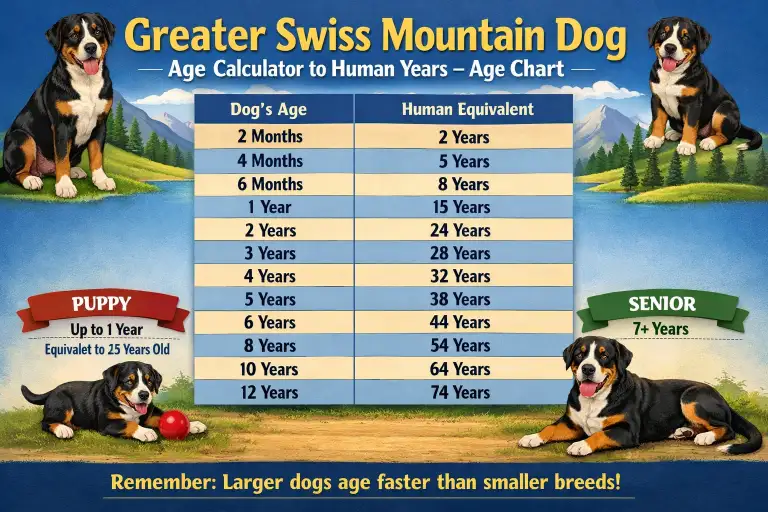
Many dog owners still believe the old “one dog year equals seven human years” rule, but this oversimplified model doesn’t reflect how dogs, especially giant breeds like the Greater Swiss Mountain Dog (GSMD), truly age. GSMDs are considered a giant breed, and their growth and aging patterns differ significantly from smaller or medium-sized dogs. While smaller breeds may remain healthy and active well into their teens, GSMDs typically have a lifespan of 6 to 9 years, with unique milestones at each life stage.
Giant breeds like the GSMD age faster in their early years. For example, a 1-year-old GSMD is roughly equivalent to a 15-year-old human, reflecting rapid growth and physical maturation. By contrast, their adult years progress more slowly relative to size and breed factors. Understanding these patterns is crucial for owners to anticipate life stage changes, provide proper nutrition, and monitor health.
The life stages of a GSMD can be broadly divided into puppy, adult, and senior phases:
- Puppy (0–1 year): Rapid growth, teething, and early socialization.
- Adult (1–6 years): Peak health, stable behavior, and full physical development.
- Senior (6+ years): Signs of aging may appear, including reduced mobility, joint stiffness, and slower recovery from exercise.
GSMD Life Stage Overview
| Life Stage | Age Range | Key Characteristics |
|---|---|---|
| Puppy | 0–1 year | Rapid growth, teething, socialization, high energy |
| Adult | 1–6 years | Full physical maturity, peak strength, stable behavior |
| Senior | 6+ years | Slower metabolism, joint stiffness, early signs of aging |
Understanding these stages helps owners set realistic expectations, plan proper nutrition, and recognize early signs of health issues.
Science Behind Dog Aging and Giant Breeds
Dogs do not age in a straight line like humans. Giant breeds like the Greater Swiss Mountain Dog grow very fast in the first year, but their aging slows down as they become adults. This means that the early puppy years are equivalent to a much longer period in human years.
Scientists have studied dog aging and found that the “one dog year equals seven human years” rule is not accurate. A 2019 study on dog DNA showed that dogs actually age in a logarithmic pattern. This means their early years count for more in human terms, and the aging curve slows down as they get older.
For GSMDs, size and genetics play a big role. Giant breeds tend to age faster than smaller breeds. Other factors like neutering, diet, exercise, and overall health also influence how long they live. Understanding these factors helps owners provide the right care at the right time.
Factors Affecting GSMD Longevity
| Factor | Effect on Aging | Owner Tip |
|---|---|---|
| Size | Giant breed ages faster than small dogs | Monitor joints and weight closely |
| Genetics | Family history affects lifespan | Know your dog’s lineage and possible health issues |
| Neutering/Spaying | Can slightly increase lifespan | Discuss timing with your vet |
| Diet & Nutrition | Balanced diet supports longer life | Feed high-quality large-breed dog food |
| Exercise & Activity | Maintains mobility and muscle | Provide daily walks and safe playtime |
By keeping these factors in mind, owners can better plan for the different life stages of their GSMD.
Greater Swiss Mountain Dog Age Calculator and Chart
Many GSMD owners want to know how old their dog is in human years. Instead of using the old “1 dog year = 7 human years” rule, we use a more accurate method that takes into account their size and breed. Giant breeds like the GSMD age faster in their first year, then slower as they grow older.
Here is a GSMD Age to Human Years chart that shows how your dog’s age compares to a human’s age:
Greater Swiss Mountain Dog Age Conversion
| Dog Age (Years) | Human Age Equivalent | Notes / Example |
|---|---|---|
| 1 | 15 | Puppy rapid growth |
| 2 | 24 | Teen years, still very energetic |
| 3 | 29 | Young adult, full size |
| 4 | 34 | Adult, strong and active |
| 5 | 39 | Mature adult, stable behavior |
| 6 | 44 | Approaching senior signs |
| 7 | 49 | Early senior stage |
| 8 | 54 | Senior, may notice slower recovery |
| 9 | 59 | Older senior, monitor joints and health |
For example, a 5-year-old GSMD is roughly like a 39-year-old human, while a 1-year-old puppy is like a 15-year-old teen. This chart helps you understand your dog’s growth, activity level, and health needs.
Using this chart, owners can plan diet, exercise, and veterinary care according to their dog’s life stage.
Life Stages of Greater Swiss Mountain Dogs
Greater Swiss Mountain Dogs go through three main life stages: puppy, adult, and senior. Each stage comes with different growth, behavior, and care needs. Knowing what to expect helps owners give the right support at the right time.
Life Stages and Milestones for GSMDs
| Life Stage | Age Range | Physical / Behavioral Changes | Care Focus |
|---|---|---|---|
| Puppy | 0–1 year | Rapid growth, teething, playful, learning social skills | Balanced puppy food, training, safe exercise |
| Adult | 1–6 years | Full size, peak strength, steady behavior | High-quality adult diet, regular exercise, mental stimulation |
| Senior | 6+ years | Slower movement, joint stiffness, possible early health issues | Senior diet, gentle exercise, regular vet check-ups, joint support |
During the puppy stage, GSMDs grow very quickly. Owners should focus on proper nutrition, safe socialization, and early training.
In the adult stage, dogs are strong and active. This is the time to maintain a healthy weight, keep them mentally engaged, and continue routine veterinary care.
In the senior stage, many dogs start showing signs of aging, such as slower movement or stiffness in joints. Care should include diet adjustments, gentle exercise, and more frequent vet visits to catch health issues early.
Understanding these stages helps owners make informed decisions about feeding, exercise, and health care for their GSMD.
Helping Your Greater Swiss Mountain Dog Age Healthily
Caring for a Greater Swiss Mountain Dog properly can help them live a longer, healthier, and happier life. Their needs change as they grow from puppy to senior, so it is important to adjust diet, exercise, and health care at each stage.
Care Tips for Each Life Stage
| Life Stage | Nutrition | Exercise | Vet Care | Mental Enrichment |
|---|---|---|---|---|
| Puppy | High-quality puppy food, controlled portions | Short play sessions, safe exercise | Vaccinations, deworming, early checkups | Basic training, socialization |
| Adult | Balanced adult diet, monitor weight | Daily walks, moderate play | Annual checkups, dental care | Training, interactive toys |
| Senior | Senior or joint-support diet, smaller portions | Gentle walks, low-impact activities | More frequent vet visits, monitor for health issues | Puzzle toys, gentle mental stimulation |
Other tips to help your GSMD age well include:
- Monitor weight: Extra pounds can stress joints.
- Support joints: Use ramps, orthopedic beds, or joint supplements if recommended by your vet.
- Preventive vet care: Blood work, X-rays, and dental checks help catch issues early.
- Mental health: Even older dogs benefit from short training sessions or interactive toys to keep their mind active.
Following these guidelines will help your Greater Swiss Mountain Dog stay healthy, comfortable, and happy throughout all life stages.
For more detailed information on giant dog breed health and lifespan, you can visit the American Kennel Club’s guide on large breeds: https://www.akc.org/dog-breeds/

Ata Ur Rehman is the founder of Pet Age in Human Years Calculator, an educational platform that provides age conversion charts and lifespan guides for dogs, cats, birds, and other companion animals. His work focuses on helping pet owners understand how animal ages translate into human years using commonly accepted age conversion formulas and published lifespan averages.
The website compiles breed and species lifespan data from kennel clubs, breed organizations, and general animal lifespan studies to present simple and easy-to-understand guides for pet owners worldwide.
This website was created to centralize animal age conversion charts into one easy reference platform for pet owners.