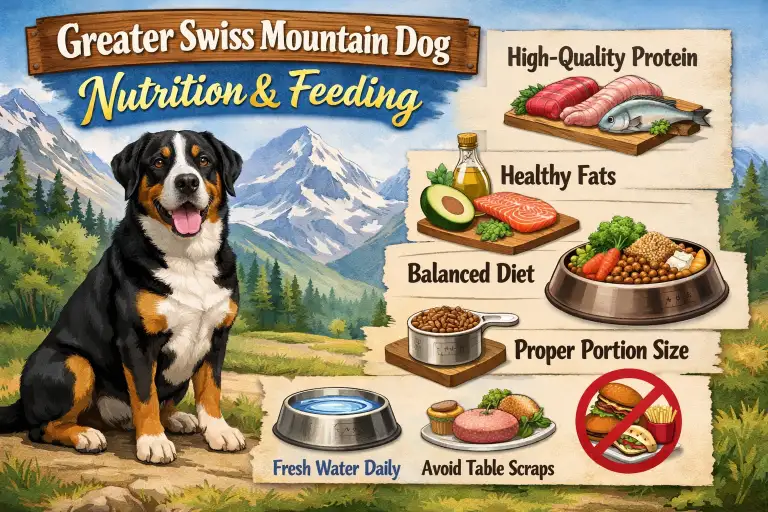
Feeding your Greater Swiss Mountain Dog the right diet is one of the most important steps you can take to ensure a long, healthy, and active life. These giant, muscular dogs grow quickly, reach a large adult size, and have unique nutritional needs compared to smaller breeds. Proper nutrition affects everything from their energy levels and growth rate to joint health and overall longevity.
Greater Swiss Mountain Dogs have a calm, friendly temperament, but their large size puts extra stress on bones, joints, and internal organs if they are overfed or underfed. Puppies require nutrient-dense diets that support controlled growth to prevent skeletal issues, while adults need balanced meals to maintain muscle mass without excessive weight gain. Senior Swissies often benefit from diets that are lower in calories but rich in joint-supporting nutrients and easily digestible proteins.
This guide will walk you through everything you need to know about Greater Swiss Mountain Dog nutrition — from feeding amounts and schedules to the best types of food, treat safety, and troubleshooting common problems. By the end, you’ll have the knowledge to feed your Swissy confidently, helping them thrive at every stage of life.
Feeding Guidelines by Life Stage and Breed Size
Feeding your Greater Swiss Mountain Dog the right amount at the right stage of life is very important. Puppies, adults, and seniors all have different needs. Large breeds like Swissies also need careful portion control to keep their joints and bones healthy.
Life Stage Feeding Chart
| Life Stage | Age Range | Daily Calories | Meals per Day | Special Nutrients |
|---|---|---|---|---|
| Puppy | 8 weeks – 6 months | 1,500 – 2,500 kcal | 3 – 4 | High protein, calcium, phosphorus for growth |
| Puppy | 6 – 12 months | 2,000 – 3,500 kcal | 2 – 3 | Controlled calcium & protein to support bones |
| Adult | 1 – 6 years | 3,000 – 4,000 kcal | 2 | Balanced protein & fat for maintenance |
| Senior | 7+ years | 2,500 – 3,500 kcal | 1 – 2 | Joint supplements, easily digestible protein |
Since Greater Swiss Mountain Dogs are a giant breed, portion sizes should be adjusted based on weight. Heavier dogs need more calories, but overfeeding can lead to obesity and joint problems.
Breed Size Portion Adjustment
| Dog Weight (lbs) | Portion Multiplier | Notes |
|---|---|---|
| 60 – 80 | 1.0 | Normal activity level |
| 80 – 100 | 1.2 | Adjust for higher activity or growth stage |
| 100 – 120 | 1.4 | Monitor weight, avoid overfeeding |
| 120+ | 1.5 | Large adult Swissies, use Body Condition Score to adjust |
Tips for feeding:
- Puppies should eat more frequently, with smaller meals.
- Adults need fewer meals but balanced calories to maintain weight.
- Seniors may need lower calories but higher joint-support nutrients.
- Always check your dog’s body condition and adjust portions as needed.
Types of Dog Food and Choosing the Right Diet
Greater Swiss Mountain Dogs can eat different types of food, and each type has its own benefits and drawbacks. Choosing the right food helps keep your Swissy healthy, supports growth, and prevents problems like obesity or digestive issues.
Here is an easy comparison of the main types of dog food:
Food Type Comparison
| Food Type | Pros | Cons | Safety Considerations | Cost |
|---|---|---|---|---|
| Kibble (Dry Food) | Convenient, long shelf life, helps clean teeth | May have fillers, less moisture | Check for quality protein | Low to medium |
| Canned (Wet Food) | Tasty, high moisture | Shorter shelf life, more expensive | Store properly to avoid spoilage | Medium to high |
| Raw Diet | High protein, natural | Risk of bacteria, careful handling | Use safe preparation, consult vet | Medium to high |
| Fresh/Frozen Meals | Nutrient-dense, minimally processed | Short shelf life, more expensive | Keep refrigerated/frozen | High |
| Homemade | Full control of ingredients | Risk of imbalance if not formulated | Consult nutritionist for balanced recipe | Variable |
Some dogs have special needs, like sensitive stomachs, weight issues, or joint support. Here is a simple guide for those diets:
Special Diet Needs
| Condition | Recommended Food Type | Notes |
|---|---|---|
| Sensitive stomach | Canned, fresh, or limited-ingredient kibble | Avoid rich or fatty foods |
| Weight management | Low-calorie kibble, measured portions | Monitor BCS, avoid free feeding |
| Joint support | Food with glucosamine and omega-3 | Especially for adults and seniors |
| High-energy dogs | High-protein, high-fat diets | Good for working or active Swissies |
Tips for choosing food:
- Always read labels carefully. Look for high-quality protein and limited fillers.
- Avoid foods with artificial colors, flavors, or preservatives.
- Make changes gradually to avoid upset stomachs.
- Consider life stage, activity level, and any health issues.
Feeding Amounts, Schedules, and Treat Guidelines
Feeding your Greater Swiss Mountain Dog the right amount at the right time keeps them healthy and happy. Overfeeding can lead to obesity and joint problems, while underfeeding can affect growth and energy.
Here is a simple guide for daily calories and portions based on weight and activity:
Calorie & Portion Guide by Weight
| Dog Weight (lbs) | Activity Level | Calories per Day | Recommended Meal Size |
|---|---|---|---|
| 60 – 80 | Low | 2,500 – 3,000 | 2 meals of 1,250 – 1,500 kcal |
| 60 – 80 | Moderate | 2,800 – 3,300 | 2 meals of 1,400 – 1,650 kcal |
| 80 – 100 | Low | 3,000 – 3,500 | 2 meals of 1,500 – 1,750 kcal |
| 80 – 100 | Moderate | 3,300 – 3,800 | 2 meals of 1,650 – 1,900 kcal |
| 100+ | Moderate | 3,500 – 4,000 | 2 meals of 1,750 – 2,000 kcal |
Feeding frequency tips:
- Puppies: 3–4 smaller meals per day
- Adults: 2 meals per day
- Seniors: 1–2 smaller meals, easier to digest
Treats and human foods should be given carefully. Here is a guide to keep your Swissy safe:
Treats & Human Food Safety
| Food/Treat | Safe Quantity | Notes / Cautions |
|---|---|---|
| Carrots | 2–3 small sticks | Good for teeth, low calories |
| Apples | 2–3 slices | Remove seeds and core |
| Peanut Butter | 1 tsp | Use unsweetened, no xylitol |
| Cheese | Small cubes | High in fat, give occasionally |
| Chocolate | 0 | Toxic, never give |
| Grapes/Raisins | 0 | Toxic, never give |
| Onions/Garlic | 0 | Toxic, never give |
Tips:
- Always measure treats and include them in daily calorie count.
- Avoid giving table scraps that are high in fat or salt.
- Use treats for training, not as free snacks.
Common Problems, Troubleshooting, and When to Consult a Vet
Even with the best feeding plan, Greater Swiss Mountain Dog owners may face some problems. Knowing what to watch for and how to fix it helps your dog stay healthy and happy.
Common Feeding Problems & Solutions
| Problem | Cause | Practical Solution | When to Seek Vet Advice |
|---|---|---|---|
| Picky eater | Food not appealing or sudden change | Try different textures, rotate flavors, feed at set times | If dog refuses to eat for more than 24 hours |
| Overweight | Too many calories or treats | Reduce portions, use low-calorie treats, increase exercise | If weight gain continues despite changes |
| Underweight | Not enough food, health issue | Increase portions, check for illness | If weight loss is rapid or dog is lethargic |
| Loose stool | Sudden diet change, sensitive stomach | Switch food gradually, consider limited-ingredient diet | If diarrhea lasts more than 2–3 days |
| Food aggression | Multiple dogs or competition | Feed separately, use structured feeding | If aggression becomes severe or unsafe |
| Bloat risk | Eating too fast, large meals | Use slow feeder, smaller meals, avoid exercise immediately after eating | Seek emergency vet care immediately if abdomen is swollen or painful |
Tips:
- Always observe your dog’s eating habits and body condition.
- Introduce new foods gradually over 7–10 days to prevent digestive upset.
- For persistent problems, consult a vet or veterinary nutritionist to adjust the diet safely.
For more expert guidance on large-breed dog care and nutrition, visit the American Kennel Club’s official Greater Swiss Mountain Dog page: https://www.akc.org/dog-breeds/greater-swiss-mountain-dog

Ata Ur Rehman is the founder of Pet Age in Human Years Calculator, an educational platform that provides age conversion charts and lifespan guides for dogs, cats, birds, and other companion animals. His work focuses on helping pet owners understand how animal ages translate into human years using commonly accepted age conversion formulas and published lifespan averages.
The website compiles breed and species lifespan data from kennel clubs, breed organizations, and general animal lifespan studies to present simple and easy-to-understand guides for pet owners worldwide.
This website was created to centralize animal age conversion charts into one easy reference platform for pet owners.